Mysterious Ancient Jerusalem Tunnel Discovered — and Experts Can’t Explain Why It Exists
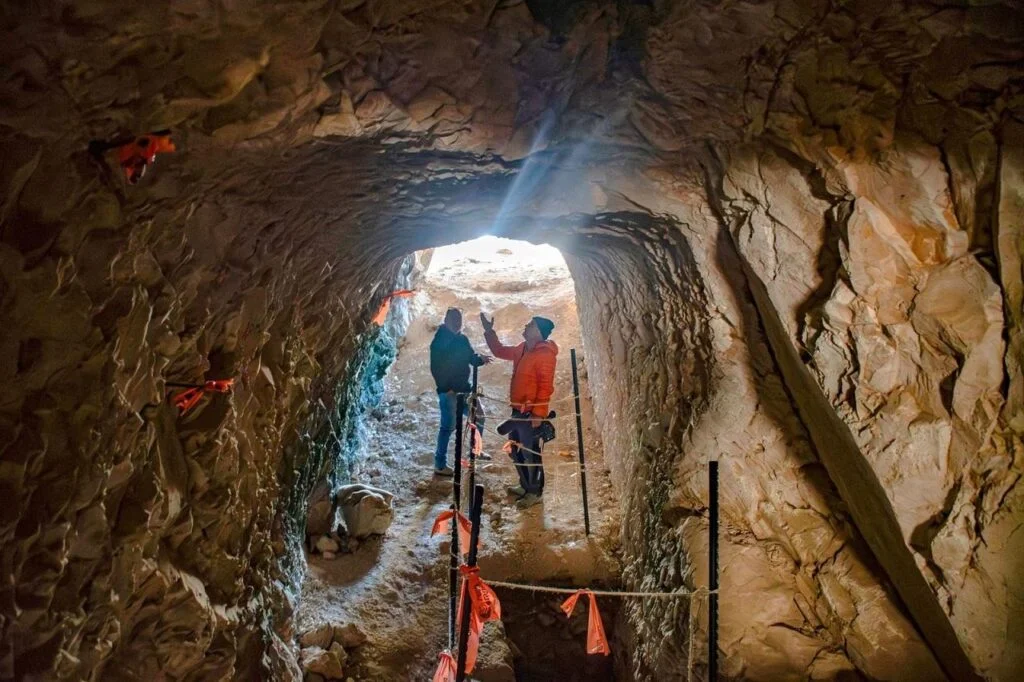
A remarkable ancient Jerusalem tunnel has come to light near Kibbutz Ramat Rachel, and the people who found it are openly admitting they have no idea what it was for. Carved roughly 50 meters into solid rock, the passage turned up unexpectedly during archaeological work and has quickly become one of the more puzzling finds the city has produced in recent memory.
An Accidental Discovery Beneath a Future Neighborhood
The tunnel surfaced during excavations led by the Israel Antiquities Authority, carried out ahead of a major construction project. The development, funded and initiated by the Israel Lands Authority, will rise on land north of Ramat Rachel.
The plans are substantial. Across an area of about 58 dunams, the project calls for 488 new housing units, thousands of square meters of commercial and employment space, and educational facilities including an elementary school and kindergartens.
What the archaeologists did not expect was to stumble onto something far older hiding beneath the surface.
From a Natural Cavity to a Long Tunnel
According to excavation directors Dr. Sivan Mizrahi and Zinovi Matskevich, the team was working in rocky, exposed ground when it came across what first looked like a natural karstic cavity, a hollow formed by water dissolving rock over time.
As the dig continued, that small cavity kept going. It gradually opened into a lengthy tunnel, parts of which remain collapsed even now. Because of those blockages, the directors note, the tunnel has yet to give up all of its secrets.
Inside the Hewn Passage
Whoever built this tunnel clearly knew what they were doing. Access from the surface was provided by a staircase that descended to a carved opening, which in turn led into the passage itself.
When discovered, the tunnel was packed with layers of soil that had built up over centuries, possibly even millennia. Measurements taken at several points reveal an impressive scale: heights reaching up to 5 meters and a width of roughly 3 meters.
The craftsmanship stood out to the excavators. The quarrying was carried out with precision, they said, making it obvious that the builders invested enormous effort and careful planning, and had the skills and resources needed to see the work through.
So What Was It For?
Here is where the mystery deepens. Several theories have been raised and then set aside.
- A water installation. Researchers first wondered whether the tunnel was an ancient channel built to reach a spring. That idea was dropped for a few reasons. The walls lack the plaster typically found in ancient water systems, a consulting geologist confirmed there are no known underground water sources in the area, and the tunnel shows no signs of water ever collecting inside it.
- An agricultural or industrial site. The team also considered whether the passage served some underground farming or production purpose. But the sheer scale of the work, combined with the absence of any comparable sites nearby, made this explanation unconvincing.
- A quarrying operation. The leading theory at the moment is that the tunnel was dug to reach a layer of chalk suitable for cutting building stones or producing lime. A shaft carved into the ceiling, possibly for ventilation, and quarrying debris found on the floor lend some support to this view. Even so, the researchers stress that this interpretation is far from certain.
There is also a simpler possibility: the project may never have been finished at all, which would leave its true purpose permanently unknown.
A Tunnel Without a Date
Adding to the puzzle, the excavators cannot say when the tunnel was created. Not a single artifact, however small, turned up that could pin down its age.
What they can say is that the tunnel sits within a few hundred meters of two important ancient sites. Nearby stands a public building from the Iron Age, the First Temple period, located in the Arnona neighborhood. Close by as well is Tel Ramat Rachel, where remains of settlement spanning the Iron Age through the Islamic period have been recorded.
A Discovery That Even the Experts Find Astonishing
Dr. Amit Re’em, Jerusalem District Archaeologist at the Israel Antiquities Authority, framed the find against the backdrop of Jerusalem Day, observed this week. He noted that discoveries emerge constantly across the city, and that the authority’s researchers are always at work because Jerusalem never stops surprising them. Usually, he said, the team can explain what it uncovers. This time, they are simply amazed.
For Re’em, the tunnel speaks to the long and deep history layered beneath the city, evidence of generations who lived, built, and left their mark on the land. He described Jerusalem as both the modern capital of Israel and the heart of a historical story that is still being revealed.
The Public Will Get to See It
The story does not end with the dig. The tunnel is expected to be preserved and folded into a planned archaeological park, allowing both the public and the future residents of the new neighborhood to experience this strange and impressive piece of the past for themselves
Author