NATO unity is facing one of its toughest tests in years as alliance leaders prepare to gather in Turkey, with all eyes fixed on how President Donald Trump will engage with his European counterparts. Behind the scenes, NATO’s leadership is working overtime to keep the alliance cohesive and its most unpredictable member fully on board. Yet deep disagreements over defense spending, America’s military role, and the recent conflict with Iran threaten to expose cracks that could weaken the entire partnership.
A Carefully Prepared Charm Offensive
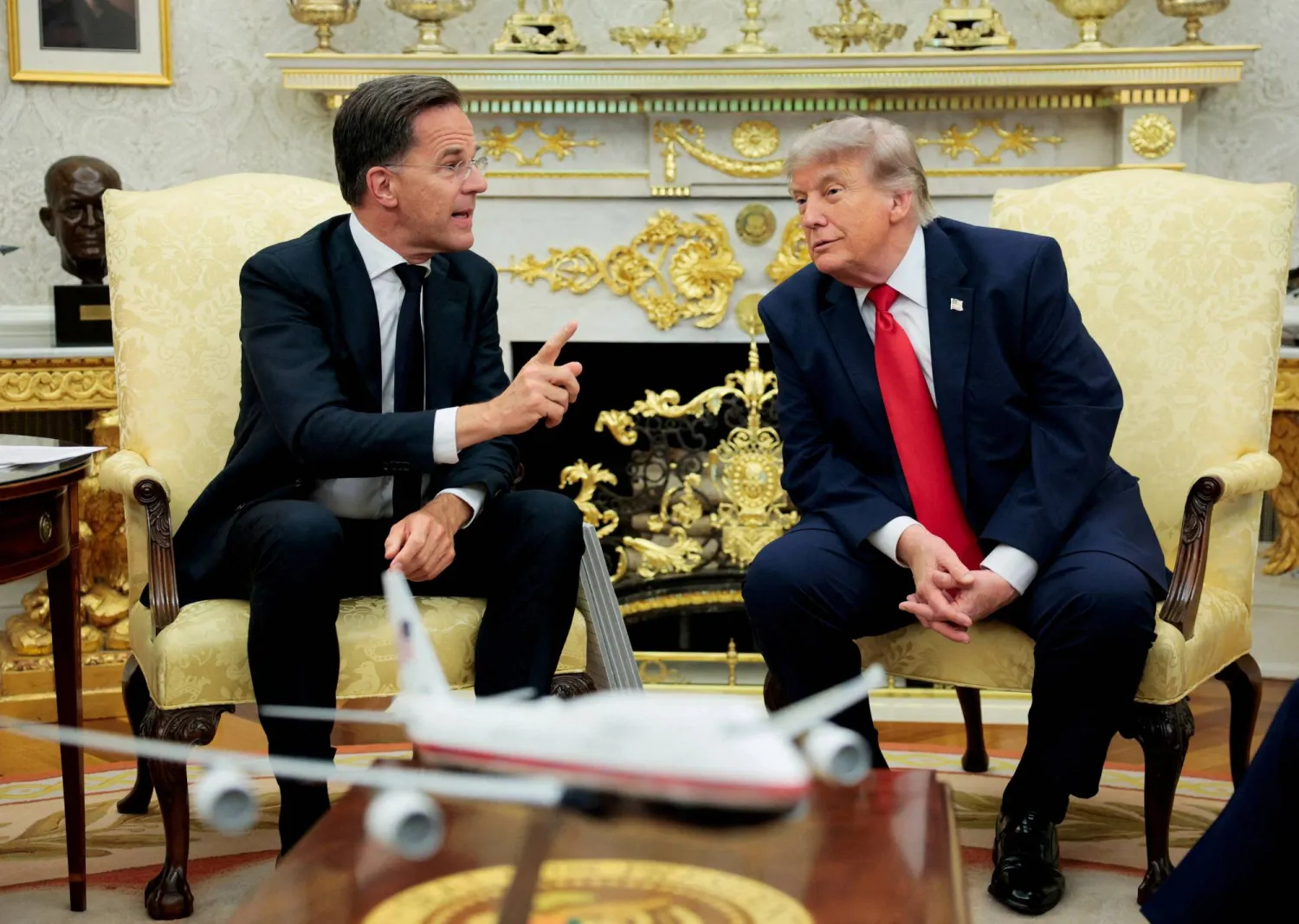
When NATO Secretary-General Mark Rutte arrived in Washington in late June, he came armed with a clear strategy. As Trump aired grievances about European allies failing to back the United States during its war against Iran, Rutte responded not with defensiveness but with generous praise.
He came ready with visual props, including large display boards featuring gold-lettered headlines. One boldly proclaimed a message designed to appeal directly to the president’s sense of achievement.
Standing before the cameras, Rutte enthusiastically credited Trump with driving a remarkable surge in defense investment. He pointed to an additional 1.2 trillion dollars in spending by European allies and Canada since 2017, framing it as a direct result of the president’s influence.
Keeping Trump on Board
This performance revealed what has become one of Rutte’s most crucial responsibilities: maintaining Trump’s commitment to the alliance. With a pivotal summit approaching in Ankara, the stakes could hardly be higher.
The gathering will unite leaders from all 32 member nations at a moment thick with uncertainty. Tensions in the Middle East remain elevated, and Russia’s war against Ukraine continues to cast a long shadow over European security.
Adding to the anxiety, the United States has been reviewing its military footprint across Europe. This has left many governments questioning just how dedicated Trump remains to the security partnership that has anchored Western defense for decades.
The Strategy Behind the Summit
Rutte’s approach rests on a blend of flattery, persuasion, and economic appeal. He aims to remind Trump of the tangible benefits NATO delivers to America while showcasing the genuine efforts Europeans have made to shoulder more of the load.
According to transatlantic security expert Claudia Major, nervous leaders will be working hard to project strength and demonstrate that the alliance remains robust. Much of their energy, she noted, will go toward keeping Trump satisfied while building a compelling case for NATO’s continued relevance.
This helps explain why Rutte has placed defense production at the very heart of this year’s agenda. He is expected to unveil an ambitious initiative he describes as a defense industrial revolution.
The plan reportedly includes:
- Tens of billions of dollars in fresh contracts.
- New procurement deals for European nations.
- Expanded opportunities to boost weapons manufacturing.
The underlying goal, Major explained, is to prove there is a thriving market for American defense industries while presenting an economic argument that Trump might find genuinely appealing.
An Unpredictable Partner
Whether this carefully crafted strategy will succeed remains far from certain. Major cautioned that if there is one consistent lesson from Trump’s tenure, it is his capacity for disruption and the difficulty of predicting his next move.
That volatility surfaced clearly at a defense ministers’ meeting in Brussels, where Trump’s defense secretary announced a formal review of American troop deployments across the continent. The message came wrapped in a stern warning.
The defense secretary made clear that the United States intended to push allies to contribute more, vowing to closely monitor those who hesitated or resisted. He framed the review as a test, suggesting some countries would pass admirably while others would fall short.
Europe’s Growing Concerns
The blunt tone reportedly ruffled feathers among the assembled ministers. While the review itself came as no surprise, European governments have long braced for a gradual pullback of American involvement, the real worry centers on the pace of that transition.
German Defense Minister Boris Pistorius urged caution, warning against creating dangerous gaps in military capability during the handover. He stressed the need for a coordinated, well-synchronized roadmap rather than an abrupt shift.
Major echoed this sentiment, arguing that Europe must develop its own plan to manage the changing dynamic. If America steps back from its central role, she warned, Europeans will need to move quickly given the persistent threat from Russia and the fragile geopolitical environment surrounding the continent.
Encouragingly, European allies and Canada responded to earlier pressure by increasing defense spending by 20 percent in 2025 compared to the previous year, a significant real-terms jump.
Ukraine Takes Center Stage
Beyond spending debates, securing continued support for Ukraine will feature prominently on the Ankara agenda. Leaders are expected to discuss substantial new funding commitments aimed at bolstering the country’s defenses.
Reports suggest that NATO’s European members and Canada plan to pledge 70 billion euros in military aid for Ukraine, covering both this year and next. However, familiar tensions linger over how fairly this burden should be shared.
Rutte has repeatedly urged member states to distribute Ukraine assistance more evenly, highlighting an ongoing source of friction within the alliance.
The Real Test: Political Unity
For Major, the summit’s defining challenge lies not in procurement figures or spending targets, but in political cohesion. She warned that any public display of division could prove damaging.
Should Trump openly criticize a particular ally for insufficient spending or inadequate support during the Iran conflict, it would undermine the alliance’s unity. That erosion, in turn, would weaken both its military deterrence and the credibility of its collective defense message.
Reasons for Cautious Optimism
Despite these risks, there are hopeful signs that the allies may present a united front. At a recent G7 summit, Trump adopted a noticeably more cooperative posture, joining fellow leaders in supporting increased pressure on Russia.
This included backing additional sanctions targeting Russian oil exports and the banking sector. German Chancellor Friedrich Merz welcomed the outcome as a meaningful signal for Ukraine, suggesting it established a fresh tone of transatlantic determination and even hinted at a possible opening for peace.
What Hangs in the Balance
As leaders converge on Ankara, they are hoping to replicate that spirit of solidarity. The summit declaration is expected to reaffirm the alliance’s mutual-defense commitment, the principle that an attack on one member constitutes an attack on all.
Leaders also hope to preserve language identifying Russia as a long-term threat to Euro-Atlantic security, a key priority for European members.
Yet deterrence only holds power if the underlying promise is believable. That is precisely why unity, rather than budgets or contracts, represents the true measure of success in Ankara. If the alliance can project genuine togetherness, it will emerge stronger. If cracks appear, the consequences could echo far beyond a single summit.
Author