Israel New York Times Lawsuit Sparks Global Debate Over Press Freedom and War Reporting
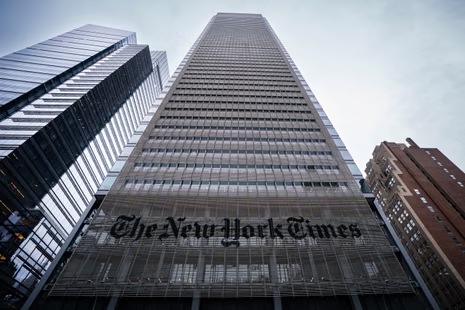
The Israel New York Times Lawsuit threat has set off a fierce international debate over journalism, accountability, and the conduct of soldiers in active conflict zones. Prime Minister Benjamin Netanyahu announced on Thursday that he had instructed his legal team to pursue what he called the harshest possible legal action against The New York Times and one of its prominent journalists, Nicholas Kristof.
At the heart of the controversy is a recent article that alleged widespread sexual violence by Israeli soldiers, prison guards, and settlers against Palestinian prisoners. The piece has drawn intense reactions from both sides, raising serious questions about the limits of war reporting and the lengths to which governments will go to push back against critical coverage.
Netanyahu’s Strong Response
Netanyahu’s reaction was direct and forceful. In a public statement, he accused the newspaper of defaming Israeli soldiers and spreading what he described as a “blood libel” by suggesting widespread rape had occurred. He also dismissed any attempt to draw moral comparisons between Hamas, which he labeled a genocidal terrorist group, and Israeli forces fighting in Gaza.
According to the prime minister, the lawsuit will not just be a courtroom battle but also a fight for public opinion. He vowed that truth would ultimately prevail, framing the legal action as part of a broader effort to defend Israel’s international image.
Despite the tough rhetoric, Netanyahu did not specify:
- Where the lawsuit would be filed
- When the legal action would begin
- Whether other media outlets covering similar topics could face action
This is not the first time Netanyahu has issued such a threat. Last August, he warned of legal consequences against the Times over a separate article on starvation in Gaza, but no lawsuit ultimately materialized.
What the New York Times Article Claimed
The article in question was written by Nicholas Kristof, a veteran opinion columnist with decades of experience covering international human rights issues. According to the newspaper, Kristof spent considerable time gathering testimonies from Palestinians who said they had experienced sexual abuse while in Israeli detention.
The article included particularly disturbing accounts, among them a Palestinian man who said he had been raped by a dog. Israel has firmly rejected this and other claims in the piece.
In response to criticism from Israeli lawmakers, The New York Times publicly defended its reporting. Newspaper spokesman Charlie Stadtlander stated that:
- Kristof had interviewed 14 men and women for the article
- Their accounts were corroborated, when possible, by other witnesses
- Lawyers, family members, and trusted confidants were also consulted
- Every detail had been thoroughly fact-checked
In his article, Kristof also raised a politically explosive point, arguing that American tax dollars help fund the Israeli security establishment. By that logic, he suggested, the United States is indirectly complicit in any abuses occurring within Israeli-run facilities.
UN and Rights Groups Have Documented Abuses on Both Sides
The current controversy fits into a much broader and ongoing global discussion. Both the United Nations and several human rights organizations have, over the past two years, documented cases of sexual violence committed by both Israeli forces and Hamas militants since the October 7, 2023 attack on Israel.
The attack, which killed hundreds of Israelis and led to many being taken hostage, triggered the start of the current war in Gaza. Since then:
- Allegations of sexual violence have been raised against Hamas fighters during the October 7 assault
- Similar accusations have emerged against Israeli soldiers, prison staff, and settlers
- International bodies have called for fuller investigations of both sets of claims
- Rights organizations have repeatedly emphasized the need for accountability on all sides
This pattern of mutual allegations has made the conflict not just a military and political crisis, but also a deeply contested narrative battle.
Press Freedom Concerns Take Center Stage
For media organizations and press freedom advocates, Netanyahu’s threats represent a worrying development. Defamation lawsuits filed by world leaders against major newspapers are rare and can have a chilling effect on journalism, even when they ultimately fail in court.
Critics argue that aggressive legal threats can:
- Pressure newsrooms into self-censoring controversial reporting
- Drain media organizations financially through prolonged legal battles
- Discourage journalists from covering sensitive war crimes allegations
- Send a signal to governments worldwide that critical coverage can be punished
At the same time, governments have a right to defend their soldiers and citizens against what they consider false or misleading reporting. Striking that balance between accountability and free press has become one of the defining tensions of modern wartime journalism.
What’s at Stake for Israel
For Israel, the stakes of this confrontation are enormous. The country is already under intense international scrutiny over its military operations in Gaza, with multiple investigations underway at various global institutions. A high-profile lawsuit against one of the world’s most influential newspapers could either reinforce its image as a country willing to defend its soldiers or further fuel criticism over how it handles dissent.
Kristof’s article is now part of a much wider discussion about the conduct of Israeli forces in the West Bank, accountability for alleged abuses, and the role of foreign aid in supporting military operations. Whether or not the lawsuit ever materializes, the article’s claims, and Israel’s response, will continue to shape the global narrative around the conflict.
What Comes Next
It remains to be seen whether Netanyahu will follow through on his threat or whether, as in past instances, the lawsuit will quietly fade from the headlines. The New York Times has so far stood firmly behind its journalist, and its defense of fact-checked, corroborated reporting suggests it is preparing for a long fight if necessary.
Key issues to watch in the coming weeks include:
- Whether other media outlets covering similar allegations face pressure
- How international rights organizations respond to the lawsuit threat
- Whether the U.S. government weighs in given Kristof’s reference to American funding
- How the broader conversation around sexual violence in the conflict evolves
In a war already shaped by deeply contested narratives, the Israel New York Times Lawsuit threat has added another explosive layer. It highlights how global politics, journalism, and human rights advocacy increasingly collide in the digital era and how the world’s most powerful leaders are willing to use every tool available, including courtrooms, to control the story.
Author