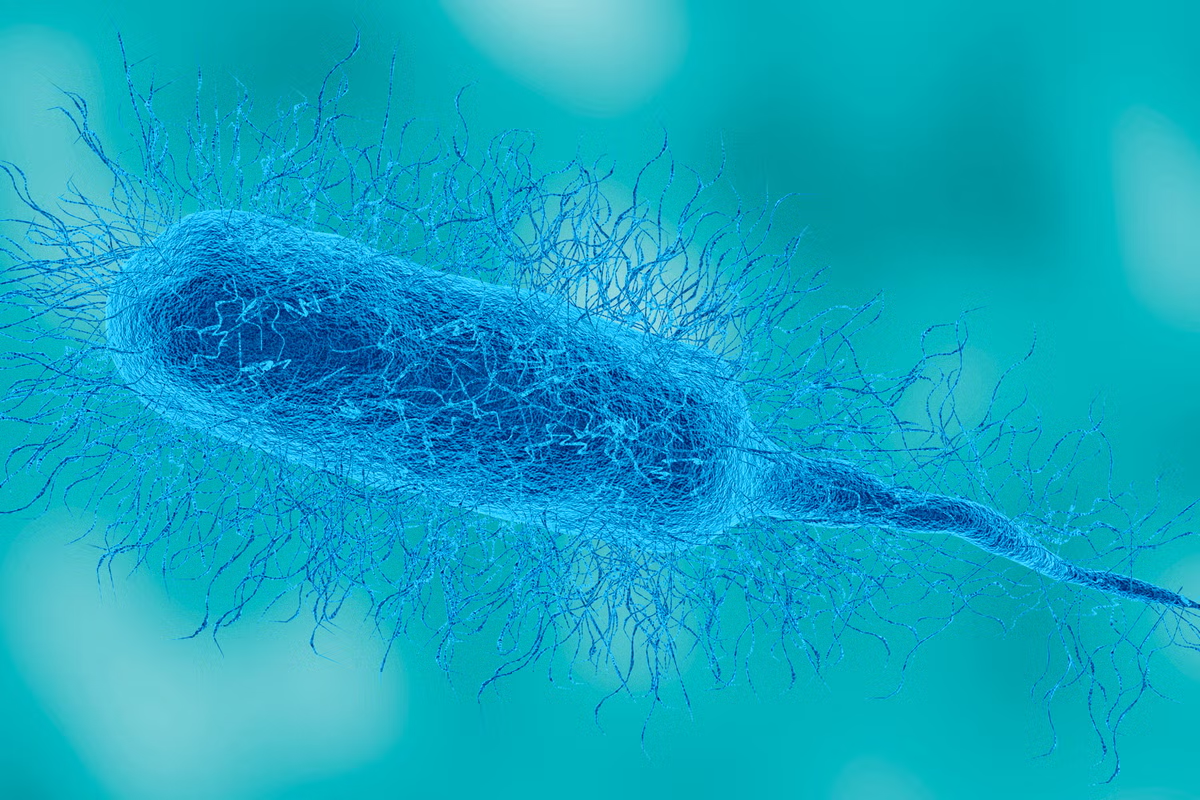
Vibrio vulnificus infections in Louisiana have climbed well above their usual pace this year, and the death toll is what prompted state health officials to issue a warning about warm coastal waters.
Nine cases have been reported in 2026. All nine patients were hospitalized. Five of them died.
How Unusual That Is
Context makes the numbers more alarming rather than less.
Across the same period over the previous ten years, Louisiana averaged seven cases and one death annually.
So case counts are modestly elevated, but the fatality figure is five times the typical average. That gap is what turned a seasonal advisory into a more urgent public warning.
Who Got Sick
Every one of the nine cases followed the same pattern: a wound exposed to seawater.
All nine patients also had underlying health conditions.
That detail is central to understanding the risk. Vibrio vulnificus is dangerous to anyone, but it becomes far more likely to turn severe in people whose immune systems or liver function are already compromised. Chronic liver disease, diabetes, cancer treatment and immunosuppressive medications all elevate risk substantially.
Where the Bacteria Come From
Vibrio bacteria occur naturally in warm coastal waters. They are not a contaminant introduced by pollution, and their presence is normal.
Case numbers typically rise from May through October, tracking water temperature. Warmer water supports higher bacterial concentrations, which is why the risk is seasonal rather than constant.
Two Routes of Infection
There are two distinct ways people become infected, and they carry different implications.
The first is wound exposure. An open cut, scrape, recent surgical site, new tattoo or piercing exposed to brackish or salt water can allow bacteria direct entry.
The second is consumption. Eating raw or undercooked seafood, particularly oysters, can cause infection through the digestive tract. Oysters filter large volumes of water, concentrating whatever is present.
Depending on the route and the individual, infection can produce gastrointestinal illness, a wound infection, or blood poisoning.
Why It Progresses So Fast
The severity of Vibrio vulnificus is not primarily about how many people get infected. It is about how quickly things deteriorate when they do.
Roughly one in five people infected with the bacteria die, and death can occur within a day or two of first becoming ill.
Severe cases may require intensive care. Some require limb amputation when tissue destruction advances beyond what antibiotics can control.
That compressed timeline is why health officials emphasize immediate action rather than waiting to see whether symptoms improve.
Warning Signs to Watch
For wound infections, seek medical care immediately if a wound that was exposed to brackish or salt water becomes red, swollen, painful, warm or discolored.
One instruction matters as much as recognizing the symptoms: tell the healthcare provider about the water exposure. That information changes the clinical picture significantly and can accelerate appropriate treatment. A wound infection treated as routine may receive antibiotics that do not cover Vibrio.
For bloodstream infections, the signs include fever, chills, dangerously low blood pressure and blistering skin lesions.
Practical Precautions
The risk is manageable with straightforward measures.
People with open wounds should stay out of brackish and salt water entirely until healing is complete. That includes cuts that seem minor, along with recent tattoos, piercings and surgical sites.
Anyone who cannot avoid exposure should cover wounds with waterproof bandages, and wash thoroughly with soap and clean water after any contact with seawater or raw seafood.
People with liver disease, diabetes, cancer or compromised immune systems face substantially higher risk and should be correspondingly more cautious, including avoiding raw oysters.
Handling raw seafood carries risk too. Wearing gloves while shucking oysters or cleaning fish prevents the small cuts that create an entry point.
The Broader Context
Vibrio cases have drawn increasing attention across the Gulf Coast and beyond in recent years, and warming water temperatures are frequently cited as a contributing factor in the geographic and seasonal expansion of the bacteria’s range.
For Louisiana residents this summer, the practical message is narrower. The water itself is not the danger. The combination of an open wound, warm salt water and an underlying health condition is.
Author
-
Lucienne Albrecht is Luxe Chronicle’s wealth and lifestyle editor, celebrated for her elegant perspective on finance, legacy, and global luxury culture. With a flair for blending sophistication with insight, she brings a distinctly feminine voice to the world of high society and wealth.