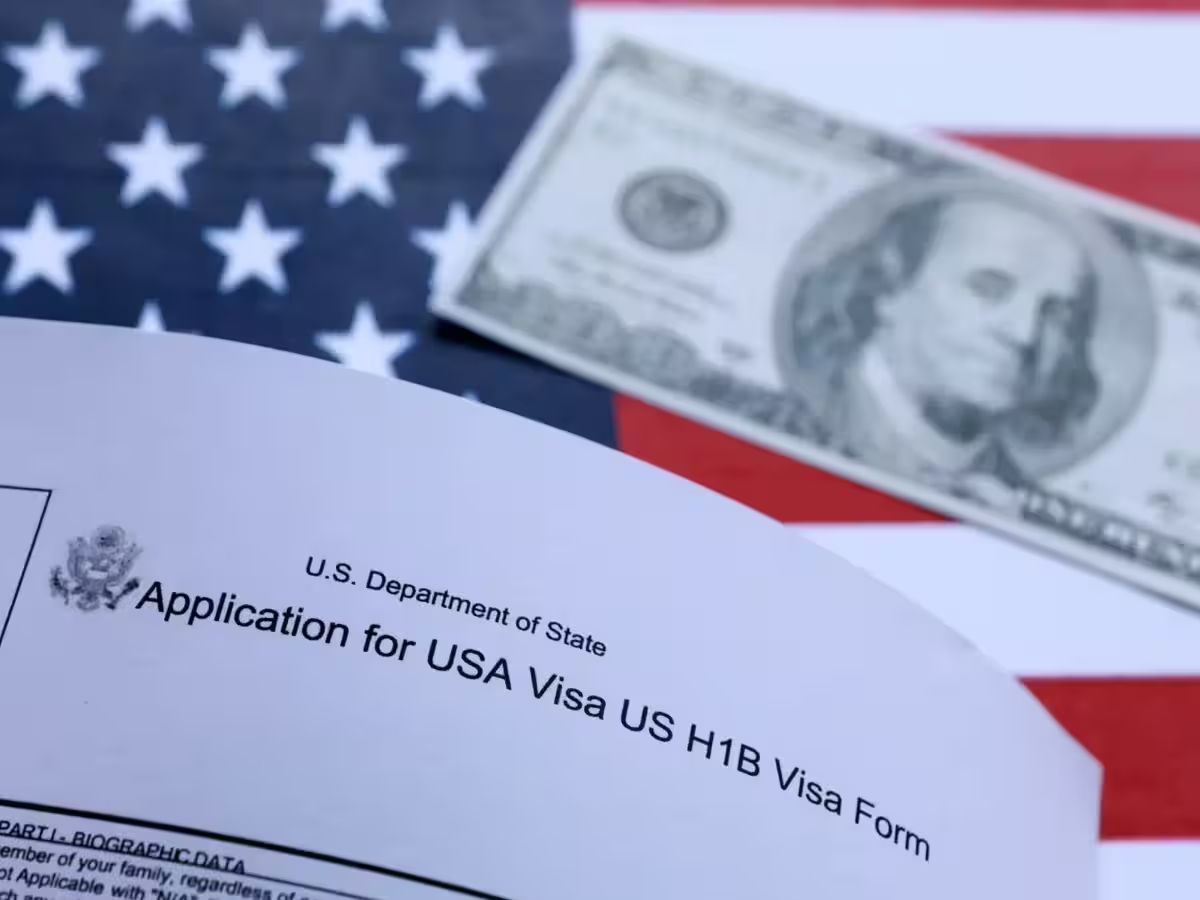
The H-1B visa fee is back on the table, and this time the figure is even higher than before. The Trump administration has proposed charging $103,265 for the skilled-worker visa, only months after a federal court dismantled its earlier attempt to impose a $100,000 charge.
The proposal surfaced Monday in a draft regulation. It is not yet binding, and the path to becoming enforceable is neither short nor certain.
What the Administration Is Proposing
According to the draft rule, the fee would serve two purposes. Officially, it is framed as a way to recoup what it costs the government to administer the immigration system. Beyond that, the administration argues the price tag would push companies toward hiring domestic workers and paying them better.
Nothing takes effect yet. The public now has 30 days to file comments, and the full rulemaking process can stretch across months. Legal challenges, which appear likely given the history here, would extend that timeline further.
How We Got Here
This is the second attempt, not the first.
In September 2025, Trump signed an executive action introducing a $100,000 charge on H-1B applications. The move represented an enormous jump. The prior cost sat at roughly $3,000, meaning the new figure amounted to a more than thirtyfold increase.
That effort did not survive judicial review. In June, U.S. District Judge Leo Sorokin, based in Boston, struck the fee down. His reasoning centered on authority rather than policy merits. Sorokin concluded the president had no power to impose the requirement unilaterally, characterizing the charge as functioning like a tax. Setting taxes and rewriting federal immigration requirements, he found, belongs to Congress.
The current approach differs in method. Rather than acting through executive action alone, the administration is routing the fee through formal rulemaking, complete with a public comment window. Whether that procedural change addresses the core constitutional objection is precisely what opponents will test.
What an H-1B Visa Actually Is
The visa exists for foreign professionals entering roles classified as specialty occupations. Applicants must hold a bachelor’s degree or its equivalent.
The visa runs for three years initially and can be extended for a further three, giving a six-year window in total.
Availability is capped by statute. Federal law permits 65,000 H-1B visas each year, with an additional 20,000 set aside for individuals holding advanced degrees earned at American universities. Demand routinely exceeds supply, which is why the annual allocation is distributed by lottery.
Two Competing Arguments
The disagreement over this program is long-running and does not break neatly along familiar lines.
The case for the program. Economists have generally argued that access to international talent helps American firms stay competitive and expand, and that expansion itself generates domestic employment. On this view, restricting the pipeline does not automatically convert into American hires. It can simply push the work, and sometimes entire teams, offshore.
The case against it. The administration maintains the program is used far more heavily than intended and functions as a substitute for hiring domestically. Vice President JD Vance summarized the position bluntly on social media, arguing that an American corporation needing workers should hire and train Americans.
Who Would Feel a Six-Figure Fee
A charge above $100,000 per application does not affect all employers equally, and that unevenness is central to the criticism.
Large technology companies, financial institutions and major consultancies can absorb the cost, however unwelcome. For them it becomes a line item.
Smaller organizations face a different reality. Startups, university-affiliated research operations, regional healthcare systems and rural hospitals that depend on foreign-trained physicians operate on margins where a six-figure per-hire surcharge is simply prohibitive. Critics argue the practical result would be a program accessible only to the largest and wealthiest employers, which is close to the opposite of what a merit-based system is meant to achieve.
Healthcare in underserved areas draws particular attention. Facilities in rural regions have long relied on the visa to staff positions they struggle to fill locally, and they are rarely in a position to write checks of this size.
What Happens Next
The immediate sequence is procedural. Comments will be collected over the coming month, the agency must respond to substantive objections, and a final rule would follow at some later point.
After that, the more consequential phase begins. Given that a federal judge already invalidated a nearly identical charge on separation-of-powers grounds, any finalized version will almost certainly be challenged. The central question will be whether wrapping the fee in a formal regulation cures the defect Sorokin identified, or whether the objection was never about process at all but about who holds the power to impose a charge of this magnitude in the first place.
For employers planning hiring cycles and for applicants weighing whether an American career remains realistic, the honest answer for now is that nothing is settled. The proposal signals clear intent. It does not yet establish a rule.
Author