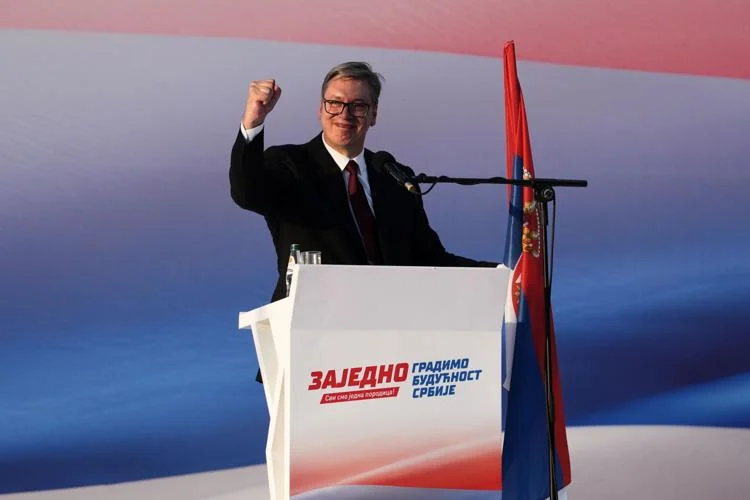
The Vučić resignation Serbia announcement has sent shockwaves through the country’s political landscape, as President Aleksandar Vučić declared he will step down in the coming weeks. The decision, made against a backdrop of persistent anti-corruption protests, sets the stage for early presidential and parliamentary elections.
A Surprise Announcement
Speaking to supporters of the ruling Serbian Progressive Party at a rally in Belgrade on Saturday, Vučić told the crowd that he was living his final days and weeks as the republic’s president, after which he would resign. The announcement is striking given that his second and final mandate was not set to expire until 2027.
Vučić did not provide a specific date for his departure, nor did he indicate when the new elections might take place. Even so, his words signaled a significant shift for a leader who has dominated Serbian politics for more than a decade.
Pressure From the Streets
The president’s decision did not emerge in a vacuum. It came amid a wave of student-led anti-corruption demonstrations that have gripped the country for months. The protesters have been demanding early elections since a devastating tragedy in November 2024, when the roof of a railway station in Novi Sad collapsed, killing 16 people.
That disaster became a rallying point for public anger, and the demonstrations have frequently turned volatile. The protest movement has been marked by:
- Persistent demands for early elections
- Frequent violent clashes between police and demonstrators
- Sustained mobilization led largely by students
The sustained pressure appears to have played a central role in pushing Vučić toward his announcement.
What Comes Next
Despite stepping back from the presidency, Vučić made clear he does not intend to disappear from political life entirely. In an address broadcast live by most of Serbia’s leading television channels, he signaled his willingness to remain involved in the electoral fight ahead. He told supporters that if the party wanted and asked for it, he would work alongside them to help win back the people’s trust in the upcoming elections.
A Long Tenure in Power
Vučić’s departure would mark the end of an era in Serbian politics. He has held power as either president or prime minister for 12 years, making him one of the country’s most enduring and influential figures.
His resignation also arrives at a sensitive moment for Serbia’s international ambitions. The country has been a candidate for European Union membership since 2012, and the coming political transition could have implications for its path forward.
As Serbia braces for early elections, the announcement leaves significant uncertainty about the nation’s direction. With the timing of both the resignation and the elections still unclear, the weeks ahead promise to be a defining period for a country navigating the intersection of public unrest, political change, and its broader European aspirations.
Author