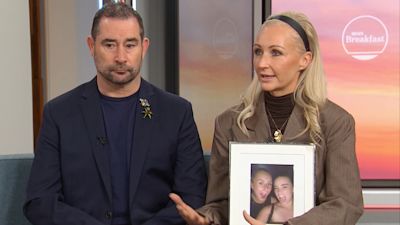
The methanol poisoning Laos case that killed six young travellers in 2024 has reached an official conclusion that satisfies almost no one: authorities say they cannot determine what caused the deaths, or hold anyone responsible for them.
The reason given is stark. No autopsies were performed.
What the Ministry Said
The Laos Ministry of Public Security stated it lacked evidence to establish whether the deaths resulted from any individual’s actions or from any particular cause, because post-mortem examinations were never conducted on the bodies.
In its Saturday statement, the ministry said authorities had not been permitted to carry out autopsies in 2024, leaving them without the forensic evidence needed to determine cause of death.
The ministry did confirm one significant finding: excessive levels of methanol were detected in vodka produced by the distillery involved.
That creates an unusual position. Officials have identified contaminated alcohol from a specific producer, but say they cannot connect it to six deaths.
The Charges That Were Filed
News emerged earlier this week that the distillery owner faces charges — though not for the deaths themselves.
The counts are selling food products harmful to health and operating an illegal business. Together they carry a maximum penalty of one year in prison and a fine of £829, roughly $1,100 or A$1,600.
Six people died. The maximum available punishment is twelve months and a fine smaller than the cost of the trips the victims were taking.
Australia’s Reaction
The Australian government responded with unusually direct language, describing itself as deeply frustrated and bitterly disappointed that more serious charges hadn’t been pursued.
Australia’s foreign ministry summoned Laos’ ambassador in Canberra — a formal diplomatic rebuke rather than a private expression of concern.
Two of the six victims were Australian teenagers.
Who Died
The victims were:
- Simone White, 28, from Britain
- Bianca Jones, 19, from Australia
- Holly Morton-Bowles, 19, from Australia
- Anne-Sofie Orkild Coyman, 20, from Denmark
- Freja Vennervald Sorensen, 21, from Denmark
- James Louis Hutson, 57, from the United States
Five were in their teens or twenties, travelling through Southeast Asia on the backpacker route that runs through Vang Vieng.
The Autopsy Problem
The forensic gap didn’t have to exist.
Australian media reported at the time that the Australian Federal Police offered assistance with the investigation and were turned down.
Timing was critical. Autopsies generally need to be performed within two to three days of death to yield reliable results. The bodies of the two Australians weren’t repatriated until two weeks after they died.
By then, the window for meaningful forensic examination had closed.
That sequence — offered help declined, delay, then a finding that no evidence exists — is the source of most of the frustration now being expressed by foreign governments.
What Investigators Believe Happened
The working understanding is that the victims consumed free shots contaminated with methanol.
Methanol is a toxic substance normally found in products like paint thinner. It’s sometimes illegally added to alcohol as a cost-cutting measure, because it’s cheaper than ethanol and difficult to detect.
It’s colourless and tastes similar to drinkable alcohol. A relatively small quantity can kill.
The mechanism is what makes it so dangerous. Methanol absorbs through the gut within minutes and enters the bloodstream. When the liver attempts to process it, an enzyme converts it into formaldehyde and formic acid — compounds far more toxic than the original substance.
That’s why symptoms often appear well after the drinking has stopped, and why victims may feel fine initially.
The Hostel
Many of the victims were staying at the Nana Backpacker Hostel. Guests failed to check out on 13 November after falling ill.
Earlier this year, 10 people connected to the hostel were charged with destroying evidence. They received suspended sentences and fines of $185 each.
That outcome adds another layer to the frustration. Evidence destruction was prosecuted; the deaths were not.
Symptoms Worth Knowing
Because methanol poisoning is treatable if caught early, recognising it matters. Symptoms typically progress in stages:
- Early signs include vomiting, impaired judgement, loss of balance, and drowsiness
- Between 12 and 48 hours after drinking, symptoms can include abdominal pain, vertigo, hyperventilation, breathlessness, blurred vision or blindness, coma, and convulsions
- Vision problems are the most distinctive warning sign — blurred vision, difficulty tolerating bright light, and in some cases total blindness
- “Snowfield vision,” which resembles static on an old television, and tunnel vision can also occur
The delay between drinking and serious symptoms is the trap. Someone who feels only mildly unwell after a night out may already be in the early phase of a life-threatening poisoning.
Anyone experiencing vision changes after drinking should seek emergency medical care immediately.
Warnings for Travellers
Vang Vieng is a riverside town in central Laos and a well-established stop on the Southeast Asian backpacker circuit.
Last week, the British government launched a campaign warning tourists about methanol risks — a response that came more than a year and a half after the deaths.
The practical advice generally centres on avoiding free or heavily discounted spirits, sticking to sealed bottles opened in view, being cautious with local spirits of unknown origin, and treating unusual taste or after-effects as a reason to seek help rather than sleep it off.
What Remains Unresolved
Three families’ governments have now pushed for accountability that hasn’t materialised.
The core issue isn’t really what the ministry said Saturday. It’s what happened in the days immediately after the deaths — when autopsies could have been performed, foreign assistance was available, and the evidence needed for a serious prosecution still existed.
That evidence no longer does. Which means the official conclusion, however unsatisfying, may also be accurate: without forensic findings, establishing legal causation is genuinely difficult.
For six families, the practical result is the same either way. Their children and relatives died after a night out in a town full of young travellers, and no one will be held responsible for it.
Author