Global Energy Crisis 2026 Deepens as Oil Markets Brush Aside Warning Signs
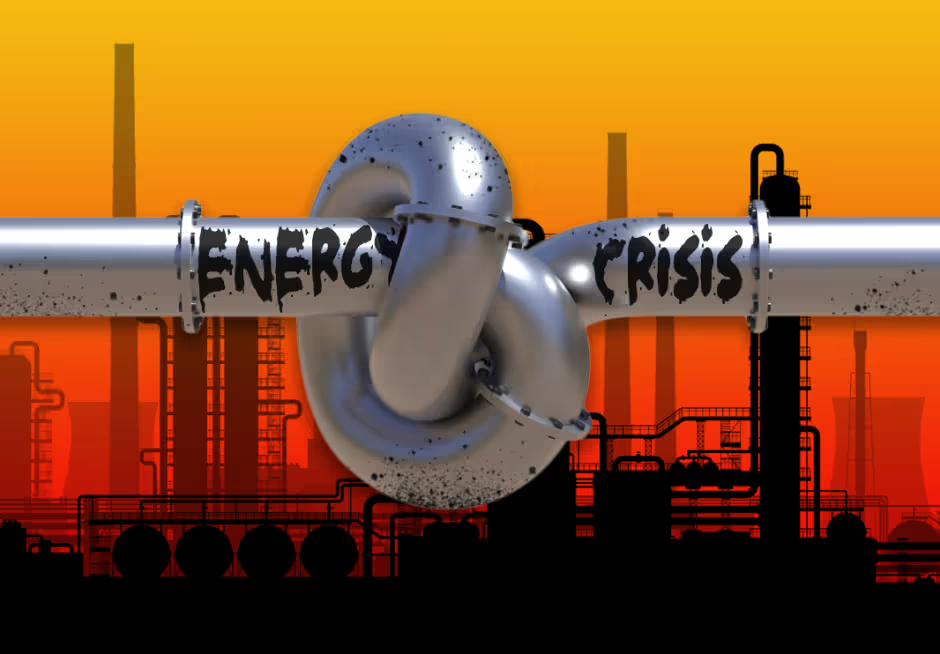
The global energy crisis 2026 is showing no signs of slowing down as oil markets continue to ignore mounting warning signals from every corner of the world. From geopolitical chaos around the Strait of Hormuz to weak economic data in Europe and a tightening of global oil inventories, the energy landscape is being reshaped in dramatic ways. Yet, despite all this pressure, markets remain surprisingly stable, with ICE Brent crude hovering around $105 per barrel.
A Week of Conflicting Signals
This past week, oil traders found themselves navigating a maze of conflicting headlines. The largest ever recorded U.S. inventory drawdown should have triggered a major bullish reaction. Instead, the market barely flinched as rumors of possible negotiations between the United States and Iran captured most of the attention.
Europe, meanwhile, posted its worst macroeconomic numbers since 2023, raising fresh concerns about demand. The International Energy Agency (IEA) also issued a stern warning, predicting that global oil markets could hit a critical “red zone” by July or August. Unless there is a diplomatic breakthrough, Brent crude is unlikely to slip below current levels anytime soon.
OPEC+ Still Aiming Higher
In a bold move, the seven active members of OPEC+ are expected to push forward with another 188,000 barrel-per-day increase to their combined July crude production quotas. This decision comes even though Gulf states have seen their oil output plunge by an enormous 10 million barrels per day since the blockade of the Hormuz Strait began. The group’s continued ambition reflects its hope that supply control will help stabilize prices in the long run.
UK Lifts Restrictions on Russian-Linked Refined Products
In a surprising move, the UK government has decided to suspend its sanctions on diesel and jet fuel refined from Russian crude in third-party countries such as Turkey and India. Officials say the suspension is open-ended and was triggered by the ongoing situation in the Middle East. The decision reflects the difficult balance Western governments are trying to strike between sanctions enforcement and energy security.
Marine Fuel Quality Concerns in Northwest Europe
Buyers in Europe’s main marine fuel hub of Amsterdam-Rotterdam-Antwerp (ARA) are raising alarms about declining bunker fuel quality. Surveyors have detected high sediment levels and the presence of lower-grade blending components, including shale oil. These developments threaten the smooth operation of one of the world’s most important shipping hubs and could push shippers to look elsewhere for cleaner fuel.
Egypt’s Gas Production Hits Historic Low
Egypt is facing a serious energy challenge as its natural gas production has dropped to its lowest level since the country began publishing official data back in 2011. March output was just 3.34 billion cubic meters, or roughly 108 million per day. The decline is worsening domestic gas shortages, especially as imports from Israel via pipeline have dried up.
China Raises Fuel Price Caps Again
To deal with rising crude prices, China’s economic planner NDRC has raised its retail fuel price caps for the second time in three months. The new ceilings are set at $1.33 per liter for gasoline and $1.38 per liter for diesel. These adjustments highlight the strain that elevated global oil prices are placing on major importers like China.
Japan Eyes LNG Project in Hawaii
Japan’s biggest utility firm, JERA, has filed a proposal with the U.S. Federal Energy Regulatory Commission (FERC) to begin a regulatory review of its planned Longboard LNG project in Oahu, Hawaii. The project would feature a floating regasification unit feeding an onshore gas-powered electricity plant, marking a new step in regional energy diversification.
Devon Energy’s Massive Federal Land Bet
In a major boost for U.S. shale, Devon Energy made headlines this week by spending $2.5 billion to acquire 25 drilling parcels in New Mexico and Texas. The auction itself was record-breaking, bringing in over $4 billion in bids for federal lands. Devon’s aggressive moves signal continued confidence in U.S. shale production despite global uncertainty.
Dangote Refinery Targets September IPO
In Africa, Nigeria’s massive 650,000-barrel-per-day Dangote refinery is preparing for an initial public offering in September. According to founder Aliko Dangote, the company has already attracted around $2 billion in offers from private investors. The IPO is expected to be one of the most closely watched in Africa’s energy sector.
Iran and Oman Eye Joint Hormuz Control
Bloomberg reports that Iran is currently in talks with Oman to set up a permanent toll system at the Strait of Hormuz. The proposal would formalize the two nations’ shared control over one of the most critical maritime passages in the world. At its narrowest point, the strait is just 24 miles wide, but it carries an enormous portion of global energy trade.
U.S. Majors Reject Venezuelan Overtures
ConocoPhillips CEO Ryan Lance has openly stated that Venezuela’s renewed attempts to attract Western oil companies are falling short. With a government take expected to reach about 95 percent, Lance argued that the terms are simply unworkable for serious investors. This continues to delay any meaningful return of Western majors to Venezuela’s vast oil fields.
U.S. Government Backs Quantum Innovation
The Trump administration has announced a $2 billion investment in nine quantum computing firms, with $1 billion going to IBM’s new chip manufacturing venture. The move reflects ongoing efforts to maintain U.S. technological leadership and counter China’s expanding influence in the quantum space.
UK Cracks Down on Oil Tax Loopholes
Adding to its already strict oil regulatory framework, the UK government has announced plans to close loopholes that allow oil and gas companies to reduce their UK tax liabilities. The crackdown targets practices where major firms like Shell have routinely reinvested profits to sidestep windfall taxes.
Trust Erodes at Chile’s Codelco
Chile’s state-controlled mining giant Codelco, the world’s largest copper producer, fired an executive after an audit uncovered improper reporting of its 2025 production figures. The findings inflated the finished product tally, raising serious concerns about the credibility of one of the world’s most important mining institutions.
Indonesia Opens 13 New Blocks for Investment
Indonesia is hoping to revive its declining oil output by offering 13 new exploration blocks to investors. The country aims to boost production by 50 percent to one million barrels per day. Most of the new acreage is located in the eastern provinces, regions that remain underdeveloped but show high potential.
U.S. Set for First Antimony Mine
Perpetua Resources has secured a massive $2.9 billion loan from the U.S. Export-Import Bank to develop the Stibnite mine in Idaho. By 2028, it will become the first operational antimony mine on U.S. soil, an important step in securing critical mineral supplies domestically.
Alberta Considers Separation From Canada
Adding political risk to the global energy outlook, Alberta Premier Danielle Smith has announced a referendum in October that will ask voters whether the oil-rich province should remain in Canada or pursue independence. With Alberta producing nearly 85 percent of Canada’s oil, the outcome could have huge implications for North American energy markets.
Final Thoughts
The global energy crisis 2026 is unfolding with increasing complexity as governments, corporations, and consumers all try to make sense of a rapidly shifting landscape. From Hormuz tensions and OPEC+ decisions to Africa’s IPO ambitions and U.S. mining breakthroughs, the energy world is in a state of constant transformation. Despite oil prices appearing steady, the warning signs are stacking up. The coming months may prove to be one of the most defining periods in modern energy history.
Author