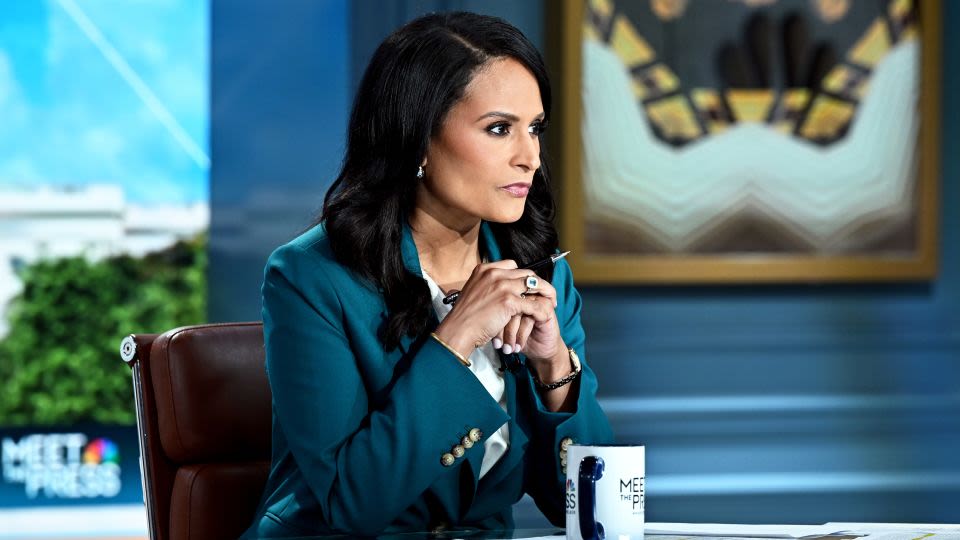
A Trump FCC threat has landed on NBC after Meet the Press host Kristen Welker used a single word on air that the president disputed. Speaking during a live segment for a Washington, DC affiliate ahead of Sunday’s programme, Welker said Trump’s record with the candidates he has endorsed has been “mixed.”
That characterisation prompted a social media post from the president calling for regulatory action against her.
What Welker Actually Said
Her remarks were brief and largely conventional political analysis. She noted that Trump will loom large over the coming midterms and that he has endorsed a slate of primary candidates, adding that the results had been mixed.
She then pointed to a specific win, mentioning his endorsement of appointed interim Senator Darline Graham, sister of her late predecessor Lindsey Graham, who prevailed in her primary contest.
The segment, in other words, contained both a qualifier and a concrete example of success.
The President’s Response
Trump nonetheless responded sharply. In a post, he described Welker as the unpopular hostess of what he called Meet the Fake Press, accused her of purposeful inaccuracy, and said she would be reported to the FCC for rebuke or punishment.
He added that he hoped FCC chair Brendan Carr, whom he appointed, and Carr’s fellow commissioners would treat the matter as a serious threat to the country.
Alongside the Graham example, he cited Oklahoma gubernatorial contender Mike Mazzei’s Republican primary victory as further evidence of his influence.
The Numbers Behind the Dispute
The disagreement centres on interpretation more than fact, since the underlying figures are not seriously contested.
Trump’s endorsement record includes:
- More than 300 endorsements resulting in wins overall
- 214 of 218 endorsed House candidates winning their primaries this cycle
- All 24 endorsed Republican Senate primary candidates winning
- Five losses out of 21 endorsed gubernatorial candidates
That last category is where the word “mixed” finds its footing. Among the gubernatorial losses was Mike Lindell, who finished a distant second in Minnesota to state house speaker Lisa Demuth. The state supreme court effectively sealed his 11-point defeat on Saturday by rejecting his request for a recount.
Trump has framed the losses differently, saying days earlier that his losing candidates had faced impossible races and received his backing out of loyalty. In a 23 August post he insisted his endorsements were stronger than ever and that nothing had ever come close.
A Recurring Point of Sensitivity
This is not the first time the topic has drawn a presidential response. On Friday, HBO Max host Bill Maher apologised to Trump after claiming he was winning almost none of his endorsements. Trump had sent Maher figures making his own case.
NBC News had also published an article on 19 August examining the record, with a headline stating that the endorsement record had taken a hit at the close of primary season.
Meanwhile, on Sunday’s edition of Meet the Press itself, a guest analyst argued that the single most important factor determining the Republican nominee in 2028 will be whom Trump endorses, a assessment that hardly diminishes his standing.
History Between Trump and Welker
The two have clashed before. In June, Trump walked out of an hour-long interview after being pressed on his campaign pledge of no new wars, among other uncomfortable subjects. He launched military action against Iran alongside Israel in late February and denied having guaranteed there would be no wars in a second term.
He ended that interview by calling the network one-sided and crooked, saying he had had enough, and telling the host to straighten out her press, adding that no country can be great with a dishonest press.
NBC responded to Sunday’s post with a short statement calling Welker one of the best in the business and saying the network stands by her.
The Broader Pattern of FCC Pressure
Sunday’s comments fit into a longer sequence of attempts to bring regulatory weight to bear on outlets the administration objects to.
In September 2025, Carr reportedly pressured television station groups to pre-empt Jimmy Kimmel’s programme over a remark the ABC host made following the assassination of conservative influencer Charlie Kirk. Sinclair and Nexstar complied, and ABC pulled the show indefinitely before Kimmel returned a week later.
Trump has also secured private settlements from ABC and CBS totalling more than 30 million dollars during his second term.
Earlier in August, ABC sued the FCC, alleging it was being unlawfully targeted after being required to apply early to renew eight local broadcast licences. Republican complaints about the network include claims that their candidates receive unequal airtime on The View. In its filing, ABC argued the administration had waged a retaliatory campaign through the commission for one reason: disapproval of what the network broadcasts.
NBC holds FCC licences to directly operate 11 local stations, which gives the threat a practical dimension even if its legal footing is questionable.
Can the FCC Actually Do This?
The commission, established in 1934, has no mandate to police editorial judgments or constitutionally protected speech.
CNN media reporter Brian Stelter, who first surfaced the Welker clip on Sunday, wrote that the FCC cannot punish her because its powers are deliberately limited. He added a caveat, however, noting that Carr has proven responsive to Trump previously and that it would be reasonable to expect NBC to face scrutiny next.
That gap between formal authority and informal leverage is the real substance of the story. The commission may lack the legal tools to sanction a broadcaster over a word choice, but licence renewals, inquiries and public pressure can create consequences without a formal ruling ever being issued.
For now, NBC has declined to retreat, and Welker’s original remark remains a fairly ordinary reading of an endorsement record that includes both a long list of wins and a handful of losses.
Author