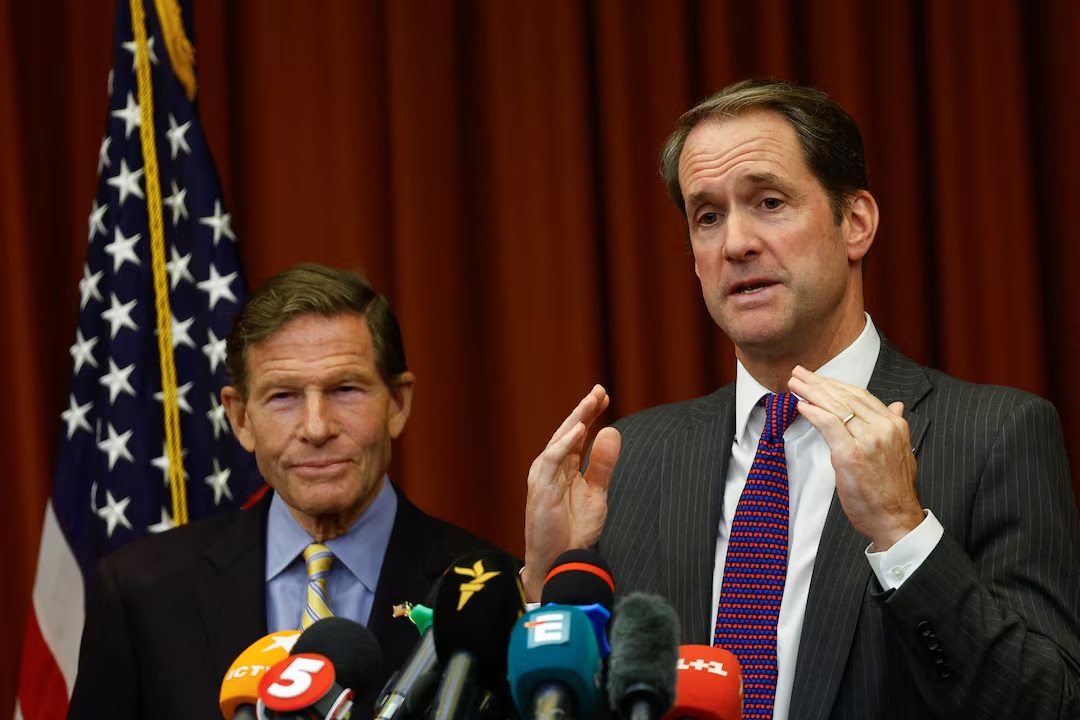
Ukraine air defense has become the central ask from Senator Richard Blumenthal, who argued on Sunday that intercepting incoming Russian missiles and drones matters more right now than any attempt to talk Moscow into restraint.
The Connecticut Democrat made the case during an appearance on CBS News’s Face the Nation, speaking with host Margaret Brennan.
Blumenthal’s Argument
His framing was blunt. He described Vladimir Putin as a mob thug who responds only to force and strength.
From that premise, he questioned the value of diplomatic warnings delivered in person. He pointed to President Biden’s decision to send CIA Director Bill Burns to caution Putin, arguing that attempts to persuade the Russian leader with words were always likely to fall flat. Actions, he said, carry more weight than statements.
He then landed on his main point, saying European partners recognise that what Ukraine needs at this moment is additional air defense capability.
Why Air Defense Specifically
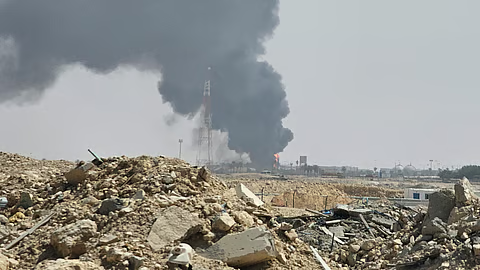
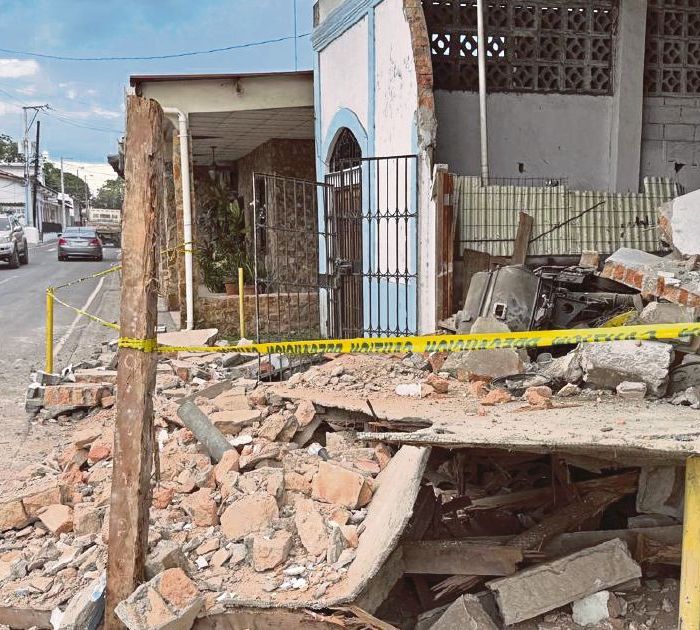
The emphasis is not arbitrary. Russia has been intensifying its aerial campaign against Ukrainian territory, and civilian casualties have been climbing as a result.
Air defense addresses that pressure directly. It does not require Ukrainian forces to take new ground or change the situation on the front line. It simply reduces what gets through.
The practical challenge is supply. Interceptor missiles are expensive, production lines are finite, and every system committed to Ukraine is one not stationed elsewhere. That constraint has shaped the debate in Washington and European capitals for the better part of two years.
The Ratcliffe Trip to Moscow
Blumenthal’s comments arrived in the middle of a separate story that has generated considerable speculation.
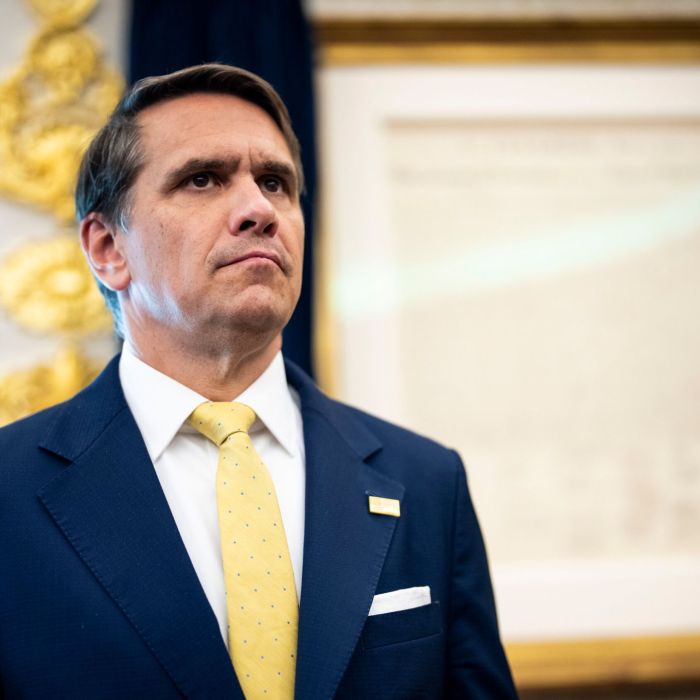
CIA Director John Ratcliffe made an unannounced visit to Moscow. According to multiple reports, the purpose was to caution Russia against any move on NATO member states.
The Wall Street Journal first reported details of the meeting. Its significance is partly historical: the previous visit to Russia by a serving CIA director came in late 2021, when Burns travelled there under Biden to warn Putin against launching a full-scale invasion of Ukraine.
That precedent carries obvious weight. The last time a CIA chief went to Moscow with a warning, the warning was not heeded.
Washington Plays It Down
President Trump described Ratcliffe’s visit as semi-routine when asked about it on Wednesday, language that deliberately lowered the temperature.
Baltic officials took a similar approach, minimising suggestions that an attack was imminent.
A European official told The Hill that the United States had briefed allies on the trip and that its focus was Ukraine rather than a NATO contingency. The same official said there was no immediate military threat to the alliance.
The Longer-Term Assessment
Beneath the reassurances sits a more uncomfortable finding. Earlier Journal reporting indicated that the US intelligence community has assessed Putin might attempt to probe NATO’s cohesion through a limited assault on a member state at some point in the coming years.
That assessment is not a prediction of imminent conflict. It describes a possibility within a multi-year window, which is a very different thing from a warning about next month.
Still, it explains why a trip framed as routine attracted the attention it did.
Two Different Readings of the Same Moment
The episode has produced competing interpretations.
- One view holds that quiet diplomacy at the intelligence level is exactly how serious warnings should be delivered, away from cameras and public posturing
- The opposing view, closer to Blumenthal’s, holds that conversations without material consequences have already been tried and produced nothing
Both readings can point to evidence. Backchannel contact between intelligence services has historically defused misunderstandings between nuclear powers. It also failed conspicuously in 2021.
What This Means for Ukraine
For Kyiv, the immediate concern is less about who visits Moscow and more about what arrives at Ukrainian airbases and launch sites.
The practical questions include:
- How many interceptor systems can realistically be delivered and on what timeline
- Whether European production can scale to reduce dependence on American stockpiles
- How the burden is shared between the United States and its allies
- Whether funding decisions in Washington will keep pace with the rate of Russian strikes
None of those questions were settled by Sunday’s interview, but Blumenthal’s remarks reflect a position with meaningful support among lawmakers who want the emphasis placed on hardware rather than dialogue.
The Wider Picture
What emerges is a policy environment pulling in two directions at once. The administration is signalling calm about NATO’s security while an intelligence assessment quietly flags a longer-term risk. Meanwhile a senator is arguing that the entire premise of persuasion is misplaced.
Those positions are not necessarily contradictory. A government can downplay near-term danger, prepare for a distant one, and face pressure to send more equipment in the meantime.
The unresolved question is whether additional air defense arrives quickly enough to matter for the civilians currently under attack, and whether warnings delivered privately in Moscow land any differently this time than they did four years ago.
Author