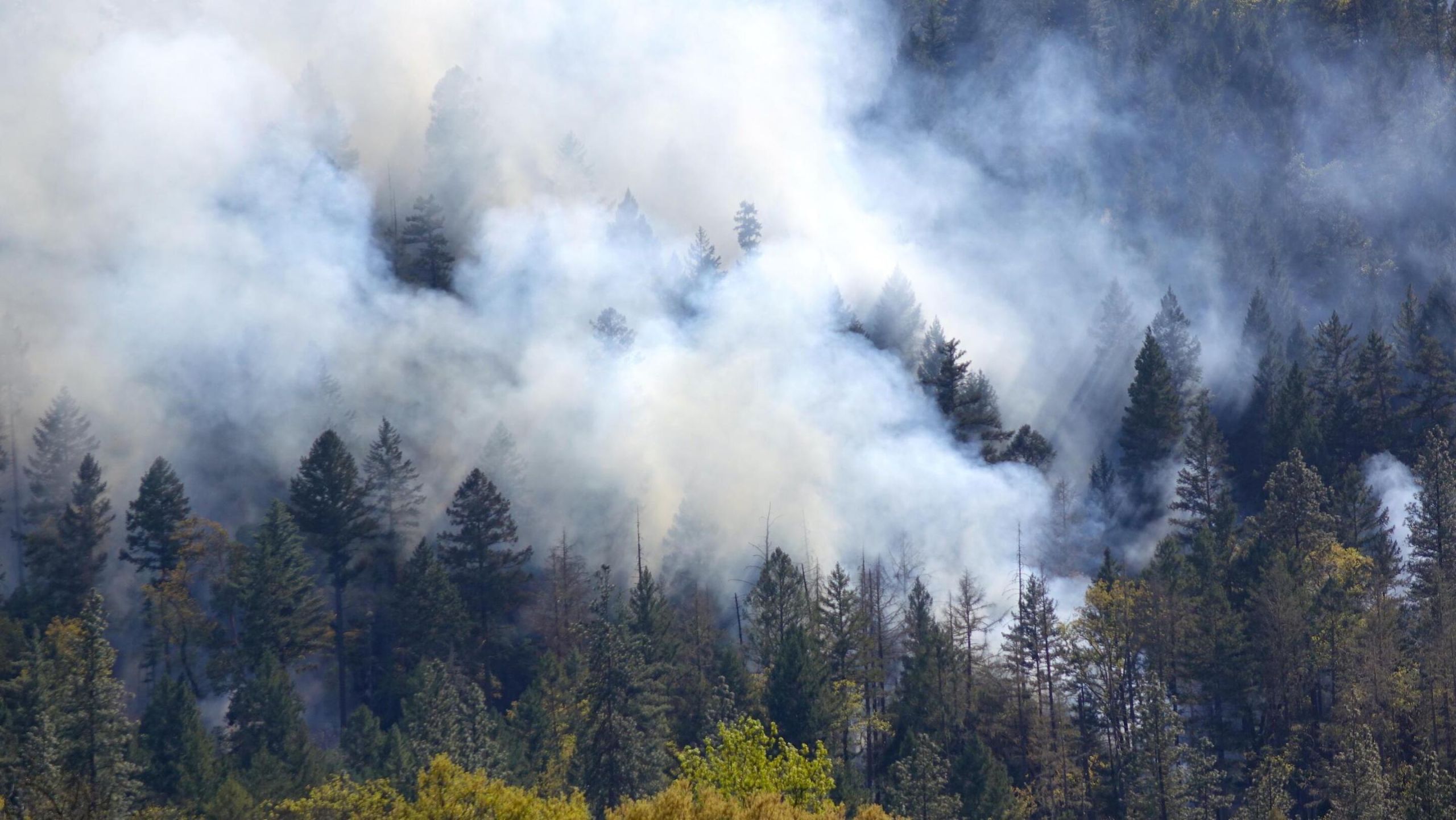
Oregon wildfire smoke has pushed Portland into some of the worst air on the planet this week, with the city ranking among the five most polluted major urban areas in the world on Wednesday. Much of the Willamette Valley has spent days under a thick gray ceiling. The good news, according to National Weather Service forecasts, is that the pattern is about to break.
Improvement is expected to begin Thursday evening.
The Wind Is About to Turn
The mechanism behind the relief is simple. The same wind pattern that created the problem is reversing.
Fire officials working the Grasshopper fire near Mount Hood said Wednesday that the winds carrying smoke from dozens of active wildfires westward into the Portland region are forecast to shift and start pushing east instead. Once that happens, the accumulated haze over the valley has somewhere to go.
For the Portland metro area, forecasters expect air quality to return to the moderate category by 9 p.m. Thursday. Moderate is not clean, but it is a substantial step down from where the region has been sitting.
Further south, the Eugene area should see cleaner air arrive overnight Thursday. That timing means Friday’s morning commute should look and feel noticeably different than the last several days.
Eastern Oregon Waits Longer
The regions that have suffered longest will be the last to get relief.
Eastern Oregon residents have been dealing with heavy smoke for weeks, most recently from the Fox, Big Grass and Tartar fires burning near the Idaho border. According to the National Weather Service, meaningful improvement there is not expected until overnight Friday into Saturday.
Southern Oregon falls somewhere in between, with conditions forecast to improve by Friday.
The Air Is Still Dangerous Right Now
Both the weather service and health officials have been clear that a forecast for improvement does not make the present moment safe.
Current air quality continues to pose genuine health risks statewide. Residents are advised to limit prolonged time outdoors and to take active steps to keep smoke from accumulating inside their homes.
That guidance carries more weight than it might appear. Wildfire smoke is dominated by fine particulate matter small enough to bypass the body’s natural filtration and settle deep in the lungs, where it can enter the bloodstream. The health consequences are not limited to respiratory irritation.
The people at greatest risk include those with asthma or chronic lung conditions, individuals with cardiovascular disease, older adults, pregnant women and young children, whose lungs are still developing and who breathe more air relative to their body size than adults do.
Practical Steps While Waiting It Out
There are a few measures that consistently make a difference during smoke events.
Keep windows and doors closed, even when outdoor temperatures drop overnight and the instinct is to air the house out. Run air conditioning on recirculate rather than pulling in outside air. If you have a portable air purifier with a HEPA filter, use it in whatever room you spend the most time in, ideally where you sleep.
For those without a purifier, a box fan paired with a furnace filter is a widely recommended improvised alternative that meaningfully reduces indoor particulate levels at low cost.
Postpone vigorous outdoor exercise. Physical exertion dramatically increases the volume of air moving through your lungs, which means a run during a smoke event delivers far more particulate exposure than simply being outside.
Standard cloth and surgical masks provide little protection against smoke particles. A properly fitted N95 respirator does.
Cleaner Air, But Higher Fire Risk
The forecast contains a genuine tradeoff, and it is worth understanding rather than glossing over.
The same conditions that clear the sky can make the landscape more dangerous. The National Weather Service office in Pendleton has issued a fire weather watch for north-central and northeast Oregon running from 11 a.m. Friday through 11 p.m. Saturday.
The watch cites a familiar and hazardous combination: breezy winds, low humidity and dry fuels. Each element is a problem on its own. Together they create conditions where a new ignition can escalate from a spark to a running fire in a matter of minutes, and where existing fires can expand rapidly along their flanks.
In other words, the wind shift that gives Portland its sky back is the same wind that could drive fire growth further east.
What That Means Going Forward
Relief in the valley should not be read as the end of Oregon’s fire season. Clearing smoke reflects a change in air movement, not a reduction in the number of fires burning or the dryness of the fuels feeding them.
Through the weekend, the practical situation splits along geography. Western Oregon should see steadily improving air with normal outdoor activity becoming reasonable again by Friday. Eastern and north-central Oregon face a more complicated picture, waiting on their own smoke relief while simultaneously sitting under elevated fire danger.
For anyone in the watch area, the standard precautions apply and matter more than usual. Avoid activities that create sparks, from equipment use on dry grass to parking vehicles over vegetation. Keep informed about local evacuation levels, and have a plan that does not depend on making decisions quickly under pressure.
The sky over Portland will look better by the weekend. Whether the rest of the season follows depends on what happens when those winds pick up Friday.
Author