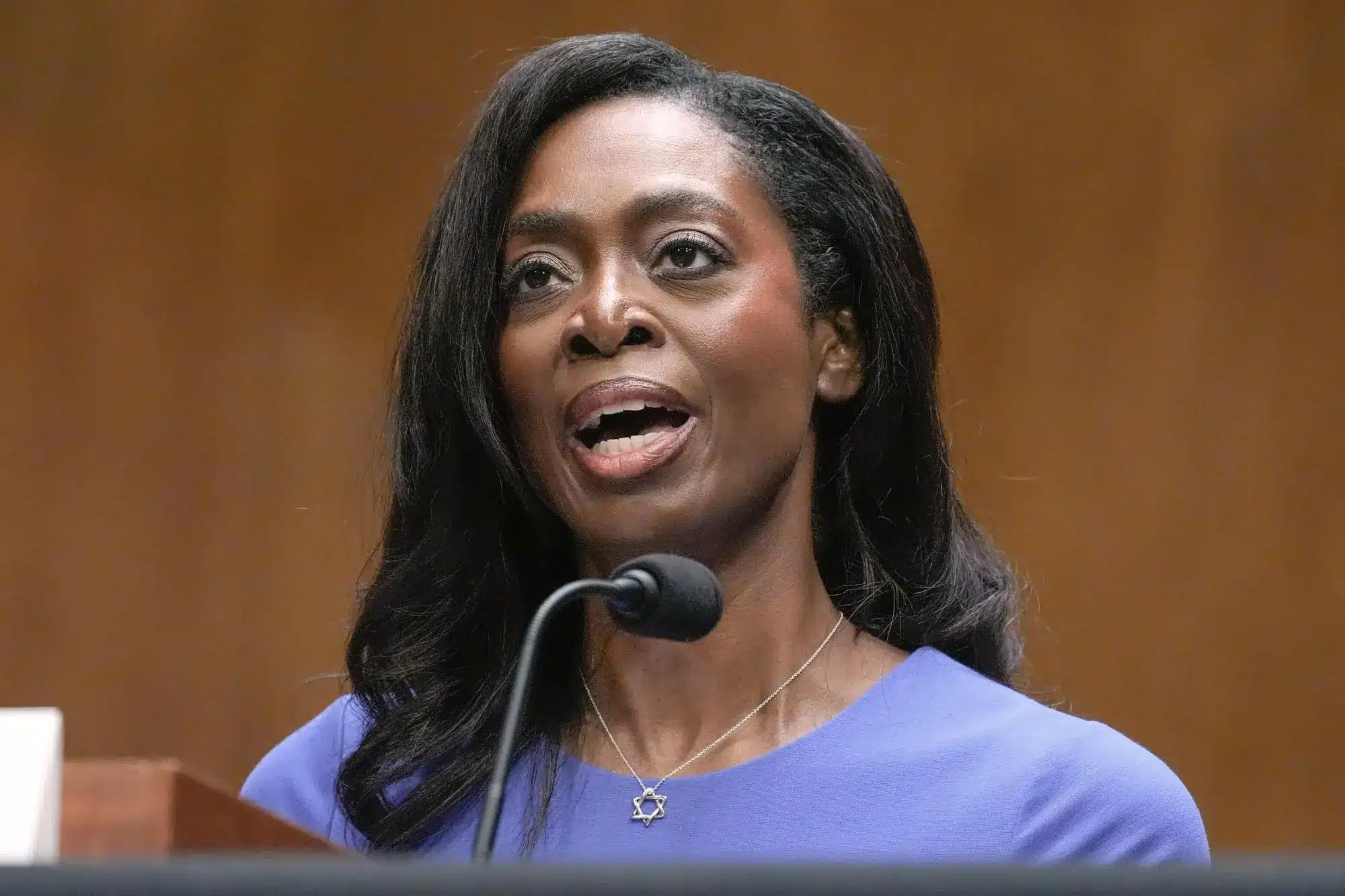
The CDC director post has been without a permanent occupant for roughly a year. That changed Wednesday when the Senate voted 51 to 44, largely along party lines, to confirm Dr. Erica Schwartz to lead the Centers for Disease Control and Prevention.
She succeeds Dr. Jay Bhattacharya, who directs the National Institutes of Health and had been serving as acting head of the CDC since February. President Trump nominated Schwartz in April, calling her incredibly talented.
Who She Is
Schwartz brings a background rooted more in uniformed service than in academic epidemiology.
She earned her medical degree at Brown University and served in the U.S. Navy until 2005. She later joined the U.S. Public Health Service Commissioned Corps, where she served as Chief Medical Officer for the Coast Guard.
From 2019 through early 2021, during the first Trump administration, she held the position of Deputy Surgeon General. That tenure gives her direct experience inside federal public health leadership, including during the earliest phase of the COVID-19 response.
The Confirmation Hearing Got Tense
Schwartz appeared before the Senate HELP Committee last month, and the questioning centered on two themes that have defined the CDC’s recent turbulence: vaccines and independence.
Senator Bernie Sanders, the committee’s ranking member, pressed her on a CDC webpage updated last November. The page asserts that a possible link between vaccines and autism has been dismissed without adequate consideration, despite a substantial body of research finding no such connection.
Sanders asked whether she would remove it. Schwartz said she accepts that overwhelming evidence shows vaccines do not cause autism, but she declined to commit to taking the page down.
Her answer instead pointed to her military background. She described having gone to superiors in the armed forces to hold difficult conversations about issues troubling personnel, and said she would approach Health Secretary Robert F. Kennedy Jr. the same way.
That response satisfied some senators and frustrated others. It was, in effect, a promise to argue internally rather than a promise to act.
Cassidy Came Around
Senator Bill Cassidy, the Louisiana Republican who chairs the committee, was visibly frustrated with Schwartz on several points during the hearing. His position shifted afterward.
Cassidy said he spoke with her again and reviewed the hearing transcript before concluding that she knows what she is doing and will stand against those who do not.
He also noted that the Department of Health and Human Services modified the autism and vaccines webpage, describing the change as a gesture of good faith. That development appears to have resolved at least part of the concern that dominated the hearing.
The Monarez Problem Hangs Over Everything
The most consequential question raised during confirmation had little to do with Schwartz personally. It concerned whether any CDC director can currently operate with genuine independence.
The reference point is Dr. Susan Monarez, confirmed to the same position in July 2025. She lasted less than a month before Kennedy fired her, reportedly because she declined to approve the health secretary’s vaccine agenda and refused to dismiss senior CDC officials he wanted removed.
The fallout was severe enough that both Kennedy and Monarez were called before Senate committees to explain what happened. That episode reshaped how lawmakers evaluate any nominee for the job.
Dr. Richard Besser, who served as acting CDC director during the Obama administration, voiced the concern directly to ABC News. He said he worries Schwartz will not be permitted to do her job and may meet the same end as Monarez, while adding that he is open to being proven wrong and that the country genuinely needs an independent director.
The Immediate Tests
Besser also outlined the specific situations that will reveal whether Schwartz can use the authority of the office.
He pointed to measles vaccination as one benchmark, watching whether she publicly urges Americans to get vaccinated. He raised the Ebola outbreak in Africa, where deaths have surpassed 1,500, as a test of whether she will call for international engagement. And he cited the cyclosporiasis outbreak spreading domestically, which has already produced deaths in Michigan, as a measure of whether she can coordinate an effective national response.
Each of these is a case where the CDC director’s voice matters as much as the agency’s technical work. Public health guidance only functions if the public hears it and trusts the person delivering it.
What Actually Comes Next
The confirmation resolves the vacancy. It does not resolve the underlying tension.
Schwartz enters an agency that has lost significant institutional continuity, operating under a health secretary whose views on vaccines diverge sharply from mainstream scientific consensus, and following a predecessor who was removed for resisting that divergence.
Her stated approach is internal persuasion. Whether that works depends on factors largely outside her control, including how much latitude Kennedy is willing to extend and how quickly disagreements escalate from private conversation to public conflict.
The practical signals to watch will emerge fairly soon. Whether the CDC’s outbreak communications remain frequent and specific. Whether vaccine recommendations issued by agency advisory bodies survive intact. Whether senior career staff stay in place or continue departing.
For now, the CDC has permanent leadership for the first time in a year. What that leadership is permitted to do is the question that will define her tenure.
Author
-
Lucienne Albrecht is Luxe Chronicle’s wealth and lifestyle editor, celebrated for her elegant perspective on finance, legacy, and global luxury culture. With a flair for blending sophistication with insight, she brings a distinctly feminine voice to the world of high society and wealth.