An Anthony Fauci subpoena issued jointly by three state attorneys general has opened a new legal front against the former federal health official, arriving the same week a Senate committee prepares to vote on holding him in contempt.
Florida Attorney General James Uthmeier announced Wednesday that his office, joined by West Virginia Attorney General John McCuskey and Louisiana Attorney General Liz Murrill, is pursuing what he described as an official investigation into awards, professional opportunities, financial incentives, grants and pandemic guidance that affected Florida businesses and consumers.
The Legal Theory Behind the Subpoena
The states are not attempting to relitigate whether Fauci’s public health advice was correct. They are pursuing a narrower and more specific claim.
Uthmeier framed it in terms of immunity and its limits. Government officials enjoy a degree of protection when acting in their official capacities, he said, but if Fauci personally profited from the guidance he issued, that conduct could fall outside those protections and potentially violate Florida law.
That distinction matters legally. Official-capacity decisions are generally shielded. Personal financial benefit derived from those decisions is a different category of allegation, and it is the one the subpoena is built around.
What Sparked the Investigation
The catalyst was the release of Fauci’s journal entries by Senator Rand Paul of Kentucky. The entries constitute a near-daily record of the pandemic as it unfolded across both the Trump and Biden administrations.
Uthmeier’s reading of those journals is unsparing. He argued they show more preoccupation with self-promotion than with safety questions surrounding mRNA vaccines, and claimed that while Fauci pursued book deals, awards and public recognition, Floridians were being deceived and harmed by misrepresentations.
He said the entries document substantial awards, including grants, book contracts and board positions, that he contends were connected to recommendations Fauci made as director of the National Institute of Allergy and Infectious Diseases.
One detail is central to the states’ access argument: the journals were written while Fauci was a federal employee and were composed on government-owned devices.
Fauci has consistently denied any wrongdoing in connection with his pandemic role. His attorney, David Schertler, did not immediately respond to a request for comment.
What the Subpoena Demands
The document requests records covering the period from January 3, 2020 through the present, with a compliance deadline of August 31.
The categories are broad. They include grants, awards and book deals Fauci received or was considered for, along with his interactions with Florida businesses, media organizations and communities regarding Covid recommendations.
The subpoena also seeks material on scientific and communications questions that have remained contested. That includes documents concerning vaccine efficacy and booster policy, natural immunity, potential adverse events such as myocarditis risk, messaging strategy, and communications with vaccine manufacturers.
That final category signals the investigation extends beyond financial records into how public health messaging was constructed and who influenced it.
The Fifth Amendment Fight
The state action arrives alongside an escalating confrontation in Washington.
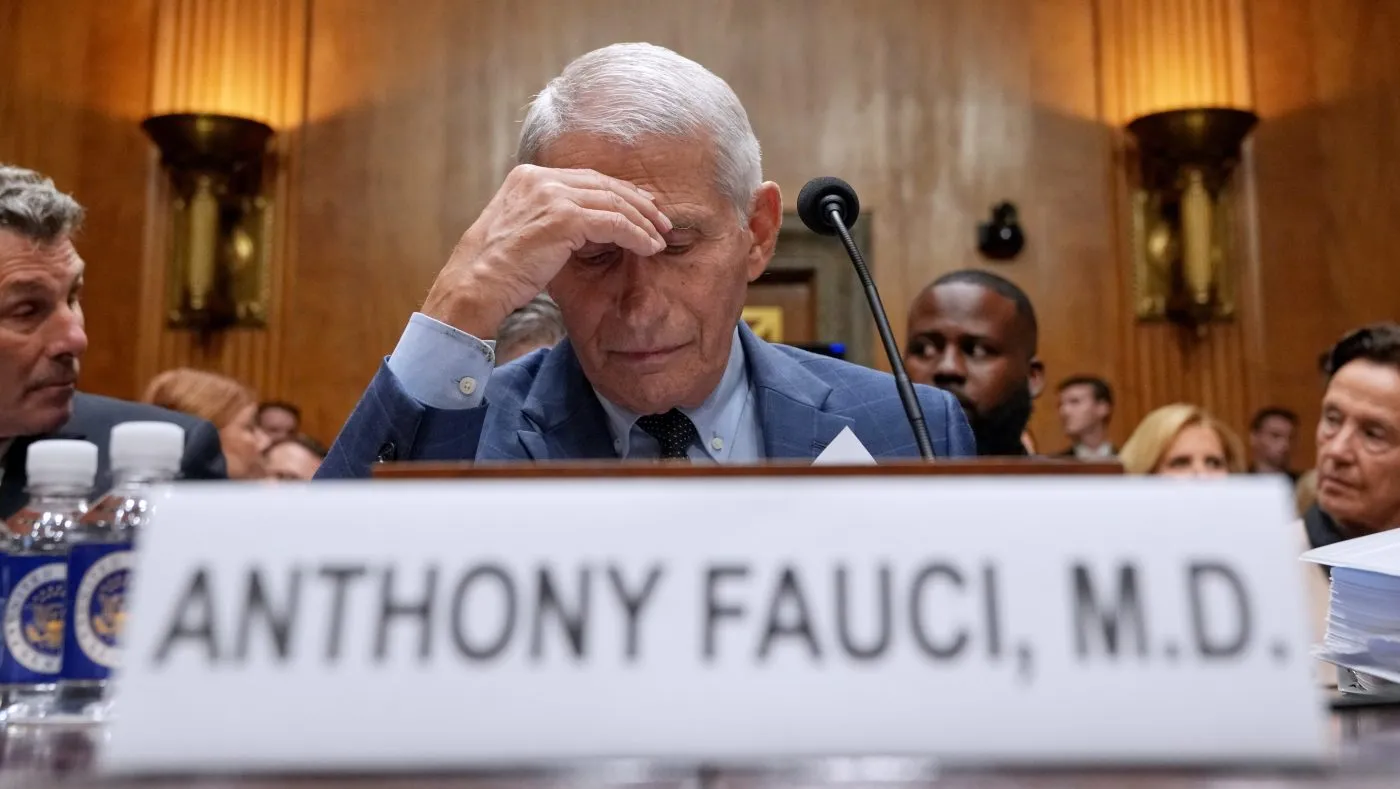
At a contentious hearing last week before the Senate Homeland Security and Governmental Affairs Committee, Fauci invoked his Fifth Amendment right rather than answer Republican questions about the pandemic response.
He explained the decision in his opening statement, attributing it to Paul’s sustained attacks and what he characterized as an obvious obsession with calling for his prosecution.
McCuskey described that refusal as concerning, saying Americans deserve to know whether they or their elected representatives were misled or manipulated, and pledging support for the Florida-led effort.
The Contempt Vote
The committee is scheduled to vote Thursday morning on a resolution holding Fauci in contempt. Passage requires only a simple majority in a Republican-led committee, making approval likely.
Paul, who chairs the panel, has said he will forward the resolution to the Justice Department immediately upon passage. From there, the department decides whether to pursue anything. A committee recommendation carries no compulsory force on its own.
The resolution advances two arguments against the Fifth Amendment claim. First, it asserts that Paul determined the privilege did not apply to questions covering the period addressed by Fauci’s pardon, and directed him to answer accordingly. Second, it contends Fauci waived the privilege by addressing subject matter relevant to the inquiry in his own opening testimony.
Both arguments are contestable, and both would likely be tested in court if prosecutors ever acted.
The Pardon Complication
Sitting underneath all of this is the preemptive pardon President Joe Biden issued for Fauci shortly before leaving office in January 2025.
A federal pardon significantly constrains federal criminal exposure, which is part of why the congressional referral faces uncertain prospects. It also helps explain the timing and structure of the state-level action.
State attorneys general operate under state law. A federal pardon does not extend to state offenses, which means the Florida-led investigation occupies legal territory the pardon does not reach. Whether the specific conduct alleged actually violates Florida consumer protection or self-dealing statutes is a separate question, and one the states will have to answer with evidence.
Two Tracks, One Target
What is happening now is essentially a coordinated squeeze from two directions.
The congressional track pursues accountability through contempt proceedings and public hearings, with limited enforcement power and a pardon standing in the way. The state track pursues documents through investigative subpoenas, unconstrained by the pardon but limited by the reach of state law.
Fauci’s options are correspondingly narrow. Complying with the state subpoena while maintaining a Fifth Amendment position before Congress creates obvious tension. Resisting the subpoena invites a court fight over whether states can compel a former federal official to produce records tied to his federal service.
The August 31 deadline gives that question a hard date.
Author
-
Lucienne Albrecht is Luxe Chronicle’s wealth and lifestyle editor, celebrated for her elegant perspective on finance, legacy, and global luxury culture. With a flair for blending sophistication with insight, she brings a distinctly feminine voice to the world of high society and wealth.