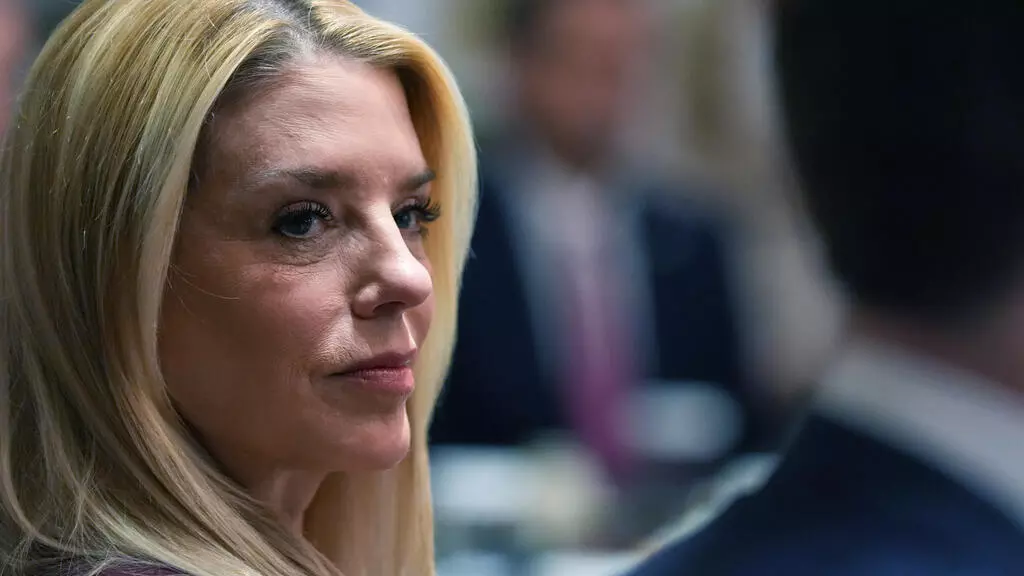
The Pam Bondi Epstein files testimony took an unexpected turn on Friday, as the former attorney general distanced herself from one of the most politically charged investigations in recent memory. Speaking behind closed doors to the House Oversight Committee, Bondi argued that she held little genuine control over how the Jeffrey Epstein documents were handled, pointing instead toward her former deputy and eventual successor, Todd Blanche.
A Striking Admission of Powerlessness
Bondi, who was dismissed as attorney general by President Trump in April, painted a picture of herself as a figure with limited authority despite holding one of the most senior positions in the federal government. According to those present, she described Blanche as the person running the entire investigation and making the key calls about which files would ultimately see the light of day.
This was a noticeably softer posture than the one she had taken in earlier appearances on Capitol Hill. In the past, Bondi had often gone on the offensive, launching loud attacks on Democrats who challenged her record or questioned her authority. On Friday, that combative energy gave way to a series of careful deflections.
Representative Robert Garcia of California, the committee’s top Democrat, recounted afterward that Bondi repeatedly steered questions toward Blanche. She also pointed lawmakers in the direction of Kash Patel, the FBI director, whenever the discussion grew uncomfortable.
Insiders Push Back on Her Account
Not everyone accepts Bondi’s version of events. Current and former Justice Department officials, speaking anonymously to discuss private matters, strongly disputed the idea that she was a passive bystander.
According to these officials, Bondi was kept informed of every significant development in the Epstein case. More than that, they said she personally approved every major decision. One particularly telling example was a memo she issued in July 2025 that officially closed out the government’s review of the files.
That same memo would later become a flashpoint. It is now widely regarded as a serious misstep, one that fueled accusations of a cover-up and political backlash, and ultimately helped pave the way for the Justice Department to release the files in full.
Deflecting the Tough Questions
Throughout the session, Bondi repeatedly claimed she lacked knowledge of crucial details. When lawmakers pressed her on anything involving President Trump, she flatly declined to respond. Instead, she urged committee members to direct their questions to Blanche.
Among the issues she sidestepped:
- The drafting and release of the controversial July 2025 memo, which she claimed she played no part in.
- The reasoning behind ending the document review, which she said only Blanche and Patel could explain.
- The transfer of Ghislaine Maxwell, Epstein’s imprisoned associate, to a more comfortable federal facility. Bondi insisted she only learned of it through news reports.
The Maxwell detail proved especially notable, given that the transfer reportedly followed an interview Maxwell had with Blanche during his time as deputy attorney general.
Later, in a social media post, Bondi praised Blanche for taking on what she called a Herculean task. She described him as an incredible attorney general and denied that any tension existed between the two of them.
A Carefully Managed Setting
The format of Friday’s session was no accident. Rather than a sworn deposition or a formal hearing carrying real legal weight, Bondi and committee Republicans agreed to a voluntary interview. This arrangement lowered the stakes considerably.
The timing reinforced that impression. The interview was scheduled early on a Friday during a holiday week, when most members of Congress were away. Nearly all of the committee’s Republicans skipped the session entirely.
The lone Republican exception was the committee’s chairman, Representative James Comer of Kentucky, who appeared obligated to attend. He offered Bondi a brief, courteous welcome, telling reporters he appreciated her returning for a second appearance.
Most committee Democrats, by contrast, showed up eager to question her, leaving Bondi without much support from her own party.
Survivors Weigh In
Bondi’s earlier exit from the Justice Department had been accelerated by a troubled February appearance, during which she traded insults, refused to engage, and avoided eye contact with several Epstein survivors seated in the audience.
On Friday, some of those same women returned, gathering outside the closed-door room. Their message was twofold: criticism of Bondi, but also a reminder that accountability should not stop with her.
One survivor, Danielle Bensky, cautioned against treating Bondi as a convenient scapegoat. In her view, Blanche posed an even greater danger than Bondi in several respects.
How She Ended Up Testifying
The fact that Bondi appeared at all reflected deep frustration within her own party over how the Justice Department had handled the Epstein matter. What began as a fringe conspiracy theory had grown into a full-blown crisis touching the Trump presidency.
In mid-March, Representative Nancy Mace of South Carolina and four fellow Republicans broke from party leadership, joining Democrats to subpoena Bondi for sworn, closed-door testimony. Comer set a deposition for April 14.
Behind the scenes, Bondi and Comer worked quietly to avoid that outcome. She made a brief Capitol appearance in March for a member briefing, but Democrats dismissed it as inadequate and walked out. Following her firing in early April, weeks of negotiation produced the lower-stakes interview format that critics say was designed to shield her from answering under oath in the spotlight.
Democrats also raised eyebrows over the presence of Harmeet Dhillon, the assistant attorney general for civil rights, who sat beside Bondi and frequently advised her against answering. While Democrats viewed Dhillon as an enforcer guarding against damaging admissions, Dhillon maintained she was simply acting as Bondi’s private attorney.
Author