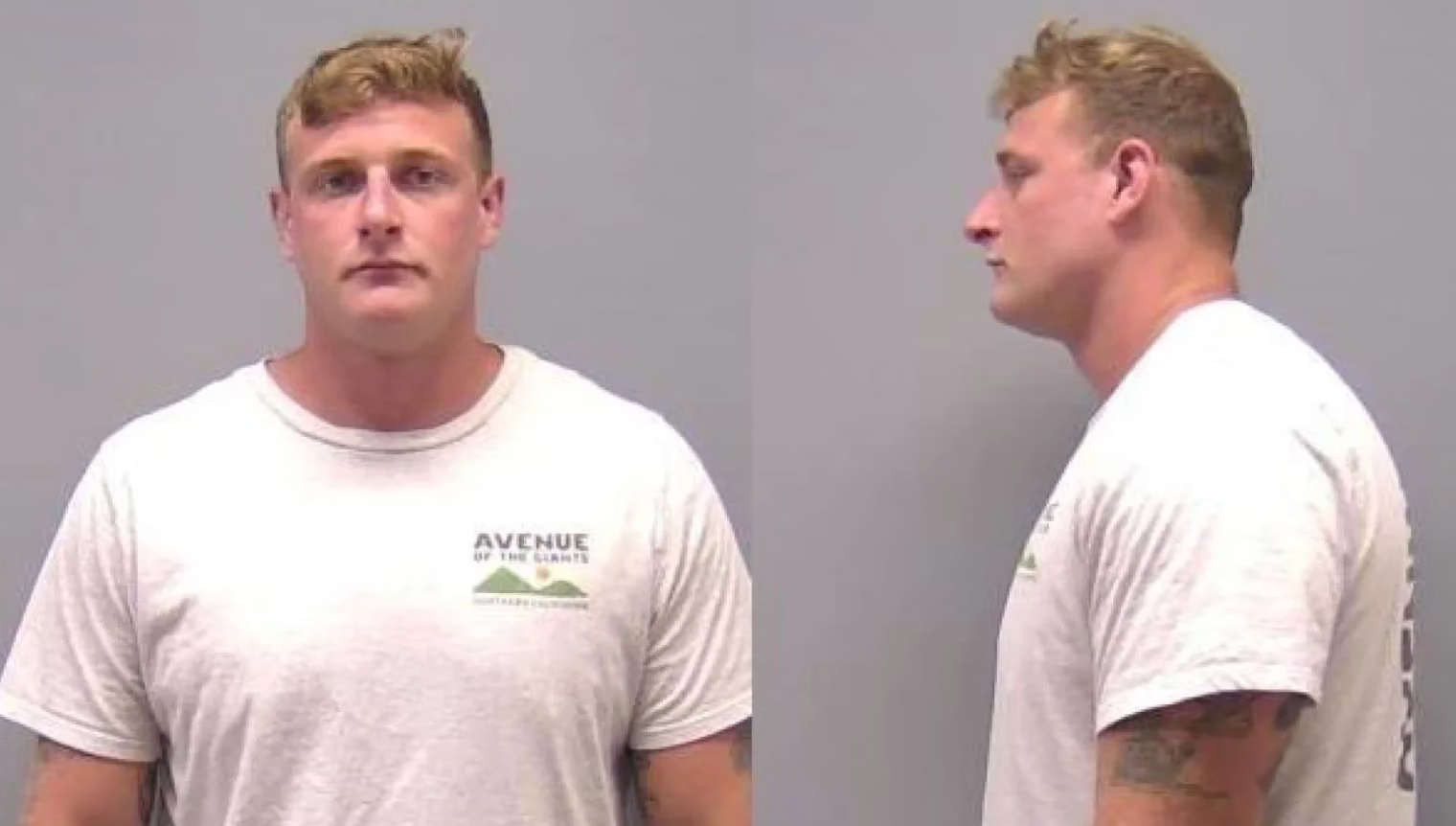
Sean Grayson death prison news broke Sunday when the former Sangamon County Sheriff’s deputy convicted of murdering Sonya Massey died while serving his sentence, according to his attorney.
Daniel L. Fultz, who represented Grayson, confirmed that his client had passed away Sunday. Grayson, 32, had been battling Stage 4 colon cancer and was undergoing treatment for the disease at the time of his death.
The Conviction That Preceded His Death
A jury found Grayson guilty last October of second-degree murder in connection with the fatal shooting of Massey. He was serving a 20-year sentence within the Illinois Department of Corrections, with an additional two years of mandatory supervised release to follow upon completion.
Just last month, the Illinois Prisoner Review Board denied Grayson’s request for medical release, ordering him to remain incarcerated despite his application citing the advanced stage of his cancer. That decision meant Grayson died in state custody rather than at home or in a hospital setting outside the prison system.
CBS News Chicago reached out to the Department of Corrections for comment but had not received a response as of the latest update.
The Family’s Response
Attorneys Ben Crump and Antonio Romanucci, who represent Massey’s family, issued a statement addressing Grayson’s death.
They acknowledged that his death from cancer while in custody does not undo the loss of Sonya Massey. The statement extended condolences to Grayson’s family, noting that Massey’s own family understands grief intimately and will carry the loss of Sonya for the rest of their lives.
The tone reflected a difficult balance many families face in these situations: acknowledging another family’s grief without equating it to their own loss or suggesting any resolution has been reached.
What Happened the Night Massey Died
The shooting occurred in July 2024, when 36-year-old Sonya Massey called police to report a possible prowler near her home.
Grayson responded alongside another officer and spoke with Massey at her residence. According to Grayson’s account, Massey began behaving erratically while inside the home, at one point saying she rebuked him “in the name of Jesus” as she walked toward a pot of water on her stove.
What the Bodycam Footage Showed
Body camera video from Grayson’s partner captured the shooting itself. Notably, Grayson’s own camera was not activated for most of the encounter, only turning on shortly after he drew his weapon, leaving a gap in the recorded record of how the situation escalated.
In the footage that does exist, Grayson can be heard threatening Massey in vulgar and explicit terms as she held the pot of water, warning her not to approach and threatening to shoot her. He then raised his weapon and ordered her to drop the pot.
According to prosecutors, Massey apologized and ducked for cover in response to his commands. Grayson fired three shots, one of which killed her.
A Partner’s Conflicting Account
Testimony from Grayson’s former partner, Dawson Farley, became a pivotal element of the trial.
Farley told jurors he was not afraid of Massey during the encounter. Instead, he said his fear centered on Grayson’s behavior. While Farley acknowledged confusion after Massey’s religious remark, he testified that he never interpreted her words as a threat.
He added that he only drew his own weapon because Grayson had drawn his first, a detail that undercut arguments framing the shooting as a response to genuine danger from Massey.
Why This Case Drew National Attention
The shooting became one of several high-profile police killings in recent years that sparked scrutiny over use-of-force decisions, bodycam policy compliance, and departmental accountability.
The gap in Grayson’s body camera activation, combined with a partner’s testimony contradicting any claim of imminent threat, formed much of the foundation for the prosecution’s case and contributed to public outrage following the shooting’s initial reporting.
What Happens Now
With Grayson’s death, the criminal case against him is effectively closed, as there is no defendant remaining to serve the balance of his sentence or pursue further appeals.
Any separate civil litigation involving Massey’s family, if pending, would generally proceed independently of the criminal case’s outcome, since civil claims exist as a distinct legal track from criminal prosecution.
For Massey’s family, Grayson’s death closes one chapter of a case that fundamentally cannot be resolved by any legal outcome. The statement from their attorneys made clear that his death, whatever its circumstances, does not restore what was lost, and that their grief will continue regardless of what happens to those responsible.
Author