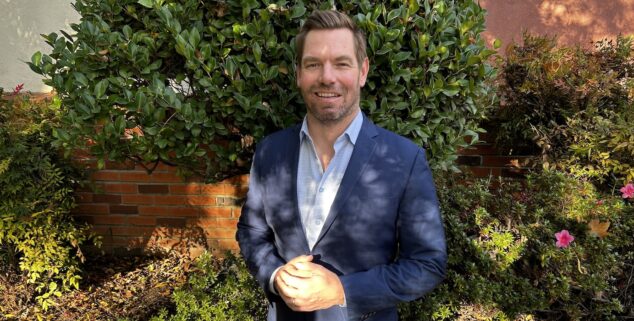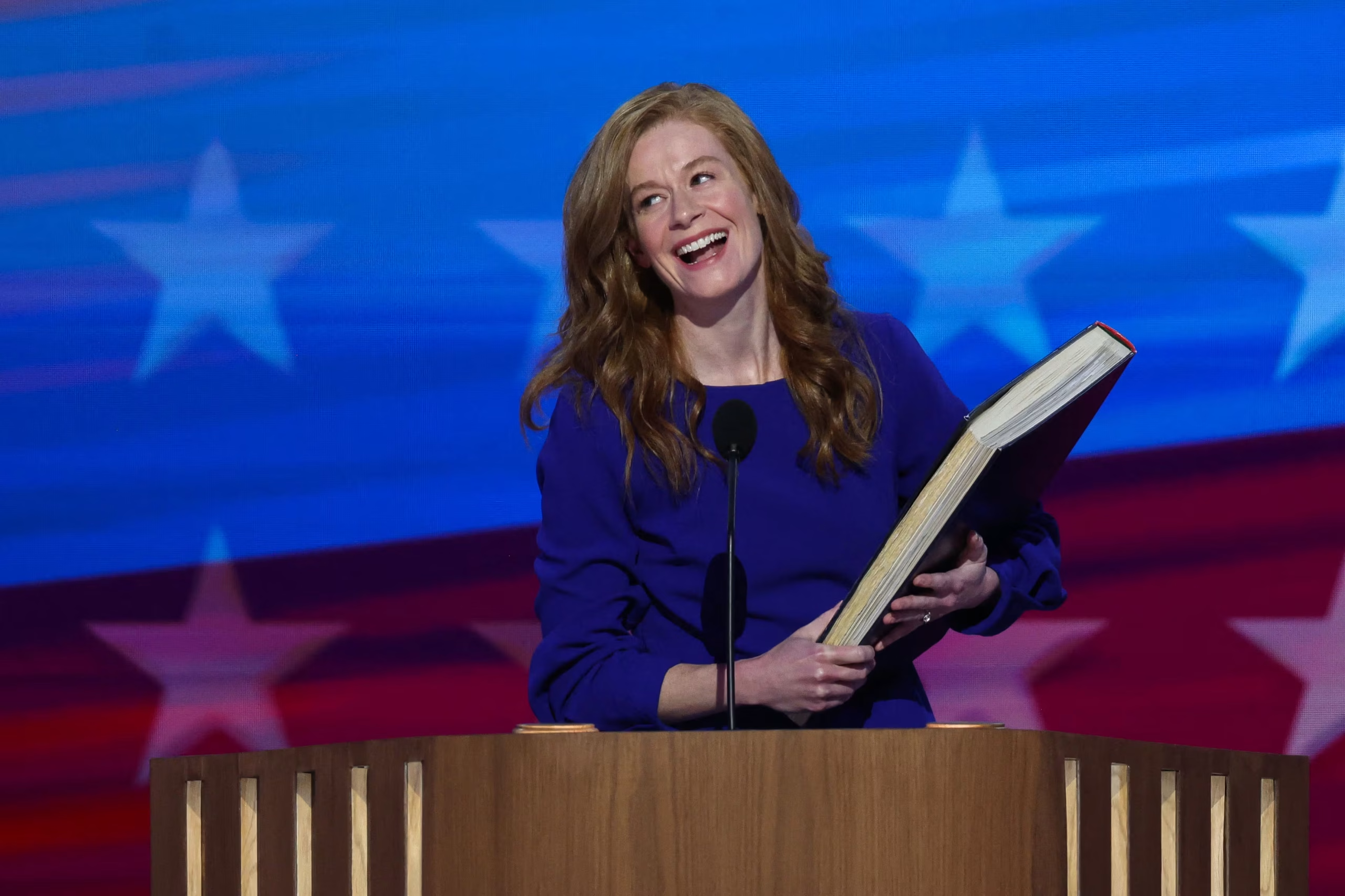
The Michigan Democratic Senate primary fact check below covers a contest that has produced an unusual volume of contested claims from both campaigns. Voters go to the polls August 4 to choose between Abdul El-Sayed, a former public health official, and Representative Haley Stevens, in a race that has become a proxy war over the Democratic Party’s direction.
The Stakes
Michigan matters arithmetically. Democrats hoping to take the Senate essentially cannot afford to lose this seat, which makes the primary outcome consequential well beyond the state.
The candidates represent distinct wings:
- El-Sayed runs as an outsider, backed by Senator Bernie Sanders and Representative Alexandria Ocasio-Cortez. He identifies as a progressive and has said he is not a socialist.
- Stevens occupies center-left ground, with support from retiring Senator Gary Peters, Minority Leader Chuck Schumer and Governor Gretchen Whitmer.
Their sharpest divide concerns U.S. policy toward Israel, a position that has shifted within the Democratic base. In July, close to half of House Democrats voted to end military aid, though Republican opposition sank the measure.
Turnout has already been substantial. More than a million Michigan voters cast ballots ahead of primary day, largely by mail.
The winner is expected to face former Representative Mike Rogers, who lost his 2024 Senate bid to Elissa Slotkin.
Claim: A July Poll Was Funded by AIPAC
El-Sayed suggested a survey showing Stevens slightly ahead appeared to be paid for by AIPAC.
Tavern Research, the Democratic firm behind it, said it financed and conducted the poll on its own. No public filings or reporting link AIPAC to the survey, and El-Sayed’s campaign offered nothing to substantiate the claim.
Rating: False
The frustration behind the accusation is not imaginary. AIPAC and affiliated organizations have spent close to $30 million supporting Stevens and attacking El-Sayed, which the Associated Press reported is the group’s largest investment in any single race. El-Sayed has described the Gaza war as genocide and called for cutting off military aid. Stevens supports Israel’s right to exist and a two-state solution while criticizing Prime Minister Benjamin Netanyahu.
Claim: Stevens Took No Utility Money
Asked whether she had accepted contributions from two major Michigan utilities for her Senate run, Stevens said no.
The record complicates that. In March 2025, her House campaign committee received money from corporate PACs tied to DTE Energy and Consumers Energy. She launched her Senate campaign a month later and transferred those funds over during 2025.
Rating: Mostly False
Claim: Rogers Took a $14 Million Pharma Lobbying Payout
El-Sayed accused the likely Republican nominee of collecting $14 million as a pharmaceutical lobbyist.
Neither federal nor Michigan records show Rogers registered as a lobbyist for any company. No evidence indicates he worked in pharmaceuticals after Congress.
He did consulting work for technology firms. His net worth may have grown by more than $14 million since leaving office, but no identifiable payment or set of payments corresponds to that figure. El-Sayed supplied no supporting evidence.
Rating: Pants on Fire
Claim: El-Sayed’s Father-in-Law Runs His Super PAC
Stevens said a super PAC operated by El-Sayed’s father-in-law has spent millions on his behalf.
Jukaku Tayeb, a Michigan nephrologist and El-Sayed’s father-in-law, is indeed a major contributor to Fighting for Michigan PAC, which formed to support the campaign. Through June he had given $300,000, tying him as its largest donor.
The organization, however, says political strategists run it, not Tayeb. Donating heavily and running an operation are different things.
Claim: AI Super PACs Are Funding Stevens
El-Sayed asserted that large artificial intelligence super PACs are backing his opponent.
Two significant AI industry super PACs are active in the 2026 midterms, Leading the Future and Public Action First. Neither has spent in the Michigan Senate race, and June FEC filings alongside multiple tracking sites show no major AI-aligned super PAC spending in these primaries.
Stevens has received corporate PAC contributions from Microsoft and Google totaling $7,500. That is a categorically different mechanism. Corporate PACs are funded voluntarily by a restricted group of executives, administrators, stockholders and their families, and they may give directly to campaigns up to $5,000 per primary.
Claim: El-Sayed Urged Democrats to Vote Uncommitted Against Whitmer’s Warning
United Democracy Project, a pro-Stevens PAC, said El-Sayed told Democrats to vote uncommitted in 2024 even after Whitmer cautioned it would help elect Trump.
The sequence is accurate as far as it goes. El-Sayed posted on Facebook that he was voting uncommitted in Michigan’s February 2024 primary to protest the Biden administration’s approach to the Gaza war, after Whitmer had issued her warning.
What the ad leaves out matters. Once Biden withdrew in July, El-Sayed endorsed Vice President Kamala Harris for both the nomination and the presidency.
Rating: Half True
Claim: Republicans Are Boosting El-Sayed
Stevens argued the GOP is spending to prop up her opponent because they consider him easier for Rogers to beat.
The National Republican Senatorial Committee ran an anti-El-Sayed ad beginning June 25, highlighting his positions on abolishing ICE and Medicare for All. The spending amount is unclear.
Jessica Taylor of the Cook Political Report told PolitiFact the ad resembles a conventional general election attack, but its timing during the primary reveals the strategy. Republicans would rather face El-Sayed than Stevens.
There is a secondary benefit either way. Even if their preferred opponent loses, early ads let the party begin defining the eventual nominee well ahead of November.
Author
-
Lucienne Albrecht is Luxe Chronicle’s wealth and lifestyle editor, celebrated for her elegant perspective on finance, legacy, and global luxury culture. With a flair for blending sophistication with insight, she brings a distinctly feminine voice to the world of high society and wealth.