Suspect in Custody After Predawn Portland Shooting That Ended With a Car Crashing Into a Building
A Portland shooting arrest early Saturday morning brought a close to nearly five days of investigation into a killing that unfolded in the dark hours of Tuesday on South Macadam Avenue.
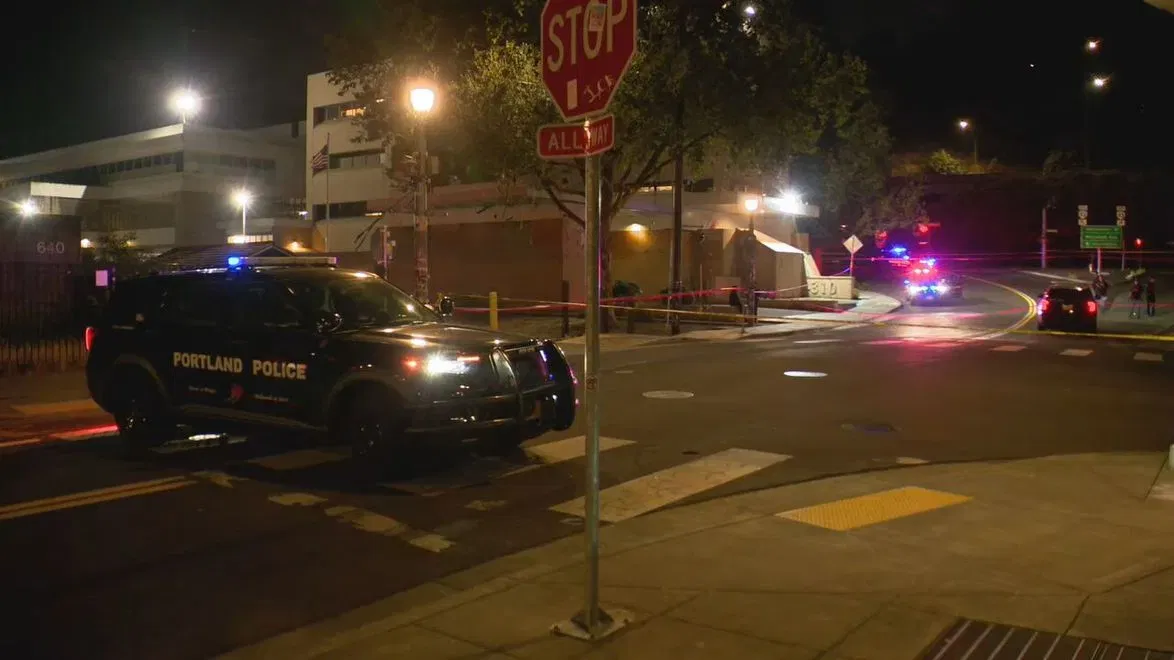
Police took a 42-year-old man into custody in connection with the death of a driver who was shot multiple times, then rolled downhill in his vehicle and struck a building directly across from the Portland ICE facility.
What Officers Found That Morning
The sequence began just after 4 a.m. on Tuesday.
A sergeant with the Portland Police Bureau, on routine patrol in the area, came across a car that had crashed into a building on South Macadam Avenue. At almost the same moment, dispatch was receiving calls reporting gunfire nearby.
The sergeant approached the vehicle and found a man inside with numerous gunshot wounds. He died at the scene from his injuries.
The victim was identified as 41-year-old Anwar Osman of Portland.
Piecing Together the Sequence
Investigators believe the shooting itself did not happen where the car came to rest.
According to police, the gunfire appears to have occurred while vehicles were stopped at the traffic light at the intersection of South Bancroft Street and South Macadam Avenue.
After the shots were fired, the suspect fled. The victim’s car, no longer under control, rolled down the hill until it collided with the building where the sergeant later found it.
That detail explains the odd geography of the scene, with a crash site sitting some distance from the point where the violence actually took place.
No Link to ICE Operations
Because the crash occurred directly across from the Portland ICE facility, speculation about a connection surfaced almost immediately.
Police addressed that on Tuesday, stating they did not believe the shooting had any relationship to ICE operations. In their assessment, the location was incidental. The violence simply happened to occur nearby.
Given the political temperature surrounding immigration enforcement facilities, that clarification carried weight. It steered the investigation, and public understanding of it, back toward a conventional homicide inquiry.
How the Arrest Came Together
Investigators identified Mahmoud Said Ali of Portland as their suspect during the days following the shooting.
On Friday evening, detectives received information placing him near Northeast Glisan Street and Northeast 31st Place. Rather than move immediately, police coordinated with tactical teams to plan the approach.
Ali was taken into custody around 3:30 a.m. on Saturday.
He was subsequently booked into the Multnomah County Detention Center on charges of second-degree murder and unlawful use of a weapon.
What the Charges Mean
Under Oregon law, second-degree murder generally applies to an intentional killing that does not carry the specific aggravating circumstances required for a first-degree charge.
The unlawful use of a weapon count typically accompanies cases where a firearm is used against another person.
Both charges are accusations at this stage. Ali has not been convicted, and the case will move through arraignment and further proceedings in Multnomah County. Prosecutors may adjust the charges as the investigation develops and evidence is reviewed.
Police Still Want to Hear From Witnesses
Even with a suspect in custody, investigators are continuing to gather information.
Anyone who has not yet spoken with police and has information about the incident is asked to email homicidetips@police.portlandoregon.gov and reference case number 26-226146.
That request matters more than it might appear. Cases built at 4 a.m. on a mostly empty street often hinge on fragments: a dashcam clip from a passing driver, a security camera angle from a nearby business, someone who heard the shots and glanced outside.
Investigators frequently discover that witnesses assumed their information was too minor to report, or that someone else had already called it in.
Why Early Morning Cases Are Difficult
Shootings that occur in the predawn hours present particular challenges for detectives.
There are fewer people around to see anything. Lighting is poor, which degrades both human observation and camera footage. Vehicles may be identifiable only by shape rather than color or plate.
At the same time, those conditions can work in investigators’ favor. With less traffic on the road, the vehicles that were present become easier to isolate and track across camera networks. A car moving through an empty corridor at 4 a.m. stands out in a way it never would at midday.
The five-day gap between the killing and the arrest suggests investigators spent that time doing exactly this kind of methodical work before moving.
Where the Case Stands
For now, the facts are these: a man was shot at a traffic light in South Portland before dawn on Tuesday, his car crashed into a building, and he died at the scene. A suspect was arrested early Saturday and faces murder and weapons charges.
The remainder will be determined in court.
For the family of Anwar Osman, an arrest offers a measure of movement but not resolution. That process, as anyone who has been through it can attest, takes considerably longer than a manhunt.
Author
-
Lucienne Albrecht is Luxe Chronicle’s wealth and lifestyle editor, celebrated for her elegant perspective on finance, legacy, and global luxury culture. With a flair for blending sophistication with insight, she brings a distinctly feminine voice to the world of high society and wealth.