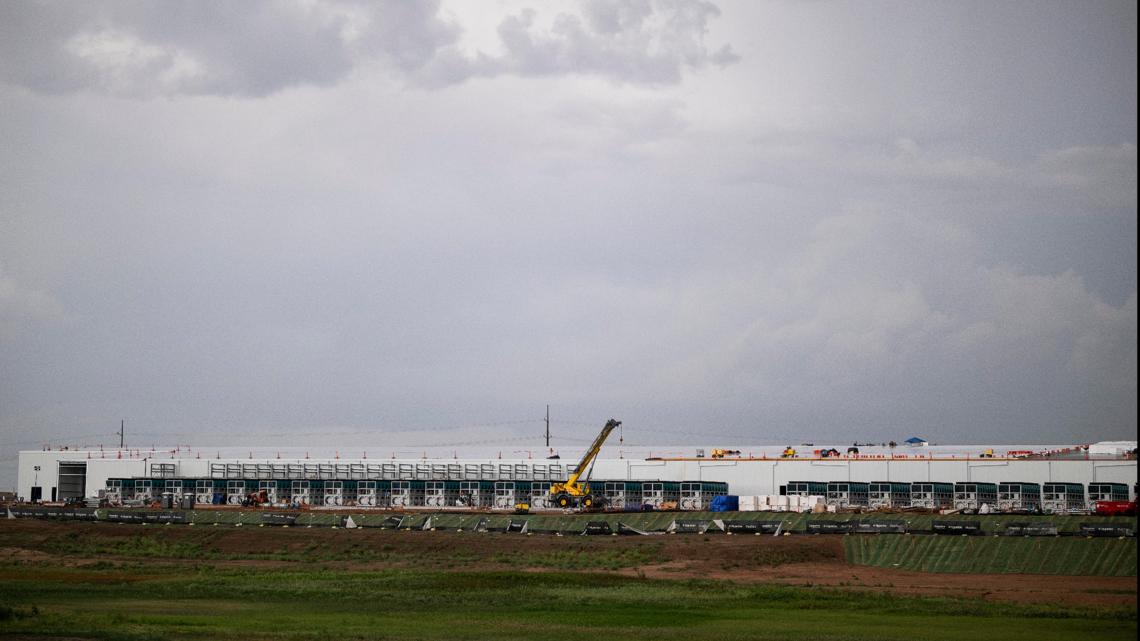
The Texas data centers audit ordered by Gov. Greg Abbott on Monday marks a notable shift in how the state is handling one of the fastest-growing pressures on its electric grid. Under the directive, state regulators must scrutinize every data center project currently seeking a permit before any additional facilities receive approval to proceed.
In practical terms, that amounts to a freeze on most new development — even though the word “moratorium” appears nowhere in the order.
What the Governor Actually Ordered
Abbott instructed two agencies to carry out what he described as a comprehensive verification and audit of all pending applicants. Those agencies are the Public Utility Commission, which regulates electric utilities in the state, and the Electric Reliability Council of Texas, the organization that operates the power grid serving the large majority of Texans.
The key phrase is the sequencing. The review must be completed before any further data centers are cleared to move forward. That ordering is what transforms an administrative review into something closer to a stop sign.
Why This Is a Reversal
For months, Abbott had pushed back against calls for a formal pause on data center construction. His resistance placed him alongside officials in other states who have argued that heavy-handed intervention risks driving investment elsewhere.
Monday’s order does not use moratorium language, but the effect is difficult to distinguish from one. New projects cannot advance until regulators finish their work — and the directive included no deadline for that work to be completed.
That omission may prove to be the most significant detail in the entire announcement. Without a fixed timeline, developers, utilities and local officials have no clear sense of whether they are looking at a matter of weeks or something considerably longer.
The Pressure Behind the Decision
The move reflects mounting political pressure on Abbott to respond more forcefully to the data center boom sweeping the state.
Texas has become one of the most attractive destinations in the country for large computing facilities, and the reasons are not mysterious:
- Abundant land in areas where construction costs remain comparatively low
- A deregulated electricity market that has historically offered competitive rates
- A permissive regulatory posture relative to many other states
- Existing energy infrastructure, including significant wind, solar and natural gas capacity
- A business climate that officials have actively promoted to technology firms
Those same advantages have produced the current tension. The facilities arriving now are substantially larger than the data centers of a decade ago, and they consume power on a scale that can rival a small city.
The Grid Question at the Center of It All
Texas operates a grid that is largely isolated from the rest of the country — a longstanding arrangement that gives the state regulatory independence but limits its ability to import electricity from neighboring regions during emergencies.
That structure makes demand forecasting unusually consequential. When supply tightens in Texas, there is less outside help available than there would be in most other parts of the country.
Against that backdrop, the concern driving the audit becomes clearer. If a large share of proposed data centers are approved, connected and drawing power simultaneously, projected demand could climb faster than new generation can be brought online.
Verifying What Is Real
One issue an audit of this kind can help resolve is the gap between projects that are genuinely proceeding and those that exist mainly on paper.
Developers commonly file interconnection requests at multiple sites while evaluating options, with no intention of building every one. That practice can inflate the apparent demand pipeline considerably, complicating the job of planners trying to determine how much new generation and transmission capacity the state actually needs.
A verification exercise gives regulators a chance to separate committed projects from speculative ones — information that is valuable regardless of where policymakers ultimately land on the broader question.
What Remains Unclear
Several important details were absent from Monday’s announcement:
- Duration. No timeline was specified for completing the audit.
- Scope of the pause. How comprehensively the freeze applies to projects at different stages of the permitting process has not been fully spelled out.
- Criteria. What standards regulators will apply when the review concludes, and whether approvals resume under new conditions, is not yet defined.
- Existing facilities. The directive centers on pending applications rather than data centers already operating or under construction.
Those gaps leave considerable interpretation to the Public Utility Commission and ERCOT as they design and execute the review.
Who Has a Stake in the Outcome
The order touches a wide range of interests across the state.
Technology companies with Texas expansion plans face uncertainty over project schedules and capital commitments.
Utilities and generators need reliable demand projections to justify investment in new capacity — and an inflated pipeline serves them poorly.
Residential and commercial ratepayers have a direct interest in whether infrastructure costs driven by large industrial users end up spread across everyone’s bills.
Local governments in communities courting data center investment must weigh promised tax revenue and construction jobs against strain on local resources.
Grid operators carry the burden of keeping supply and demand balanced during the extreme heat events that have repeatedly tested the Texas system.
A Question Facing More Than Texas
The situation unfolding in Texas is not unique. States across the country are confronting the same underlying problem: computing demand tied to artificial intelligence and cloud services is expanding faster than electric infrastructure can be planned, financed and built.
What distinguishes the Texas case is scale and speed. The state has attracted an outsized share of proposed projects, which means it is encountering the resulting strain earlier and more acutely than most.
How regulators structure this audit — and what conditions, if any, accompany a return to approvals — will be watched closely well beyond state lines. For now, the practical reality is simpler: new data center projects in Texas are waiting, and no one has said for how long.
Author
-
Lucienne Albrecht is Luxe Chronicle’s wealth and lifestyle editor, celebrated for her elegant perspective on finance, legacy, and global luxury culture. With a flair for blending sophistication with insight, she brings a distinctly feminine voice to the world of high society and wealth.