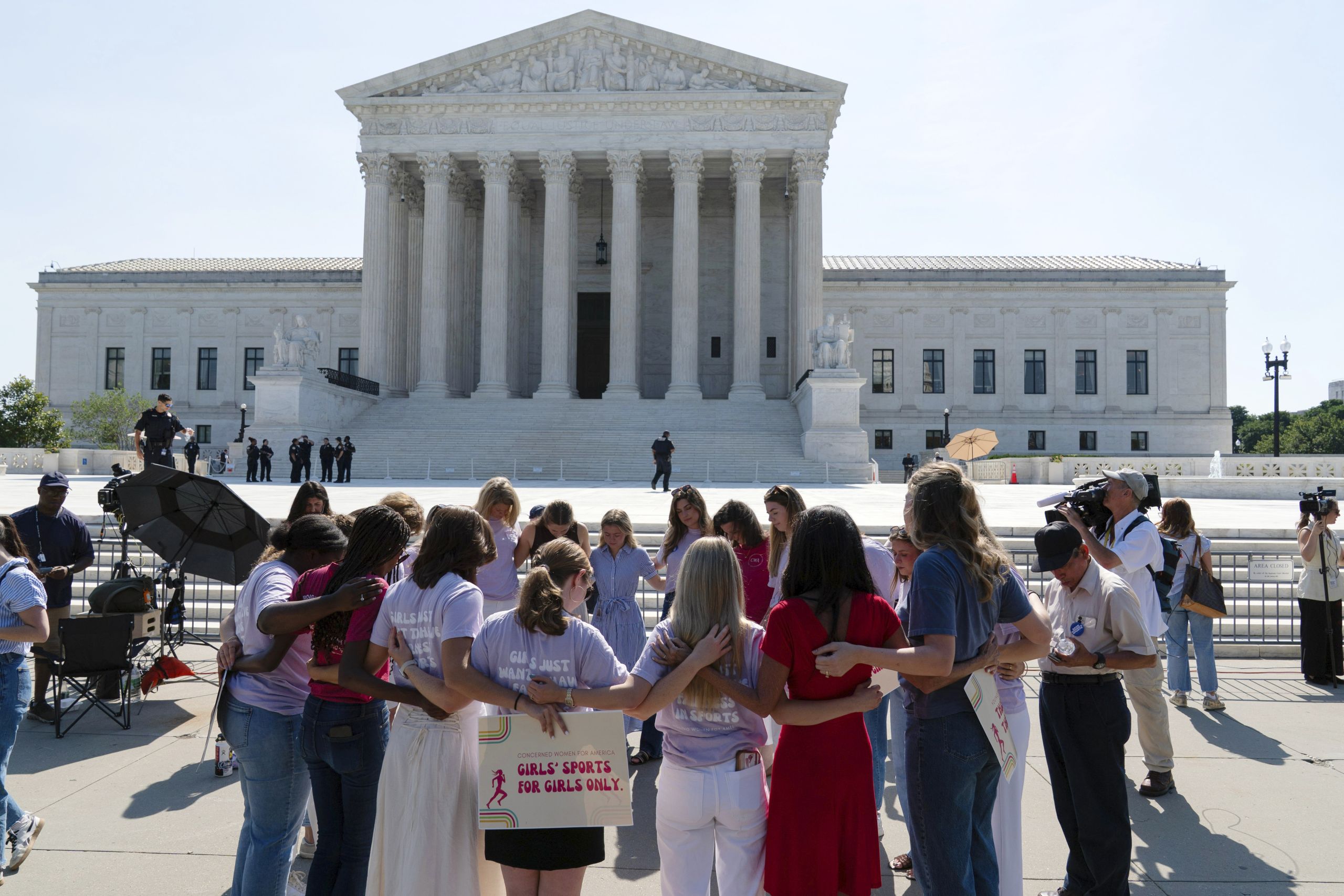
The debate over transgender athletes Supreme Court cases reached a pivotal moment on June 30, when the justices ruled that states are free to bar transgender girls from competing on female sports teams. But rather than settling the issue, the decision has set the stage for an even bigger legal fight, one the Trump administration appears eager to pursue.
A Landmark Ruling With Limits
Delivering what was arguably the most significant culture war decision of the term, the Court held that states may exclude transgender women and girls from female teams. Yet the justices deliberately drew boundaries around their ruling.
Crucially, the Court left open a major question: whether states are actually required, rather than simply permitted, to keep transgender athletes off female teams. That distinct legal issue is already making its way up through the courts and could soon land back before the justices.
The majority also declined to issue a sweeping decision that would have reshaped transgender rights far beyond athletics. Instead, they confined their ruling to the world of sports, leaving battles over bathroom and locker room access for another day.
Kavanaugh Tries to Strike a Balance
Justice Brett Kavanaugh, who authored the ruling, took a notably empathetic tone even as he defended the exclusion of transgender girls from female teams. Known for years as “Coach K” from coaching his daughters’ basketball teams, Kavanaugh pushed back on the idea that his liberal colleagues held a monopoly on understanding how the issue affects students.
He acknowledged the real difficulties faced by young people who identify as a gender different from their birth sex, both in school and beyond. At the same time, he insisted the Court had to weigh the safety and fairness concerns their participation raises for other members of a team.
Kavanaugh argued that anyone asking what harm comes from letting a transgender girl compete misunderstands the very nature of sports, which he described as highly competitive and generally zero-sum. Every roster spot, starting position, or medal, he wrote, is inherently taken from someone else.
Still, he was careful to show compassion. Noting that many of the athletes at the center of the debate are teenagers or young adults, Kavanaugh said their desire to play deserves respect. He stressed that no student-athlete, whether transgender or not, deserves to be ostracized or vilified.
Thomas Takes a Harder Line
If Kavanaugh sought to soften the tone, Justice Clarence Thomas took the opposite approach. In a pointed concurring opinion, Thomas declared that a man has no legal right to compete against women simply because he believes himself to be a woman.
One of the Court’s most conservative members, Thomas aligned closely with the Trump administration’s position that there are only two sexes, both biologically fixed and unchangeable. Using language that blurs that reality, he wrote, amounts to lying to the public.
Advocates See Reasons for Hope
Despite the loss, civil rights groups that opposed the state bans found some comfort in the ruling’s narrow scope. The Court held only that states may impose such bans under the Constitution and federal anti-discrimination law, not that they must.
Several limitations gave advocates room to continue their fight:
- The ruling applied only to sports, leaving other issues unresolved.
- The Court did not decide whether transgender people as a group deserve stronger constitutional protections.
- The decision repeatedly framed the matter as a policy question that individual states can answer differently.
Chris Erchull, an attorney at GLAD Law, noted that this leaves room to keep advocating for transgender students’ rights under Title IX in other areas beyond athletics.
The Trump Administration Presses Forward
Conservative groups, however, sense momentum on their side. Kristen Waggoner, president of the Alliance Defending Freedom, issued a blunt warning to states that still allow transgender girls to compete, signaling they would be the next targets. Her organization, which helped defend the Idaho and West Virginia bans, has already taken aim at Connecticut over its policies.
The administration itself has moved aggressively, attempting to withhold federal funding from states that permit transgender females on girls’ teams. Although officials had urged the Court to rule only that bans are allowed for now, they are clearly bracing for the next round.
Education Secretary Linda McMahon signaled the administration’s intent, saying it looks forward to ensuring every educational institution in the country follows the law.
Yet Joshua Block, the ACLU attorney who argued the West Virginia case, found reason for optimism. He pointed out that the decision repeatedly emphasized this as a policy question on which different states can reach different conclusions, suggesting the Court may ultimately decline to require bans.
Gorsuch Explains a Key Distinction
Transgender rights advocates had hoped to build on their surprising 2020 victory in Bostock v. Clayton County, where the Court ruled that workplace protections against sex discrimination also covered sexual orientation and gender identity.
Block argued that the same logic should extend to Title IX, the law barring sex discrimination in education. But Justice Neil Gorsuch, who authored that 2020 decision, explained why he reached a different result this time.
Unlike the Civil Rights Act, Gorsuch noted, Title IX specifically permits the sexes to be treated differently in the context of school sports. He acknowledged the intense national debate surrounding transgender athletes but emphasized that the Court’s job was not to resolve that debate, only to faithfully apply the directives written into federal law.
The Liberal Justices’ Partial Agreement
Notably, the Court’s three liberal justices did not fully dissent. Writing for the minority, Justice Sonia Sotomayor agreed that Title IX allows for sex-segregated sports teams.
However, she devoted much of her opinion to arguing that the West Virginia student should have been allowed to prove in court that the puberty-blocking medications she has taken leave her without any inherent athletic advantage. Sotomayor stopped short of claiming the science was definitively on the student’s side, but argued that the Constitution’s promise of equal treatment should at least give her the chance to try.
Kavanaugh rejected that approach, countering that states are not obligated to carve out case-by-case exceptions because their bans are already justified by vital interests in safety and competitive fairness.
The Road Ahead
The June 30 ruling may have answered one question, but it has clearly opened the door to another. With the issue of whether bans are mandatory already climbing toward the Court, and with the Trump administration and conservative groups pushing hard for broader restrictions, this legal battle is far from over.
For now, states retain the freedom to decide, but both sides are already preparing for the next confrontation, one that could carry even greater consequences for transgender students across the country.
Author