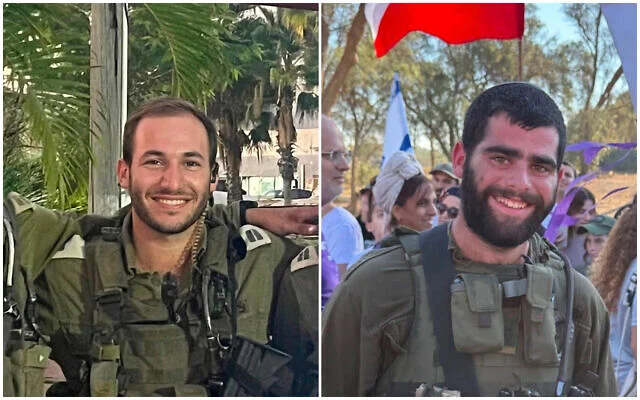
The news that two IDF soldiers were killed in Lebanon has cast a somber light on a conflict that refuses to cool, even as a nominal truce remains in effect between Israel and Lebanon. The Israeli military announced the deaths Saturday night, confirming that the two soldiers died in separate incidents over the weekend as fighting with the Hezbollah terror group ground on across southern Lebanon.
Their deaths underscore a harsh reality: despite diplomatic efforts and a ceasefire on paper, the violence on the ground has continued largely unabated.
The Two Soldiers Lost
The military identified both soldiers and described the circumstances of their deaths.
Captain Shahar Gamla, 23, served as a deputy squad commander in the Commando Brigade’s Egoz Unit and hailed from Natur. He was severely injured by a Hezbollah drone late Thursday, taken to a hospital, and on Saturday morning succumbed to his wounds.
In a separate incident on Friday, Sergeant Ohad Yaari, 21, of the Givati Brigade’s Shaked Battalion and from Rehovot, was killed by a suspected accidental firearm discharge in southern Lebanon. The Israel Defense Forces said the circumstances of that incident were under investigation by the Military Police.
A Weekend of Heavy Bombardment
The soldiers’ deaths came amid an intense Israeli campaign across southern Lebanon.
According to the IDF, Israeli forces struck around 150 Hezbollah infrastructure sites over the weekend. The targets reportedly included:
- Weapon depots
- Command centers
- Rocket launchers
- Other militant infrastructure
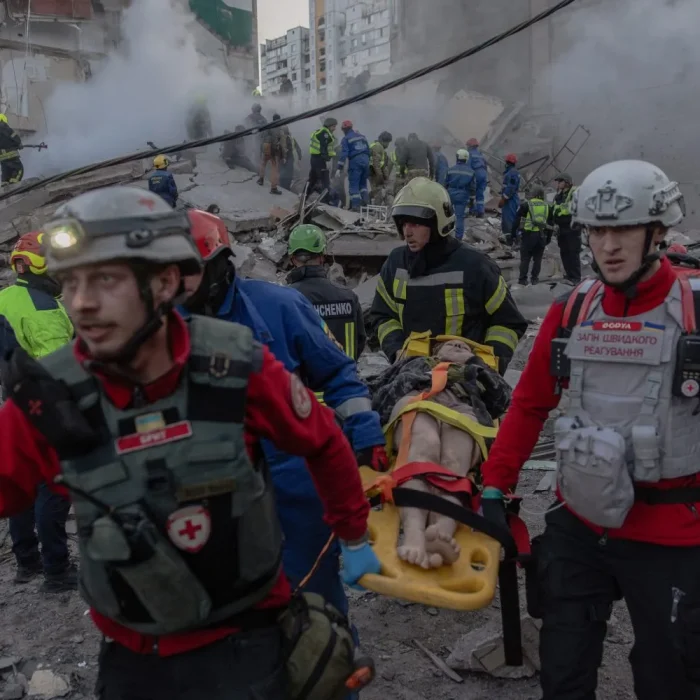
Earlier on Saturday, the army issued mass evacuation orders across much of southern Lebanon, instructing residents to move north of the Zahrani River ahead of planned strikes against Hezbollah in the area. The Israeli military also carried out several strikes across eastern Lebanon, according to Lebanese state media.
The human cost extended beyond the battlefield. The Hiram hospital in the southern city of Tyre reported that one of its nurses was killed in a strike while on the way to work — a stark reminder of how the violence reaches far beyond combatants.
Hezbollah Strikes Back
The fighting has been far from one-sided.
Hezbollah said it had targeted Israeli troops in southern Lebanon as well as an artillery position near Israel’s side of the border. Throughout the day, sirens continued to sound across northern Israel amid ongoing drone attacks. Israeli forces also reported that an apparent Hezbollah drone struck near their positions in southern Lebanon on Saturday night, though no injuries resulted from that particular incident.
The continued exchanges illustrate just how active and dangerous the conflict remains, with both sides trading blows despite the supposed truce.
A Diplomatic Push Through Pakistan
While the fighting raged, an unusual diplomatic thread was unfolding far from the front lines.
Lebanese army chief Rodolphe Haykal left Lebanon for Pakistan on Saturday to meet his Pakistani counterpart, the Lebanese military said. According to a source who spoke to AFP, the visit was tied to broader Iran-US negotiations.
In its statement, the army said Haykal traveled at the invitation of his Pakistani counterpart, Field Marshal Syed Asim Munir. A source with knowledge of the matter explained that the trip was connected to Pakistani mediation efforts aimed at resolving issues between the United States and Iran, adding that Lebanon is a critical part of those negotiations.
How Lebanon Got Drawn In
To understand why Lebanon sits at the center of these talks, it helps to trace how the country became entangled in the wider war.
Munir has emerged as Islamabad’s key negotiator between the US and Iran in efforts to end the conflict. Lebanon was pulled into the war when Hezbollah attacked Israel on March 2, retaliating for the February 28 US-Israeli killing of Iran’s supreme leader. Israel responded with an extensive campaign of airstrikes and a ground invasion, and the exchanges of fire with Hezbollah have not stopped despite the ongoing truce.
Lebanon Pushes Back Against Iran
A notable tension has emerged over Iran’s role in Lebanon’s affairs.
Iran insists that Lebanon be included in any agreement with the United States to end the regional war. But Lebanese President Joseph Aoun pushed back sharply in an interview with CNN aired on Friday, arguing that Iran must stop interfering in Lebanon, which has been conducting its own direct talks with Israel.
His words were blunt. “It’s not your country, it’s our country,” he said, adding that it wasn’t Iran’s job to interfere. He accused Iran of using Lebanon as a bargaining chip in its negotiations with the United States, calling the situation unacceptable.
The Truce That Hezbollah Rejects
At the heart of the diplomatic effort is a new conditional truce — one that faces a significant obstacle.
Announced by Lebanese and Israeli envoys this week in Washington, the agreement would require Hezbollah to stop firing, withdraw from near the Israeli border, and allow Lebanon’s army to deploy to new “pilot zones” in the area, where it would exercise exclusive control.
The problem is that Hezbollah has rejected the deal outright. The group is demanding a full Israeli withdrawal from Lebanese territory as a condition, leaving the truce stalled before it can take hold. Because Hezbollah was never a party to the agreement reached between the two governments, its refusal threatens to unravel the entire arrangement.
Why This Matters
The events of the weekend capture the central dilemma of the current crisis. Even with a ceasefire formally in place, the fighting persists because the most powerful armed actor on the ground — Hezbollah — refuses to abide by it.
Several factors make the situation especially volatile:
- The truce was agreed between governments, but Hezbollah operates independently of it.
- Lebanon has become a pawn in the larger US-Iran negotiations, despite its leaders’ objections.
- Civilian casualties, like the nurse killed in Tyre, continue to mount alongside military losses.
What Comes Next
For now, the path forward remains uncertain. Diplomatic efforts through Pakistan offer a glimmer of progress, but they hinge on resolving the deep disagreements between the US, Iran, Lebanon, and a Hezbollah that has so far refused to lay down its arms.
The deaths of Captain Shahar Gamla and Sergeant Ohad Yaari serve as a painful reminder of the stakes. As long as the truce remains rejected and the strikes continue, the danger of further escalation looms large. With two IDF soldiers killed in Lebanon over a single weekend, the fragile diplomacy now underway faces a daunting test against the relentless reality of the fighting on the ground.
Author