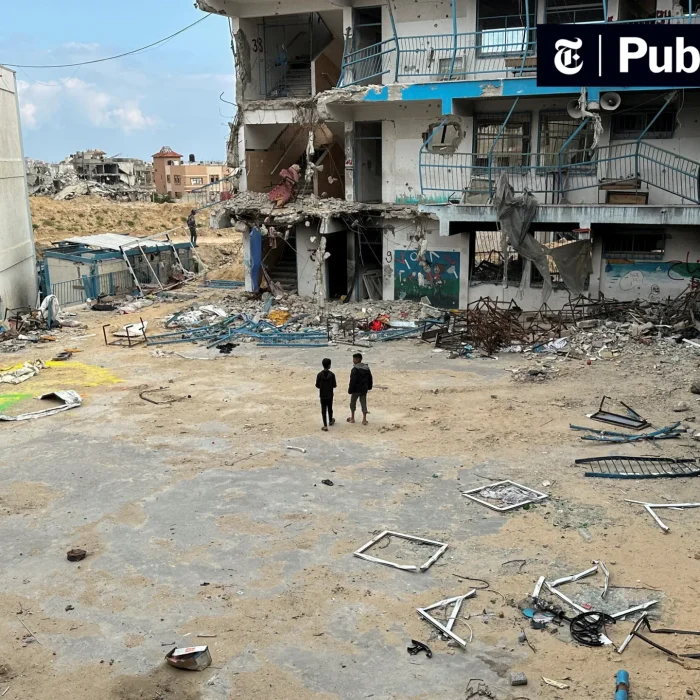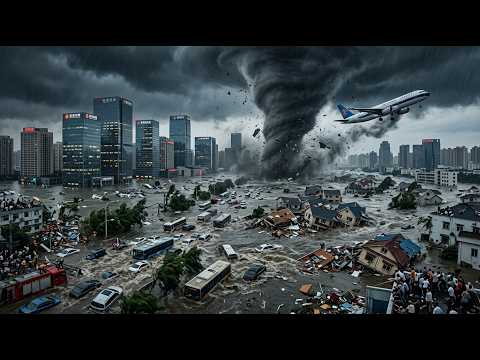
The devastation caused by Typhoon Maysak China has left communities reeling, as the powerful storm triggered catastrophic floods across the southern province of Guangxi and spawned rare tornadoes hundreds of kilometres away. With dozens dead and tens of thousands displaced, the disaster has prompted President Xi Jinping to order an all-out rescue effort.
When the Water Came Too Fast
For the villagers of Renhe in Guangxi, heavy rain was nothing unusual. When it began falling on Sunday, they took it in stride. But this time, the rain simply would not stop, and the water rose with terrifying speed.
By the early hours of Monday, floodwaters had reached knee height. By dawn, they had completely swallowed the ground floors of homes throughout the village. A woman from Renhe, identified by her surname Zhou, described the sheer speed of the disaster to the BBC, explaining that the floods came so rapidly that villagers had no time even to grab food as they fled.
Zhou’s family is among the tens of thousands displaced since Typhoon Maysak swept through the region over the weekend, causing rivers to overflow and dam walls to fail. At least four people have died in Guangxi alone.
A Region Underwater
The storm inundated the city of Nanning and the surrounding villages, leaving residents stranded and calling for rescue from their rooftops. But the destruction did not stop there. Maysak also unleashed thunderstorms and even tornadoes in the central province of Hubei, hundreds of kilometres from where it first struck.
Across the affected regions, the toll has been severe. According to state media, at least 17 people have died, hundreds more have been injured, and tens of thousands have been evacuated. The scale of the devastation led Xi Jinping to demand all-out rescue and relief operations.
Typhoons that bring widespread flooding are common in China at this time of year, and Maysak is the first to make landfall in the country during the 2026 season. State media described the storm as notable for its sudden onset and intense, short-duration winds. Adding to the concern, another system, Super Typhoon Bavi, is now moving across the Pacific and is forecast to strike China’s eastern coast later this week.
Rescue Efforts Overwhelmed
On the ground in Guangxi, the situation has grown desperate. Residents told the BBC that thousands remain trapped on rooftops, some in remote mountain villages, cut off by the rising waters. Official figures estimate that 60,000 people have been evacuated, with at least 90,000 affected in total.
Zhou, now living in another province, said several of her family members are still trapped in Renhe with limited food. Most heartbreaking, she said, her four-month-old niece had gone more than a day without milk. Other villagers had gathered on higher ground, she explained, but supplies were dwindling everywhere, with too many villages affected and far too few rescue workers to reach them all.
Another woman, surnamed Huang, from the town of Yunbiao, described how quickly the water overwhelmed her area, submerging villages in just ten minutes. She recounted the impossible task facing rescuers, noting there were too few personnel and that the lifeboats they brought were too small to travel far. Many residents, she added, could not even contact their families because entire areas had lost internet, communication, and electricity.
State media has broadcast footage of rescuers in life vests and helmets navigating inflatable boats through the floodwaters, as Xi emphasized the importance of treating the injured, resettling displaced residents, and carrying out relief work effectively.
An Unexpected Danger: Snakes in the Water
Beyond the immediate threat of drowning, residents have faced an alarming secondary hazard. Many expressed fear about snakes in the floodwaters. According to state media, the floods not only stirred up wild snakes but also allowed snakes to escape from farms in the region.
In China, certain snake species are raised for traditional medicine, meat, and anti-venom production. Huang shared a video from her village’s WeChat group showing residents looking alarmed as a large black snake slithered across their mud-covered floor, a chilling reminder of the many dangers accompanying the disaster.
Tornadoes Tear Through Hubei
While Guangxi battled floods, Hubei province faced a different terror. At least two tornadoes formed there, causing chaos across several cities. Meteorologists explained that the tornadoes resulted from cold air from the north colliding with the warm air Maysak had carried up from the south. Such tornadoes are rare in the region, with the last recorded occurrence dating back to 2021.
Videos circulating on Chinese social media captured the ferocity of the winds ripping through the cities of Ezhou and Huanggang. One clip, apparently filmed inside a restaurant, showed outdoor tables and chairs hurled through the air and electrical sparks flying as diners screamed in fear.
The human cost was stark. Local media reported that a man in Huanggang was pulled from his high-rise apartment and fell 12 storeys after powerful winds shattered his windows, blowing him and his furniture out of the building. He is reportedly in intensive care.
A student in Huanggang told the BBC he initially mistook the event for an ordinary thunderstorm, until he saw objects flying past his dormitory window. Many students, he said, were cut by flying glass, and only when everything stopped did he realize he had just survived a disaster.
Extreme Weather Spreads North
The turmoil was not confined to the south. Parts of northern China also experienced severe weather in recent days. On Saturday, a flash flood in Tongliao city in Inner Mongolia claimed the lives of two cattle farmers, while record rainfall in Fushun city left three people dead. In Fushun, the rainfall recorded between 1 a.m. and 7 a.m. local time reportedly shattered historical records.
Desperate to Reach Loved Ones
As affected communities await aid, many are consumed by anxiety over missing family members. Zhou said she had asked a friend to swim through the floodwaters to check on her relatives. He managed to call out to her father from a distance and confirmed the family was safe for now, though still surrounded by water.
The fate of others remains unknown. Zhou said an elderly neighbour and her two young granddaughters could not be located, explaining that even by swimming, no one had been able to spot them.
Another young woman, who asked to remain anonymous, told the BBC she had not heard from her parents in the town of Gantang for more than 24 hours. The last she knew, they were sheltering on the third floor of their building as water reached the second. Unable to reach them, she described her helplessness, saying she had lost contact on Monday morning and could do nothing but wait and worry.
The Bigger Picture
The catastrophe unfolding across China reflects a troubling pattern. Experts have increasingly linked such extreme weather events to climate change, which poses a growing threat to the country’s residents and its economy, especially its enormous agriculture sector.
As rescue teams race against dwindling supplies, rising waters, and the looming arrival of Super Typhoon Bavi, the coming days will test China’s disaster response to its limits. For the families still trapped on rooftops and those anxiously awaiting word from loved ones, each passing hour underscores the human cost of a storm that arrived faster and hit harder than anyone was prepared for.
Author