Ukraine Downs 106 of 128 Drones Overnight but Impacts Reported Across 14 Sites
Ukraine air defense drone attack results from Monday night show that Ukrainian forces intercepted the large majority of an incoming Russian barrage, though a portion of the drones still reached their targets.
The Air Force of the Armed Forces of Ukraine reported that 106 enemy targets were neutralized, while strikes registered at 14 separate locations across the country.
The Numbers From Overnight
According to preliminary data compiled as of 8:30 a.m., air defense units shot down or suppressed 106 Russian unmanned aerial vehicles. The intercepts occurred across the northern, southern and eastern regions of Ukraine, indicating that the attack was spread rather than concentrated on a single axis.
The full scale of the assault totalled 128 drones launched during the night of August 17, with the attack window opening at 6 p.m. on August 16.
That produces an interception rate of roughly 83 percent, a figure consistent with what Ukrainian forces have generally achieved against mass drone attacks, though it leaves more than 20 aircraft unaccounted for by intercepts.
What Russia Launched
The incoming wave combined several categories of aircraft, a tactic designed to complicate the defensive response.
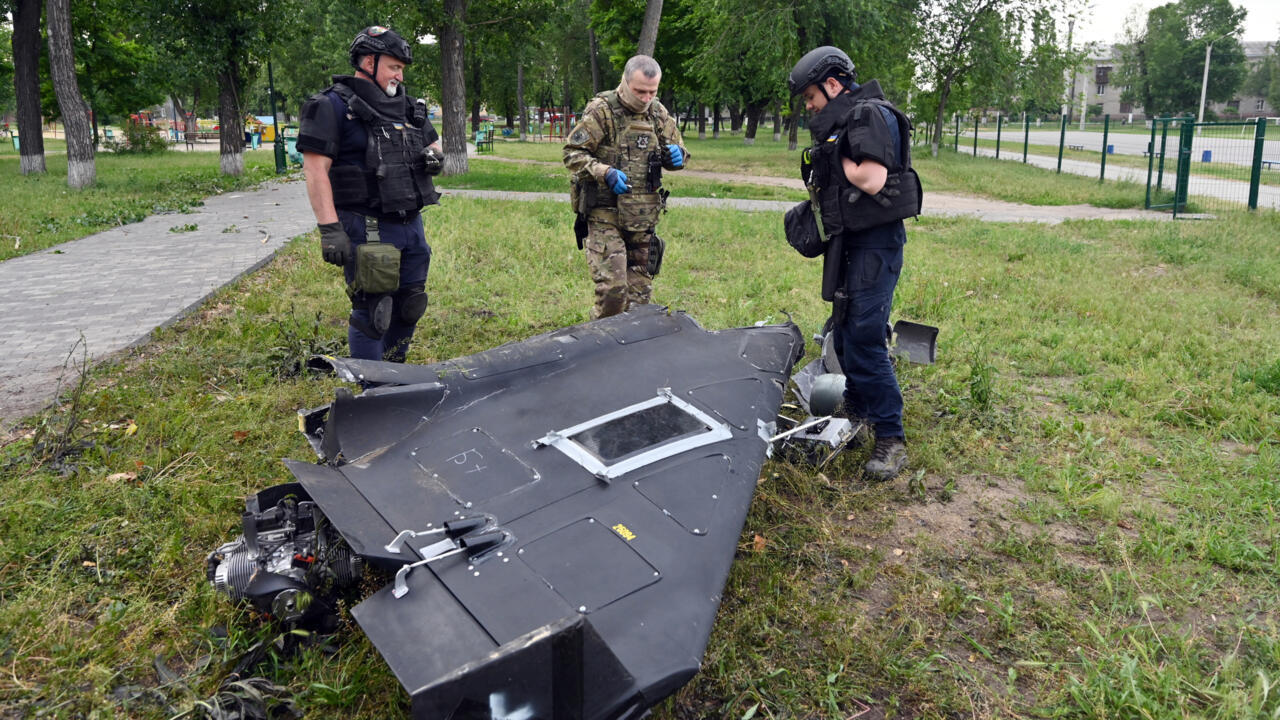
The barrage included Shahed-type strike drones, among them jet-powered variants that travel considerably faster than the propeller-driven models and therefore compress the time available for detection and engagement.
Herbera drones formed part of the attack as well. Alongside the strike platforms came Parodiya-type decoy drones, aircraft carrying no warhead whose function is to absorb interceptors, expose the position of air defense systems and saturate radar coverage.
The mixture forces defenders into a difficult calculation. Engaging a decoy consumes a missile or an interceptor drone that might be needed moments later for something carrying explosives, but ignoring an unidentified track is not an option.
Launch Directions
The drones were dispatched from four separate directions, according to the Air Force statement.
Three launch areas were located inside Russia: the Kursk region, the Orel region, and Primorsko-Akhtarsk. The fourth originated from temporarily occupied territory in Donetsk.
Approaching from multiple bearings simultaneously stretches defensive coverage and forces Ukrainian commanders to distribute limited assets across a wide arc rather than concentrating them along a single expected corridor.
How the Defense Was Mounted
Repelling the attack required a layered effort drawing on several components of Ukraine’s air defense architecture:
Aviation assets engaging drones in flight
Anti-aircraft missile troops operating ground-based systems
Electronic warfare units working to jam navigation and control links
Unmanned systems units employing interceptor drones
Mobile fire groups positioned to engage low-flying targets
The mobile fire groups occupy a particular role in this system. Equipped with machine guns and mounted on light vehicles, they provide a low-cost method of downing drones that would otherwise require expensive missiles, and they can reposition quickly as attack routes shift.
Electronic warfare accounts for the distinction between drones shot down and drones suppressed. A jammed drone may crash, veer off course or fail to reach its intended target without ever being physically struck.
Where the Damage Landed
Impacts from Russian drones were recorded at 14 locations. The Air Force statement did not specify the nature of the targets hit or provide details on damage or casualties.
Additionally, falling debris from downed drones was recorded at two locations. This remains an unavoidable consequence of successful interception, particularly over populated areas, where wreckage from a destroyed aircraft can still cause fires and structural damage on impact.
What the Pattern Reveals
Attacks of this size have become a routine feature of the war rather than exceptional events, and the composition of this particular barrage reflects an ongoing tactical evolution.
The inclusion of jet-powered Shahed variants points to Russian efforts to defeat interception through speed. The use of dedicated decoys points to efforts to defeat it through exhaustion.
Ukraine’s response, combining aircraft, missiles, jamming, interceptor drones and mobile gun teams, reflects a corresponding adaptation toward layered defense in which each tier handles the threats best suited to its capabilities and cost.
At 83 percent interception, the system is performing effectively by most measures. But with 128 drones launched in a single night, even a small percentage getting through translates into more than a dozen impact sites, which is precisely the arithmetic these mass attacks are designed to exploit.
Author
-
Lucienne Albrecht is Luxe Chronicle’s wealth and lifestyle editor, celebrated for her elegant perspective on finance, legacy, and global luxury culture. With a flair for blending sophistication with insight, she brings a distinctly feminine voice to the world of high society and wealth.