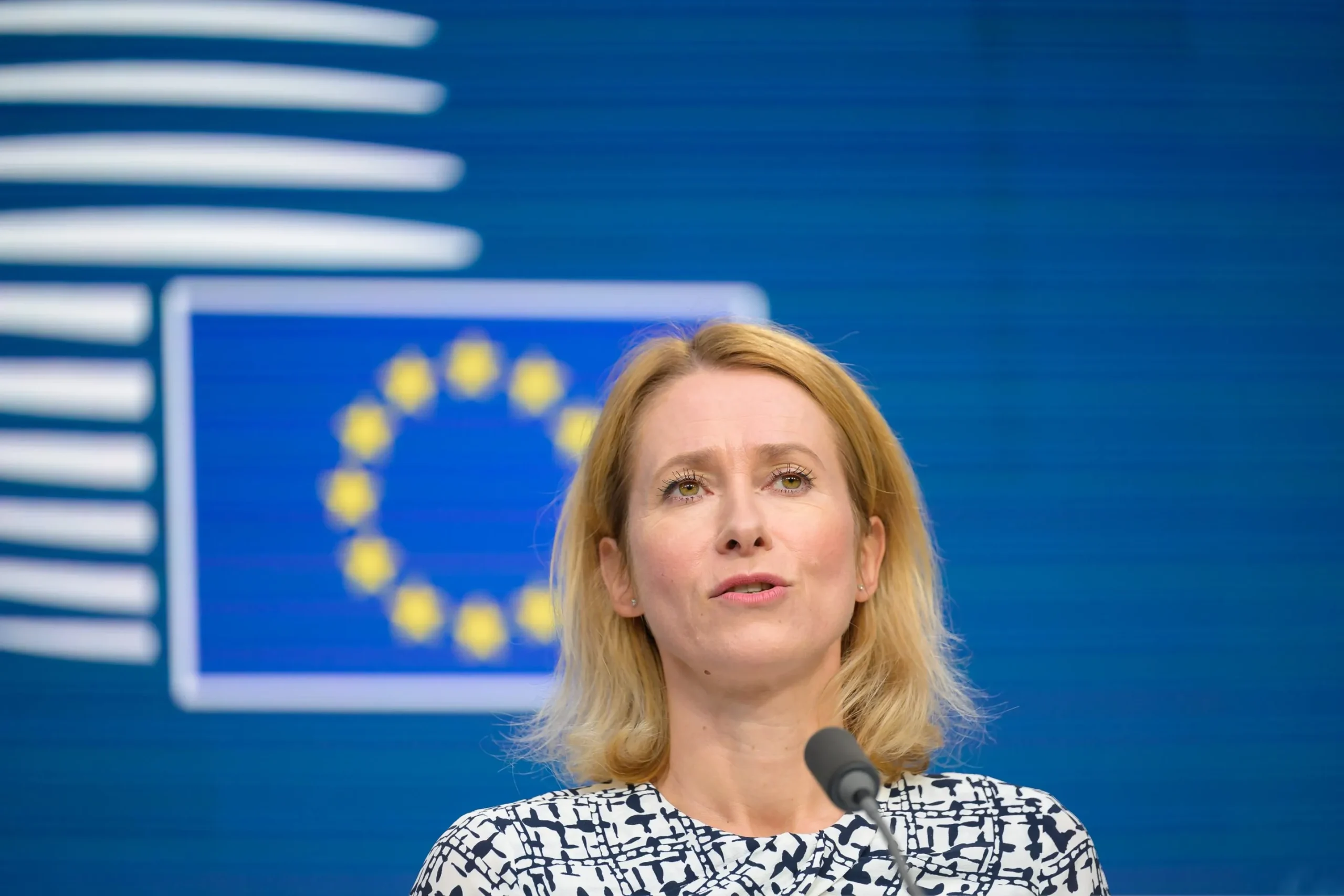
Brussels Readies Its Heaviest Blow Yet: EU Prepares Record Sanctions Package Against Moscow
The European Union is assembling what could become its most extensive EU Russia sanctions package since the full-scale invasion of Ukraine began, according to the bloc’s top diplomat.
Kaja Kallas, who serves as EU High Representative for Foreign Affairs and Security Policy, indicated that the new measures will be presented in the coming months, with an autumn timeline attached to the proposal.
The Scale of What Is Coming
Kallas described the forthcoming package as the largest set of sanctions measures the bloc has advanced since the war began.
The most concrete detail she offered concerns the number of targets. Once adopted, the measures would immediately expand the total roster of Russian individuals and legal entities under EU sanctions by one-third.
That is a substantial jump for a list that has already grown considerably over more than four years of successive packages. Adding a third again in a single round suggests a significantly broadened scope rather than incremental additions.
Counting the Damage So Far
Kallas also offered an assessment of what existing restrictions have already achieved, putting the figure at more than one trillion euros stripped from the Russian economy.
Whether measured through lost revenue, frozen assets, restricted market access or foregone investment, the number is intended to counter a persistent line of criticism that sanctions have failed to bite.
Her broader argument was that the pressure must keep intensifying until Moscow brings the war to an end, framing sanctions as a cumulative instrument rather than a one-time punishment.
The July Package and Its Difficult Passage
The forthcoming proposal follows a round of measures the Council of the European Union formally adopted on 23 July.
Officials characterized that package as delivering a significant strike against several pillars of the Russian economy:
The energy sector, long the primary source of state revenue
Financial services and banking channels
Cryptocurrency, an increasingly important workaround for restricted transactions
Getting it approved proved considerably harder than announcing it. The package sat delayed for weeks as several member states raised objections for varying reasons of their own. Greece was the final holdout, lifting its objection only at the end of the process.
That episode illustrates the structural challenge facing any new proposal. Sanctions require unanimity, and each member state has its own economic exposures and domestic political calculations.
A Rapid Follow-Up in August
The pace has not slowed since July. On 7 August, Kallas announced that the EU had approved additional sanctions against Russia, framed as a direct response to recent large-scale strikes on Ukraine.
That announcement, coming barely two weeks after the July adoption, signalled a shift toward more reactive sanctioning, with measures tied to specific Russian military actions rather than following a fixed schedule.
Why the Autumn Timing Matters
Presenting the package in autumn places it at a moment when several factors converge.
Energy demand rises across Europe as winter approaches, historically the period when the bloc’s leverage over Russian gas and oil has been weakest and when member states most dependent on imports have been most reluctant to escalate.
Proposing the largest package yet during that window suggests confidence that European energy diversification has progressed far enough to remove the seasonal constraint that shaped earlier rounds of decision-making.
The Unanimity Problem Remains
Kallas can propose. She cannot adopt.
Every package must clear the Council with the agreement of all member states, and the July experience demonstrated that objections can emerge from unexpected quarters and persist for weeks.
A package that increases the sanctioned roster by a third will inevitably touch entities with commercial relationships across multiple European economies. Each of those relationships represents a potential objection, and each objection represents delay.
What the Package Signals
Beyond the practical effects on Russian entities, the announcement carries a message about European intent.
More than four years into the invasion, with negotiations stalled and military pressure continuing, the EU is choosing escalation over consolidation. The decision to prepare a record-sized package rather than simply maintaining existing restrictions indicates that Brussels views sanctions as an instrument with room left to run.
Whether the measures survive the negotiation process intact, and whether they alter Moscow’s calculations, will not be known until autumn arrives and the package meets the Council.
Author
-
Lucienne Albrecht is Luxe Chronicle’s wealth and lifestyle editor, celebrated for her elegant perspective on finance, legacy, and global luxury culture. With a flair for blending sophistication with insight, she brings a distinctly feminine voice to the world of high society and wealth.