The critical minerals supply chain took center stage in Washington on Friday, as the United States announced a series of agreements with mining companies aimed at loosening China’s hold over the materials that feed weapons production, semiconductors and advanced manufacturing.
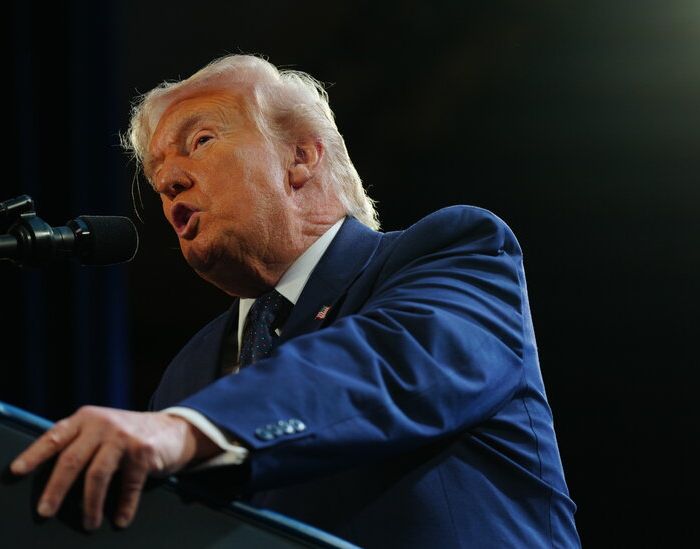
President Donald Trump made the announcement at a State Department roundtable with mining executives from around the world. He never named China directly, but the target was unmistakable.
The Pitch from the Podium
Trump framed the effort as a matter of national self-sufficiency, saying his administration would guarantee that America is never again dependent on hostile foreign nations for resources the country needs to lead in the future.
He added that miners are being put back to work and that the United States is reclaiming what he called its rightful position as the world’s minerals superpower, wrapping the message in a familiar phrase about making mining great again.
What Was Actually Announced
The package contains two distinct components:
- Roughly $2 billion in investment across multiple mining projects, both domestic and overseas
- More than $180 million directed toward developing the mining workforce
That second figure addresses a problem that receives less attention than geopolitics but may prove just as limiting.
The Talent Gap Nobody Talks About
Trump cited a statistic that captures the scale of the challenge. Accredited mining programmes in the United States now produce fewer than 170 mining engineers annually. China graduates more than 3,000.
The situation is compounded by demographics. Roughly half the current American mining workforce is expected to retire within three years.
Money can open a mine. It cannot quickly manufacture the engineers, geologists and processing specialists required to run one, which is why workforce funding sits alongside the capital investment.
Officials Sharpen the Argument
Commerce Secretary Howard Lutnick was blunter than the president about how the current situation came about.
He argued that adversaries reached market strength through cheating rather than competition, and said the United States is fighting back. His explanation for how America lost ground rejected the idea that free markets simply produced this outcome. He pointed instead to foreign subsidies, deliberate market distortion, export restrictions and stockpiling.
Secretary of State Marco Rubio approached it from the alliance angle, pledging to work with partner nations so that no country can hold this leverage over the United States or use it as a threat.
The Chinese embassy in Washington did not immediately respond to a request for comment.
Why the Urgency Now
The timing is not accidental. American military stockpiles have been drawn down by the war in Iran, sharpening concerns about dependence on Chinese materials for missiles, fighter aircraft and other systems.
The scope of that dependence is striking. A 2025 report from the US-China Economic and Security Review Commission found that roughly 78 percent of components in American defence weapons systems contain critical minerals originating in China.
Last month Trump signed an executive order requiring military contractors to move away from supply chains linked to Beijing, with the shift beginning in January 2027.
Where China’s Advantage Actually Lies
The dominance is concentrated less in extraction than in processing. Beijing holds a near monopoly over refining several key materials, including graphite, gallium, tungsten, germanium and rare earth elements.
These are not marginal inputs. They are essential to military hardware, chip fabrication and robotics, and substituting them is generally not an option.
China has demonstrated a willingness to use that position. Export controls on critical minerals and related technologies have become a standard response to American tariffs, sanctions and restrictions on advanced chip sales.
The clearest example came last April, when controls on seven rare earths imposed in retaliation for US tariffs forced temporary factory shutdowns in multiple countries. A truce reached in Busan in October eased the immediate pressure but made the depth of the vulnerability impossible to ignore.
Building Alternatives
Friday’s agreements form part of a wider strategy that includes taking government stakes in American mining firms and constructing international partnerships designed to route around China.
Two coalitions anchor that effort:
- The Forge initiative, bringing together more than 50 countries to establish preferential trade arrangements for non-Chinese mineral producers
- Pax Silica, a 24-nation grouping led by the State Department focused on supply chains spanning minerals, advanced manufacturing, semiconductors, AI infrastructure and logistics
The Short-Term Reality
For all the announcements, supply problems persist right now.
US Trade Representative Jamieson Greer told the Senate Finance Committee last month that even with agreements in place, shipments remain insufficient. Minerals are arriving from China, he said, but not in the quantities or at the speed Washington wants.
Treasury Secretary Scott Bessent raised rare earths directly in a video call last week with Chinese Vice-Premier He Lifeng, stating an expectation that Beijing would fully honour its commitments.
The numbers support the concern. Shipments of rare earth permanent magnets from China have declined since 2025, dropping 22.5 percent year on year across January and February.
Beijing’s Position
China has defended its approach. In July, embassy spokesperson Liu Chang described the country’s rare earth export controls as responsible and non-discriminatory, saying they are not aimed at any particular nation.
The justification offered was regulatory rather than political. Because rare earth items have dual-use applications, Liu said, China applies measures consistent with its export control laws.
The dispute is unlikely to stay quiet. Xi Jinping is expected in Washington next month, and minerals are set to be near the top of the agenda.
Author
-
Lucienne Albrecht is Luxe Chronicle’s wealth and lifestyle editor, celebrated for her elegant perspective on finance, legacy, and global luxury culture. With a flair for blending sophistication with insight, she brings a distinctly feminine voice to the world of high society and wealth.