When Freedom Roars: The Blue Angels Flyover That Set Pensacola Beach Buzzing
A Blue Angels flyover is meant to leave spectators awestruck, but a practice run in Pensacola, Florida, this week did more than turn heads. It sent umbrellas cartwheeling through the air, toppled beach chairs, and reignited a national debate about how low is too low when military jets share the sky with cheering crowds.
The moment unfolded on a Wednesday morning as hundreds gathered along the Gulf of Mexico. What they witnessed has since sparked reviews, viral social media posts, and a surprisingly relaxed response from top government officials.
A Jet That Came Out of Nowhere
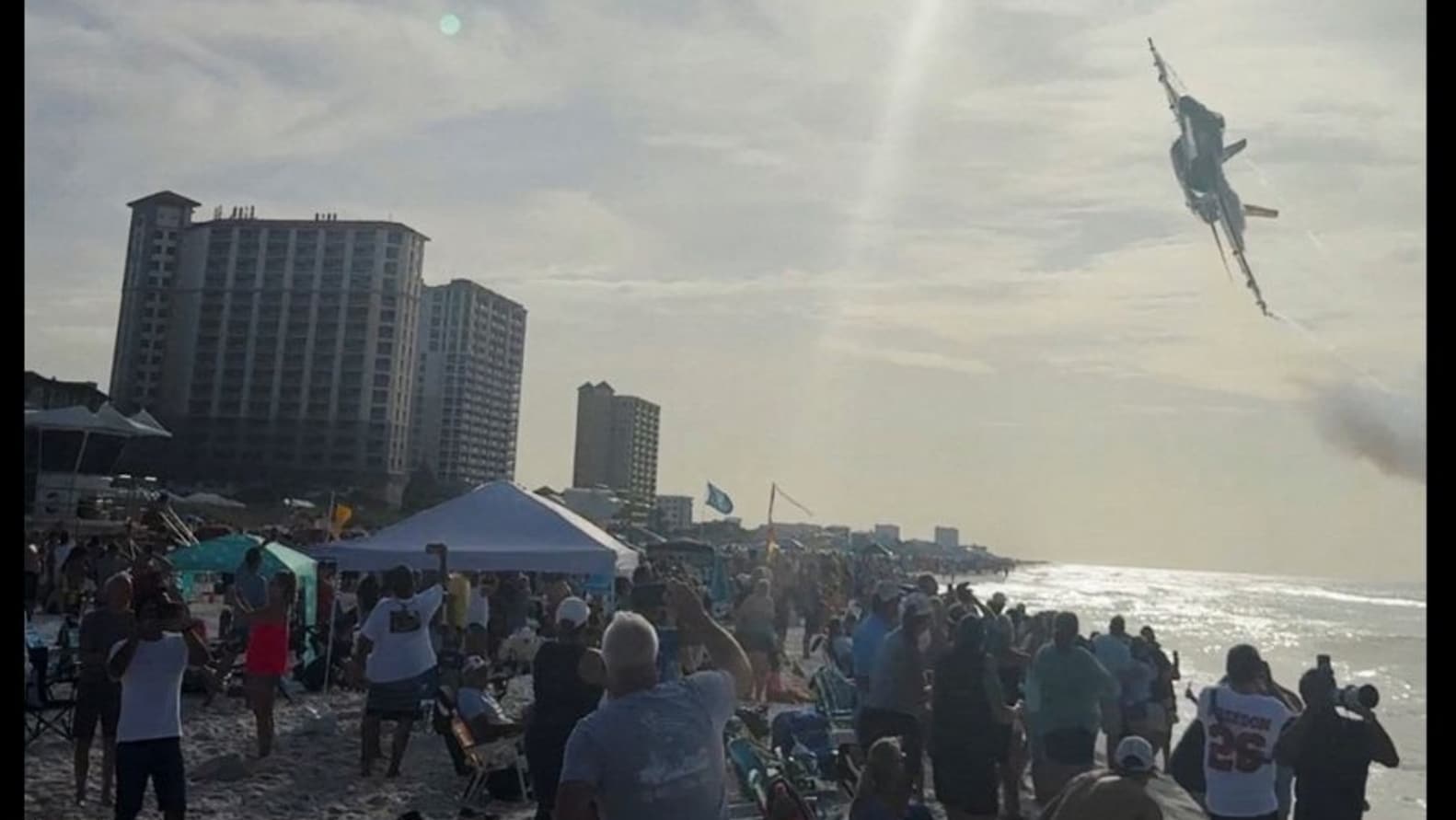
The crowd had already settled in to watch a fighter jet trace a familiar route over the water. Then, without warning, a second aircraft appeared from behind, screaming in low and fast across the surface of the Gulf.
As the F/A-18 Super Hornet neared the shoreline, it tilted its wings and shot directly over the heads of the onlookers below. For amateur photographer Dustin Roberts, it was a jolt of pure adrenaline. He estimated the jet passed roughly 90 feet above him — closer than anything he’d seen in his years attending these demonstrations.
Roberts, who says he’s missed only a single Blue Angels show all season, called it unforgettable. Still, even he admitted there’s a limit.
“Any closer would start to feel genuinely risky,” he noted.
The Blue Angels later confirmed the aircraft had dipped below its standard flight profile, prompting the squadron to launch an internal review.
“No Firings, No Problem”
By Thursday afternoon, the official verdict was in — and it wasn’t what many expected. Acting Navy Secretary Hung Cao announced that the debrief had wrapped up without consequence.
“No reprimands. No firings. No problem,” he wrote online, before adding a phrase that quickly caught fire: “That’s the sound of Freedom!”
The Blue Angels, headquartered in Pensacola, had earlier struck a more cautious tone. In a statement, the squadron emphasized that protecting their hometown community, spectators, and pilots remains their top concern.
That gap between caution on the ground and celebration from leadership captured the strange energy surrounding the entire episode.
What the Rules Actually Say
To understand why the flyover raised eyebrows, it helps to know the guidelines pilots typically follow.
According to John “JV” Venable, a retired colonel who once led the Air Force’s Thunderbirds demonstration team, the standard rule keeps pilots at least 500 feet above people on the ground. Those numbers, he explained, do loosen somewhat during live performances.
Venable was quick to point out that the Blue Angels are among the most highly trained aviators anywhere, and that the crowd in Pensacola was almost certainly never in real danger. But the videos told a story of their own.
Watching footage of airborne chairs and umbrellas tumbling across the sand, he said the pass clearly deserved a closer look.
“I’d bring that pilot in and have a conversation,” Venable said. “I’d tell them to raise their altitude and stay more aware of exactly where they are.”
A Pattern of High-Profile Passes
The Pensacola incident didn’t happen in a vacuum. It marks the third attention-grabbing military flyover in recent months.
- On July 4, South Carolina National Guard helicopter pilots flew low over a beach, leading to their temporary suspension.
- Earlier in the spring, two Army helicopter crews were grounded after buzzing the Tennessee home of musician Kid Rock and a nearby protest rally.
In both earlier cases, Defense Secretary Pete Hegseth reversed the suspensions with brief social media posts, each carrying the same message: “Carry on, Patriots.”
He kept that momentum going this week, posting Thursday morning that “the flyovers will continue until morale improves.” Pentagon spokesperson Sean Parnell shared an image of the Pensacola pass with his own nod of approval, and the White House chimed in with an illustration of spectators filming the low pass, captioned simply: “It’s okay to love America.”
Notably, Cao’s announcement that the review had concluded came less than four hours after that White House post.
The Case for Letting Units Police Themselves
Not everyone believes cheering from the top is the right approach. Venable argued that the healthiest process is one where each military unit runs its own investigation and decides on discipline internally, free from outside pressure in either direction.
“You shouldn’t be issuing orders to punish them — or not to,” he said.
He also offered a sobering piece of history. After a fatal Thunderbirds crash in 1982, the Air Force raised minimum altitudes for its demonstration pilots. It took nearly two decades before those limits were carefully eased back down. The lesson, he suggested, is that safety margins exist for reasons that aren’t always visible on a sunny afternoon.
The Crowd Wanted the Thrill Anyway
For all the debate, plenty of spectators walked away delighted. Roberts, for one, wasn’t rattled in the slightest. He comes to Pensacola Beach precisely for moments like this — the rush of a jet screaming past close enough to feel.
As for the flying umbrellas? He shrugged them off. Locals, he explained, already know better than to set up canopies on days when the Blue Angels take to the sky.
“We come for the extreme,” Roberts said.
Looking Ahead
With the Pensacola Beach Air Show scheduled for Saturday, the Blue Angels are continuing their rehearsals as planned. The review is closed, no one lost their job, and the jets will keep flying.
What lingers is the bigger question the incident quietly raised: where the line sits between spectacle and safety — and who gets to decide when it’s crossed. For now, at least according to the acting Navy secretary, the roar overhead is simply the sound of freedom.
Author