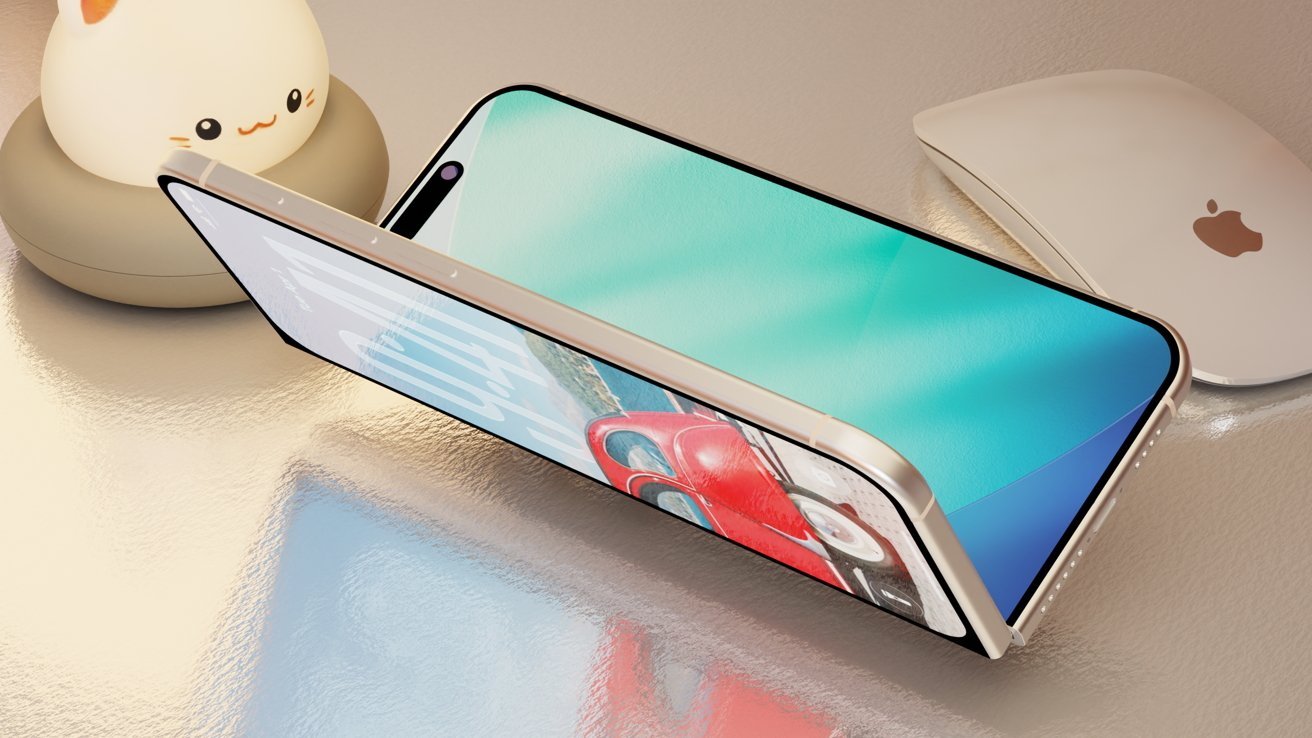
The decision to bring iPhone Ultra Touch ID back into the spotlight has raised plenty of eyebrows, especially since it appears to reverse years of Apple’s push toward facial recognition. This fall, Apple is reportedly launching a new foldable iPhone — rumored to be called the iPhone Ultra — and one of its most surprising features is the return of Touch ID in place of Face ID.
For a device carrying the premium “Ultra” branding, the move seems almost counterintuitive. So why is Apple making the switch? The answer comes down to the physical realities of building one of the most ambitious iPhones ever.
A Truly Unique iPhone
Before getting into the authentication question, it’s worth appreciating just how different this device is shaping up to be.
According to leaks gathered from a variety of sources over many months, the iPhone Ultra may be the most unusual iPhone model Apple has ever produced. Its standout features reportedly include:
- Two displays — a smaller one on the outside and a larger screen that unfolds on the inside
- A hole-punch cutout instead of the familiar Dynamic Island
- Touch ID rather than Face ID for authentication
That last point is the one generating the most discussion, and it’s the focus of this story.
Why Touch ID Feels Like a Step Back
On the surface, swapping Face ID for Touch ID looks like a downgrade — particularly for a flagship model.
Apple has spent years positioning Face ID as its premium, frictionless authentication method, gradually phasing Touch ID out of its high-end phones. So seeing it return on a device branded “Ultra” naturally strikes many as odd. It raises an obvious question: why would Apple seemingly take a step back with its authentication technology on its most cutting-edge phone?
The Real Reason: Space and Thickness
The explanation has little to do with preference and everything to do with engineering constraints.
According to analyst Ming-Chi Kuo, Apple was effectively forced to use Touch ID because of thickness and internal space constraints. In other words, the company didn’t abandon Face ID by choice — the physical design of the foldable simply didn’t leave room for it.
To understand why, it helps to look at two specific challenges.
Challenge One: An Incredibly Thin Design
The iPhone Ultra is set to be remarkably slim, even by Apple’s standards.
For comparison, the iPhone Air measures 5.6mm thick, not counting the camera plateau. The iPhone Ultra, when unfolded, will reportedly measure only 4.5 to 4.8mm — a significant reduction. Face ID’s components do fit inside the ultra-thin iPhone Air, but the foldable’s even slimmer profile makes squeezing them in far more difficult.
Challenge Two: Double the Components
The second obstacle is unique to the foldable design itself.
Even if Apple could somehow fit Face ID into the thinner frame, the foldable form factor would require double the components. That’s because each of the iPhone Ultra’s two displays would need its own dedicated set of Face ID hardware to function properly.
That requirement creates a serious problem. Whether or not Apple could technically pull it off, doing so would consume valuable internal space — real estate that could otherwise be devoted to other priorities.
What Apple Gains by Choosing Touch ID
By opting for Touch ID, Apple frees up room for features that arguably matter more to users.
The space saved could instead go toward components like a larger battery, a vapor chamber for better cooling, and more. For a device packing two displays and a folding mechanism, every millimeter of internal space is precious.
Touch ID solves the problem elegantly. Integrated into the iPhone Ultra’s power button, it doesn’t require Apple to double up on components the way Face ID would. That efficiency is precisely why the company reportedly chose it this time around.
Why This Matters
The Touch ID decision reveals something important about the trade-offs involved in building foldable devices.
A few key takeaways stand out:
- Foldable phones force difficult compromises, and authentication is just one of them.
- Apple appears to be prioritizing battery life and thermal performance over facial recognition in this design.
- The choice reflects engineering necessity rather than a philosophical shift away from Face ID.
In that light, the return of Touch ID isn’t really a step backward — it’s a practical solution to the unique demands of a folding form factor.
What Comes Next
With the iPhone Ultra expected to launch this fall, attention will turn to how users respond to the return of Touch ID on a premium device.
For some, the power-button-integrated fingerprint sensor may feel like a welcome and familiar option. For others, the absence of Face ID on a flagship could be a point of frustration. Either way, the decision underscores the balancing act Apple faces as it pushes into the foldable era.
As more details emerge ahead of the launch, the iPhone Ultra Touch ID choice stands as a telling example of how ambitious hardware design often comes down to hard trade-offs — and how even Apple must bend to the constraints of physics when building something genuinely new.
Author