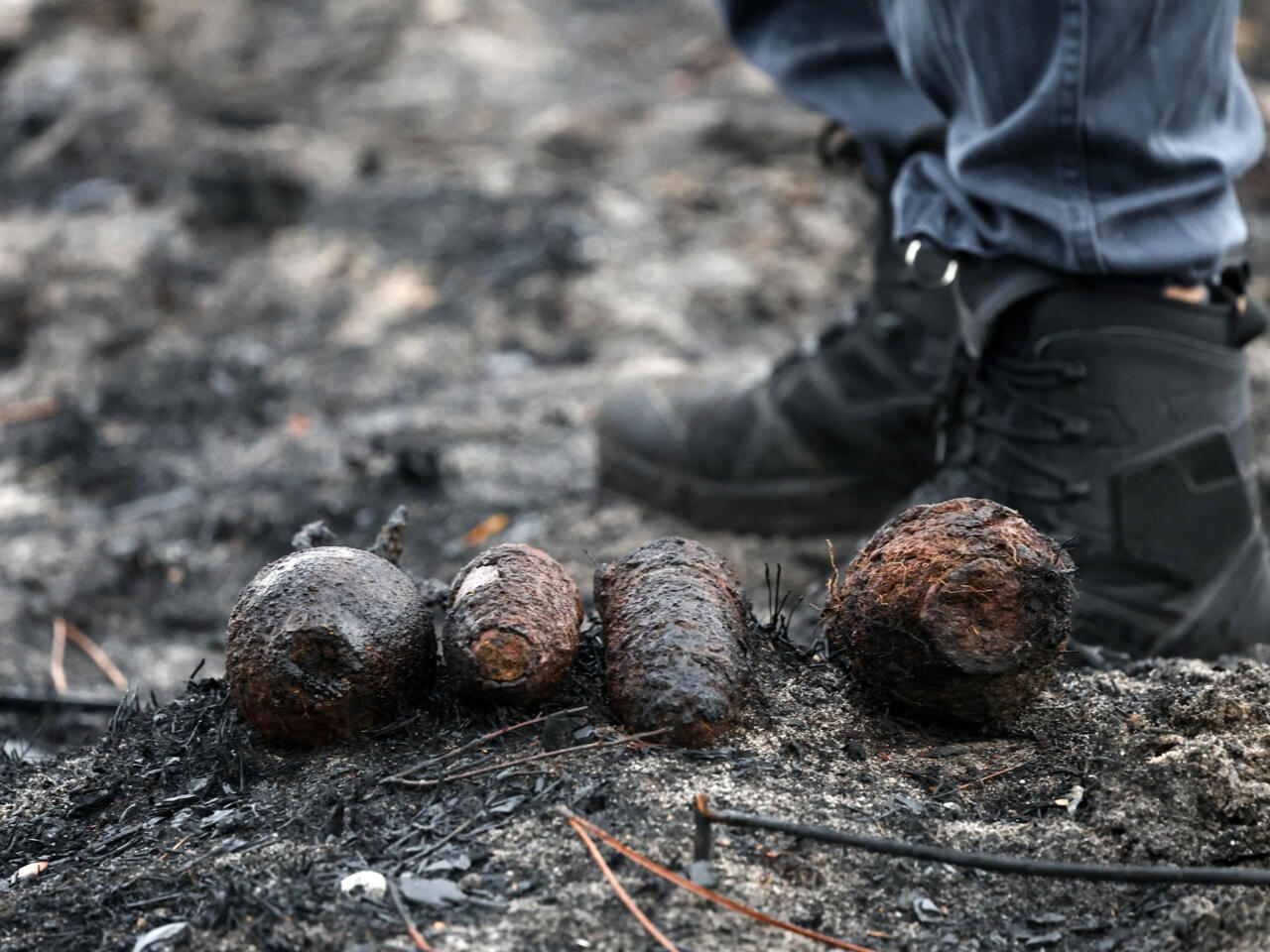
WWII shells found Le Porge have added an unexpected and dangerous complication to France’s worst wildfire season on record. As residents of the Gironde village began returning to what remained of their homes, bomb disposal teams recovered more than 400 shells and munitions from ground that had been burning weeks earlier.
The discovery began, as these things often do, with a sound nobody could explain.
Explosions in the Aftermath
After the fires swept through, people near the village started hearing detonations — the flames were gone, but something was still going off.
A statement from the local authority on Monday confirmed the scale of what followed: a bomb disposal operation carried out with Civil Protection specialists recovered over 400 shells and munitions.
Commandant Philippe Delemotte, who heads the Bordeaux bomb disposal unit, described the initial response to French outlet France Info. Explosions were heard following the fires, his team responded the previous week, and they located a field from which 75 shells were removed.
He detailed some of what was found, including two mortar shells — one French, one German — along with German 5-centimetre shells.
Why the Fire Exposed Them
The mechanism behind the discovery is grimly straightforward.
Delemotte explained that heat caused several of the buried shells to detonate, which is precisely how authorities learned where they were. Fire that intense doesn’t stop at the surface; it heats the soil deeply enough to set off ordnance that had lain dormant for eight decades.
As for how the munitions ended up there, Delemotte said he believed they originated from historic demolition pits — sites where wartime ordnance was disposed of, then forgotten.
He noted that finding such material is not unheard of, but described this case as unusual because the shells were scattered almost everywhere across the area.
The Danger of a Buried Shell
Officials moved quickly to establish an exclusion zone, and the reasoning is sobering.
Delemotte warned that a detonation could send lethal fragments hundreds of metres through the air. That radius means a single shell threatens not just anyone standing over it but people well outside any obvious danger area.
Europe continues to live with this inheritance. More than 80 years after the Second World War ended, unexploded munitions remain scattered across the continent and surface regularly — during construction, farming, flooding, and now fire.
A Village That Lost Almost Everything
Le Porge, home to roughly 3,500 people, was largely emptied in July as flames closed in. Most residents evacuated while hundreds of firefighters fought blazes that officials described as more violent and unpredictable than anything in previous years.
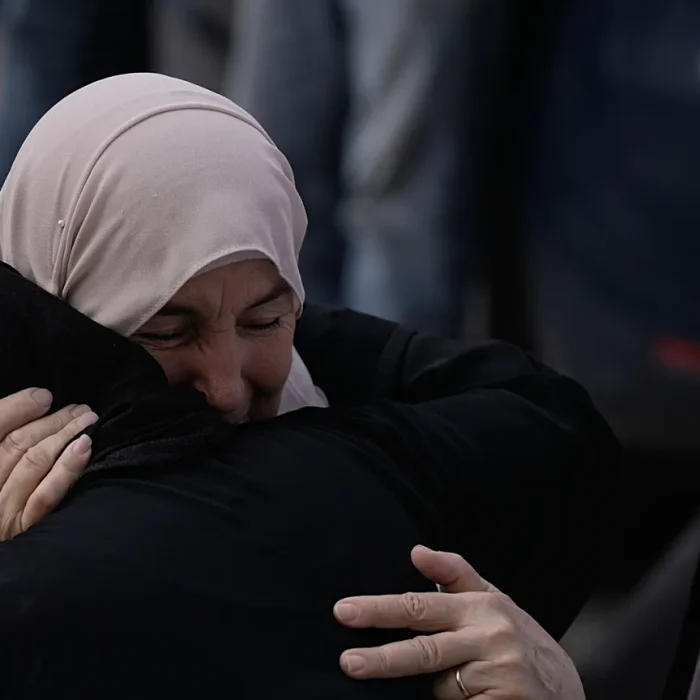
The human cost registered in the accounts of those who came back. One resident who spoke to CNN last month described losing his home and his pets, calling the scene apocalyptic and saying everything burned — including the animals.
Photographs taken Monday captured people picking through the remains of houses that no longer had roofs or walls.
Residents Cleared to Return
Gironde prefect Sophie Brocas authorised residents to return to affected neighbourhoods on Monday, following a safety assessment.
Fires remain active in nearby coastal areas but are described by officials as contained — a status that permits return without guaranteeing the situation is finished.
The Worst on Record
The scale of France’s fire season is difficult to overstate. More than 160,000 hectares — roughly 617 square miles — have burned, making these the largest fires the country has ever recorded.
President Emmanuel Macron characterised the crisis in stark historical terms last month, calling the situation the most severe ever recorded and the toughest the country has faced since the Second World War.
That framing sits uneasily alongside the shells now being pulled from the ground: a modern disaster surfacing the debris of the last one.
Europe’s Heat Emergency Widens
The French fires are one component of a continental crisis.
Temperatures across Central and Eastern Europe are forecast to run 10 to 15 degrees Celsius — 18 to 27 degrees Fahrenheit — above normal, while fires continue to spread through Greece and Italy.
Hungary faces a particularly acute problem. Prime Minister Péter Magyar said the country’s only nuclear power station came within millimetres of shutting down early Tuesday because water levels had dropped so low in sections of the Danube.
The Paks plant relies on river water to cool its reactor core and other critical systems. Magyar said Tuesday that Hungary may need to consider an alternative cooling arrangement rather than continuing to depend on the Danube, according to Reuters.
Hungarian forecasters expect Budapest to reach 40 degrees Celsius for three consecutive days — a sequence that has occurred only once before in the city’s recorded history, earlier this summer during the major European heatwave in late June.
Rivers Giving Up Their Secrets
Le Porge is not the only place where extreme conditions have exposed the past.
Drought and record heat have shrunk European rivers dramatically, revealing objects submerged for generations — ancient bones, century-old shipwrecks, and other relics that normally stay hidden.
In Hungary, receding Danube water levels uncovered several bombs, likely dating to the Second World War, according to a local official who spoke last week.
The pattern is consistent across the continent: as water withdraws and fire burns through, the ground and riverbeds are handing back what they have been holding.
A New Kind of Fire Season
Europe has always experienced wildfires. What scientists emphasise is that climate change is making them progressively more extreme — hotter, faster, and harder to predict.
The consequences extend beyond the burn itself. Emergency services in Gironde now face a hazard nobody plans for in a fire response: clearing wartime ordnance from land where families are trying to rebuild.
For the people of Le Porge, that means returning home means waiting a little longer, and treading carefully when they do. The fire took their houses. What it left behind may take months to remove safely.
Author
-
Lucienne Albrecht is Luxe Chronicle’s wealth and lifestyle editor, celebrated for her elegant perspective on finance, legacy, and global luxury culture. With a flair for blending sophistication with insight, she brings a distinctly feminine voice to the world of high society and wealth.