World Leaders Gather At UN Amid Wars, AI Fears And Climate Crisis
UN General Assembly world leaders are convening this week under an especially heavy cloud, grappling with ongoing wars, deepening global divisions, and fresh anxieties about whether rapidly advancing artificial intelligence could ultimately threaten humanity itself, even as climate disasters and rising prices continue squeezing hundreds of millions of people worldwide.
A Packed Agenda Of Global Crises
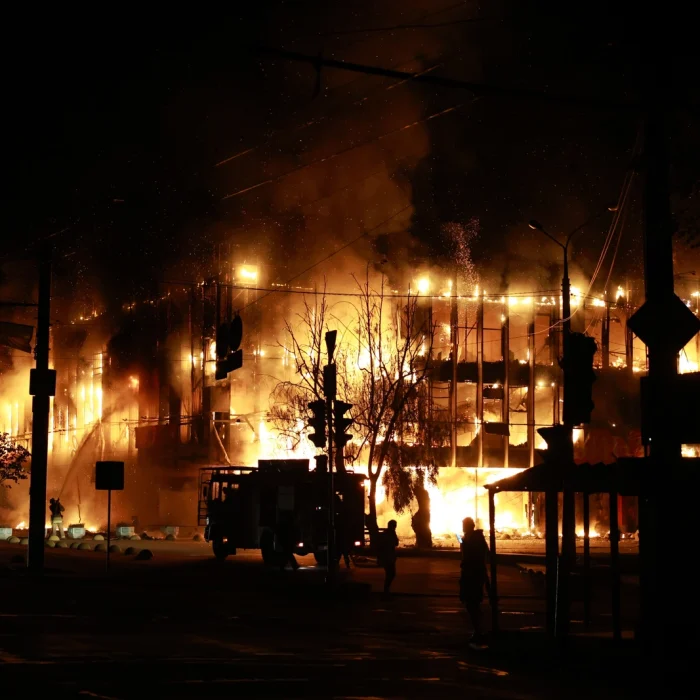
This year’s high-level gathering at the UN General Assembly will inevitably be dominated by major ongoing conflicts spanning Iran, Gaza, Ukraine, Sudan, Congo, and Myanmar, alongside the persistent question of whether world leaders can actually do anything meaningful to bring these wars to an end.
Beyond active conflicts, leaders face mounting pressure to address the relentless progression of global warming threatening the planet’s future, widening inequality both within and between nations, and significant shocks to the global economy as disrupted shipping routes and supply chains push living costs higher while slowing economic growth worldwide.
The UN’s Own Future Under Scrutiny
The institution’s own future will also feature prominently in discussions this week. At 81 years old, the UN’s power structure still largely reflects the victorious nations from World War II rather than today’s actual major global players. Member nations have agreed to a wide-ranging reform package aimed at updating key institutions, including the powerful Security Council, where the United States, Russia, China, Britain, and France maintain outsized influence through veto power. Actually implementing meaningful reform, however, remains considerably more difficult than agreeing to it in principle.
Behind closed doors, speculation continues building about who might eventually lead the United Nations next, given that Secretary-General Antonio Guterres’s second five-year term concludes December 31st with no clear successor having emerged yet.
Who’s Speaking And Who’s Skipping
Despite these challenges, the UN remains the primary gathering place where the organization’s 193 member nations and their leaders convene. Roughly 130 heads of state and government are expected to address the General Assembly starting Tuesday, alongside dozens of additional ministers.
Notable speakers include President Trump and French President Emmanuel Macron, both scheduled to speak Tuesday following Guterres’s opening address on the state of the world. Ukrainian President Volodymyr Zelenskyy and Iranian President Masoud Pezeshkian are set to speak Wednesday, while Israeli Prime Minister Benjamin Netanyahu addresses the assembly Thursday. Palestinian President Mahmoud Abbas won’t physically attend for a second consecutive year after the US denied him a visa, though he’ll still address the assembly remotely by video that same day.
Equally telling are the notable absences. Chinese President Xi Jinping is meeting Trump in Washington Wednesday but skipping the UN gathering entirely, sending a vice president instead, a decision some diplomats interpret as a deliberate snub. Russian President Vladimir Putin also won’t attend, and Indian Prime Minister Narendra Modi has backed out as well.
France’s UN Ambassador Jerome Bonnafont emphasized how critical it is for world leaders to demonstrate support for the UN as a genuine meeting ground for nations, particularly given current levels of global polarization, expressing continued belief in multilateralism and cooperation over confrontation.
A Difficult Year For The UN
This has undoubtedly been a challenging year for the world body, largely sidelined from its core responsibility of maintaining international peace while conflicts rage across the Middle East and Ukraine. Unpaid American dues totaling billions of dollars have left UN finances in precarious condition.
Still, longtime UN observer Richard Gowan suggested 2025 was actually worse, noting that a year ago, many anticipated Trump might use his UN speech to announce American withdrawal from the organization entirely. That announcement never came, and the UN has since limped through financial difficulties that forced cutbacks to peacekeeping operations and humanitarian assistance. Recently, the US paid 725 million dollars toward its dues, enough to preserve its General Assembly voting rights, suggesting Trump intends to keep America within the UN framework going forward.
Gowan characterized the organization as no longer in freefall but rather trapped in an ongoing, seemingly permanent crisis, no longer requiring emergency intervention but still confined to something resembling long-term trauma care.
Artificial Intelligence Takes Center Stage
Concerns about artificial intelligence have pushed dramatically toward the forefront of global priorities, driven by rapid technological advancement alongside growing recognition that virtually no meaningful industry controls or international guardrails currently exist for this powerful yet unpredictable technology.
Just days before this gathering, leaders from three major AI companies issued warnings about the technology potentially slipping beyond human control, calling for a development pause. Trump dismissed these concerns as a hoax, instead urging continued rapid advancement to maintain American competitiveness against China.
Reflecting growing unease, the Security Council added a dedicated high-level meeting on AI to Wednesday’s agenda, alongside an already scheduled high-level session on Ukraine featuring Zelenskyy that same morning.
Guterres, delivering his final assembly address as UN chief, previewed remarks acknowledging that global power dynamics are shifting during an era marked by deep uncertainty, emphasizing that international cooperation has become more essential than ever given the multiple existential threats facing humanity simultaneously.
Finding Hope Amid Complexity
Beyond these headline issues, numerous other topics will compete for attention throughout the week, including rising sea levels, education funding, and ongoing efforts toward gender equality, with hundreds of private meetings unfolding across UN offices, hotels, diplomatic missions, and restaurants throughout New York.
Esther Brimmer, a senior fellow specializing in global governance at the Council on Foreign Relations, noted that in-person meetings often help nations work through ideas that eventually get implemented months later. While describing 2026’s global situation as considerably more serious and complex than in previous decades, Brimmer expressed genuine optimism rather than despair, pointing to decades of accumulated experience and learning around effective international cooperation as reason for continued hope despite the daunting challenges facing world leaders this week.
Author