The debate surrounding the NCAA transgender athlete policy has intensified following a major Supreme Court decision, but the organization’s leader appears unmoved. NCAA President Charlie Baker made it clear this weekend that he does not anticipate any changes to the association’s current rules, even in the wake of the high court’s ruling.
A Firm Stance from the Top
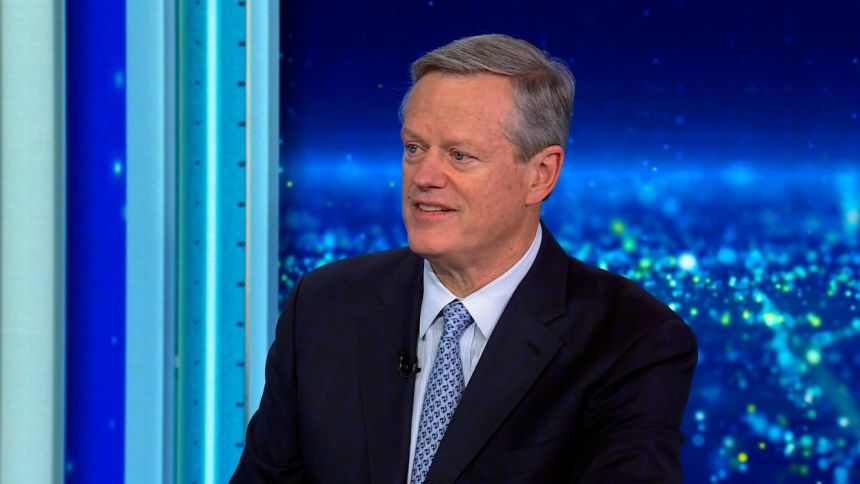
Speaking on Sunday, Baker addressed the question head-on. He expressed confidence that the NCAA’s existing policy on transgender-athlete participation would remain intact despite the Supreme Court’s involvement in the issue.
His comments came during an appearance on CBS’s “Face the Nation,” where he was directly asked whether the organization might need to adjust its approach. Baker’s response was straightforward: he doesn’t believe any tweaking will be necessary.
Understanding the Supreme Court Ruling
To grasp the significance of Baker’s position, it helps to understand what the Supreme Court actually decided. In a 6-3 vote handed down on Tuesday, the justices sided with West Virginia and Idaho, ruling against transgender athletes who had filed lawsuits seeking access to girls’ sports.
The two closely watched cases, known as West Virginia v. B.P.J. and Little v. Hecox, centered on state laws with a specific requirement. These laws mandate that student-athletes compete on teams matching their biological sex at birth rather than their gender identity.
By upholding these statutes, the court delivered a decisive victory to the states involved and set a notable precedent in the ongoing national conversation about fairness and inclusion in athletics.
Why Baker Believes the Policy Will Hold
When pressed on whether the NCAA would revise its rules, Baker explained his reasoning by pointing to the value of consistency across the country. He emphasized that the organization generally aims to create policies applicable to most of its programs, ideally establishing a uniform national standard.
Baker recounted conversations he had after taking on his role, noting that he told lawmakers from both political parties in Washington that clarity was essential. He argued that the NCAA needed a clearly defined national standard, and the organization ultimately adopted and complied with the framework put forward by the Trump administration.
He did, however, draw a distinction between national and state-level matters. According to Baker, what unfolds at the state level represents a separate question altogether. Even so, he maintained that the NCAA’s national standard would remain the benchmark schools are expected to follow when it comes to eligibility for college sports.
The Origins of the Current Policy
The NCAA’s present approach didn’t emerge in a vacuum. The organization overhauled its gender-eligibility policy back in February 2025, shortly after President Donald Trump signed an executive order titled “No Men in Women’s Sports.”
This shift marked a dramatic reversal from a prior policy that had been in effect since 2010. Under the older rules, transgender athletes had been permitted to participate in women’s sports, a stance that stood for well over a decade before the change.
The revised policy introduced new language governing participation. It states that a student-athlete assigned male at birth may practice on an NCAA women’s team and receive all other benefits available to student-athletes, while stopping short of full competitive eligibility in the same manner as before.
Critics Say the Rules Fall Short
Despite the significant changes, the updated policy has not satisfied everyone. In fact, it has drawn considerable criticism from those who argue it doesn’t go far enough to protect female athletes competing at the collegiate level.
Detractors have raised several concerns about the framework, including:
- The belief that the policy fails to establish sufficiently clear barriers to safeguard women’s sports.
- Worries that the rules leave room for potential loopholes.
- The most frequently voiced objection, which centers on birth certificate modifications.
That final point has become a particular flashpoint. Critics contend that the policy may allow transgender athletes to sidestep the intended restrictions by changing the gender listed on their birth certificate. This alleged loophole has fueled ongoing frustration among those who feel the NCAA’s measures don’t provide adequate protection.
The Bigger Picture
Baker’s remarks arrive at a pivotal moment in the broader national debate over transgender participation in sports. With the Supreme Court now weighing in and affirming state-level restrictions, the tension between federal frameworks, state laws, and organizational policies has become increasingly complex.
The NCAA finds itself navigating a delicate balance. On one hand, it seeks to maintain a consistent national standard that provides clarity for its member schools. On the other, individual states are enacting their own laws, some of which may impose stricter requirements than the association’s rules.
Baker’s insistence that the national standard will govern eligibility decisions suggests the NCAA intends to hold its ground, at least for now. Yet the interplay between state legislation and the organization’s policies could create friction down the road, especially in states with laws that diverge from the NCAA’s approach.
What Comes Next
For those following this issue closely, several questions remain unresolved. How will states with laws stricter than the NCAA’s standard reconcile the difference? Will continued criticism prompt the organization to reconsider its stance despite Baker’s current confidence? And how might future legal challenges shape the landscape?
For the time being, Baker’s message is one of stability. He has signaled that the NCAA does not plan to alter its policy in response to the Supreme Court’s decision, choosing instead to rely on the national standard it adopted in line with the Trump administration’s directive.
Final Thoughts
The conversation surrounding transgender athletes in college sports shows no signs of quieting down. With passionate voices on all sides, a recent Supreme Court ruling reinforcing state authority, and critics demanding stronger protections, the NCAA occupies a challenging position at the center of it all.
Charlie Baker’s steadfast defense of the organization’s current policy reflects a desire for consistency and clarity in an area fraught with legal and social complexity. Whether that position can withstand mounting pressure from critics, evolving state laws, and future court battles remains to be seen.
As this story continues to develop, one thing is certain: the debate over fairness, inclusion, and competition in women’s sports will remain a defining issue in the world of collegiate athletics for the foreseeable future.
Author