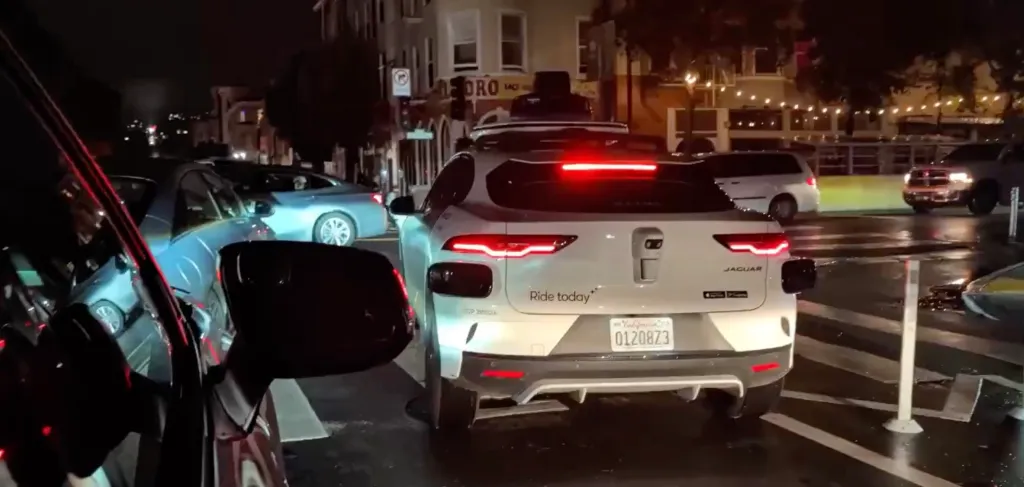
The reputation of Waymo robotaxis San Francisco took an unexpected hit this Independence Day, as several of the company’s self-driving vehicles struggled to live up to their autonomous promise. What should have been a routine holiday evening turned into a public display of the technology’s limits, with cars stalling, getting stuck, and ultimately requiring tow trucks to clear them from the streets.
A Rough Night for Self-Driving Cars
On the Fourth of July, the futuristic vision of driverless transportation collided with the messy reality of holiday chaos. Across San Francisco, residents witnessed Waymo vehicles behaving in ways that were anything but smooth and automated.
Throughout Saturday night, locals took to social media to document the trouble. Videos captured Waymo cars malfunctioning, sitting motionless, and being hauled away as the surrounding festivities descended into gridlock. For a company built on the premise of seamless autonomy, the footage told a very different story.
Social Media Captures the Chaos
The incidents didn’t stay hidden for long. Frustrated onlookers shared clip after clip of the struggling robotaxis, offering a window into just how disrupted the evening became.
One user on the platform X, posting under the name Marco Gutierrez, shared video of a Waymo being towed and relayed a startling detail. According to what he was told, clearing the disabled vehicles could take three to four hours before traffic would be able to move again.
Other posts painted an equally chaotic picture. Users uploaded footage showing:
- Stalled vehicles blocking roadways
- Extensive traffic jams throughout the area
- One particularly dramatic moment where a Waymo drove directly through an erupting box of fireworks
These viral moments quickly turned the company’s technology into a talking point, and not for the reasons Waymo would have hoped.
Waymo Responds to the Disruption
Faced with mounting attention, the company offered an explanation. Waymo spokesperson Chris Bonelli acknowledged that severe traffic congestion had thrown off normal operations for some of the fleet.
Bonelli explained that the company coordinated with local authorities and emergency services to address the situation. He said their roadside assistance team moved quickly to clear the affected vehicles from the area. He also emphasized that Waymo continually looks for ways to improve how its cars handle major traffic disruptions, framing the night as a learning opportunity rather than a fundamental failure.
What Actually Went Wrong
Digging into the details, Waymo provided a clearer account of the circumstances that led to the breakdowns. The northern part of San Francisco experienced intense traffic congestion during Saturday’s celebrations, a problem compounded by unplanned road closures following the fireworks display at the Golden Gate Bridge.
The company described a range of outcomes for its vehicles caught in the mess:
- Some cars became trapped in the gridlock and couldn’t move.
- Others managed to drive away once the congestion eventually eased.
- A number of vehicles drained their batteries while idling in place, leaving them stranded and in need of towing.
That last point proved especially embarrassing. The image of high-tech robotaxis running out of power while stuck in traffic underscored a practical vulnerability in the technology that many might not have anticipated.
No Injuries, Full Autonomy Maintained
Despite the disorder, Waymo was careful to highlight several reassuring facts. The company stated that its roadside assistance team managed all the towing logistics, ensuring the disabled vehicles were removed as efficiently as possible.
Importantly, no injuries were reported in connection with any of the incidents. The company also stressed that the vehicles were operating in fully autonomous mode throughout, meaning the failures stemmed from the extraordinary conditions rather than any human error behind the wheel, because there were no human drivers to begin with.
The Technology Behind the Robotaxis
To appreciate why these breakdowns caught attention, it helps to understand the sophisticated systems powering these vehicles. Waymo’s autonomous navigation depends on an elaborate multi-sensor setup designed to give its artificial intelligence multiple ways to interpret its surroundings.
Each vehicle is equipped with an impressive array of hardware, including:
- 29 cameras providing visual coverage
- Five lidar units for precise distance mapping
- Six radar sensors to detect objects and movement
This combination allows the AI to perceive its environment from various angles and through different methods, theoretically making the cars capable of handling complex real-world situations. Yet even this advanced technology proved no match for the perfect storm of holiday traffic, road closures, and dwindling battery life.
A Growing Presence with Growing Pains
Waymo, owned by Alphabet, has been steadily expanding its footprint across the country. So far, the company has deployed roughly 2,500 robotaxis in multiple American cities, positioning itself as a leader in the race toward autonomous transportation.
That scale of deployment means moments like this one are bound to draw scrutiny. As more of these vehicles hit the streets, incidents that expose their weaknesses become increasingly visible, and increasingly consequential for public trust.
What This Means for the Future
The Fourth of July mishaps serve as a reminder that autonomous vehicle technology, however advanced, still faces real hurdles in unpredictable environments. Holiday celebrations, with their crowds, fireworks, sudden road closures, and gridlock, represent exactly the kind of edge cases that challenge even the most sophisticated systems.
For Waymo, the episode raises practical questions worth considering:
- How can the vehicles better manage battery life during extended idling?
- What protocols should be in place when cars become trapped in unexpected gridlock?
- How quickly can the company respond when multiple vehicles fail simultaneously?
The company’s acknowledgment that it is always evaluating ways to strengthen its resilience suggests these are questions Waymo is actively wrestling with.
Final Thoughts
While the sight of stranded robotaxis made for entertaining social media content, the underlying story points to the ongoing growing pains of a transformative technology. Waymo’s vehicles performed admirably in the sense that no one was hurt and the cars maintained full autonomy, but the night nonetheless exposed vulnerabilities that the company will need to address.
As driverless cars become a more common fixture on city streets, events like this San Francisco gridlock offer valuable lessons. The path toward fully reliable autonomous transportation is clearly still under construction, and moments of chaos like this Independence Day serve as important checkpoints along the way. For now, Waymo and its competitors have plenty of work ahead to ensure their fleets can handle whatever the real world, and the occasional box of fireworks, throws their way.
Author