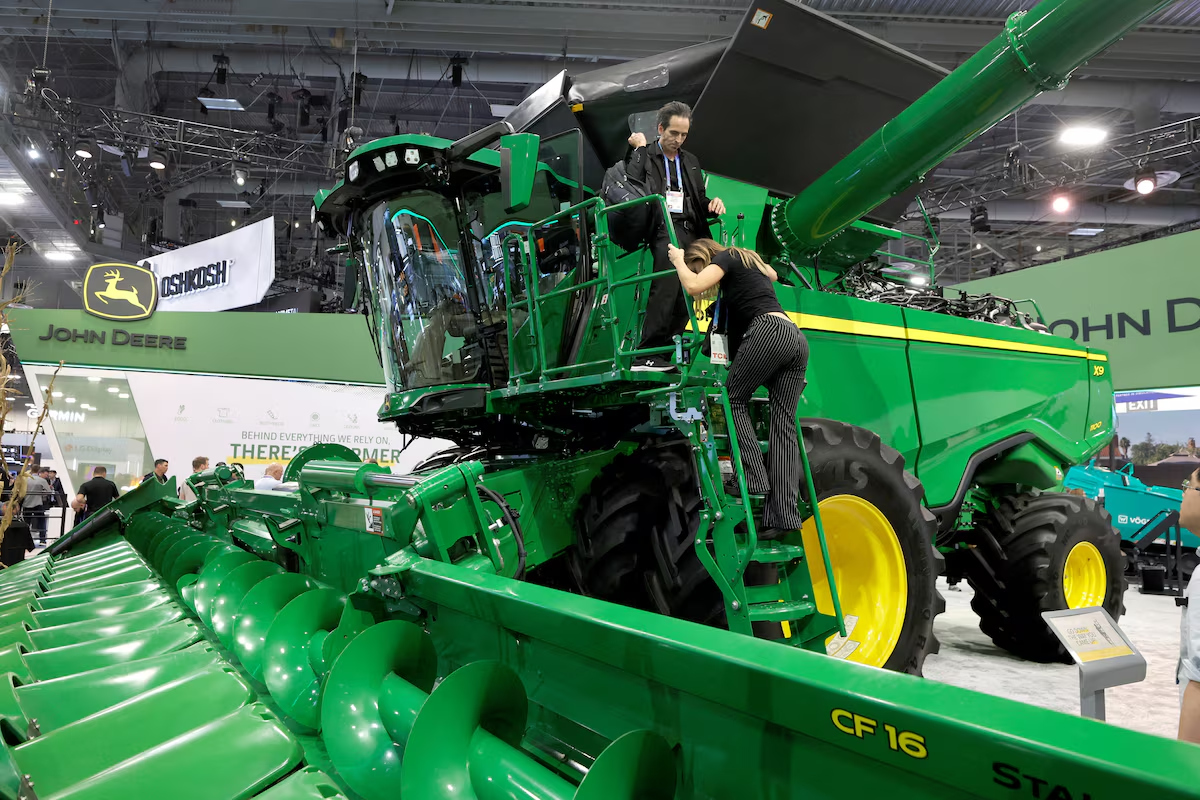
The FTC John Deere right-to-repair settlement marks a watershed moment for farmers and repair advocates who have spent more than a decade battling the tractor giant’s tight grip on equipment servicing. Announced Wednesday by the US Federal Trade Commission, the agreement resolves a 2025 lawsuit that accused John Deere of unlawfully building and maintaining a monopoly over repair services for its farm equipment.
What the Settlement Requires
At the heart of the deal are sweeping new obligations for how John Deere handles repairs. The company must now give farmers and independent repair shops access to the same tools and resources it has long reserved for its official dealers.
That access extends into areas that had previously been off-limits or heavily restricted, including software capabilities such as:
- Reading and resetting equipment codes
- Pairing with other software systems
These limitations had real consequences. Restricted access often created delays in diagnosing equipment problems, and for farmers, a delayed fix can mean a delayed harvest, something many viewed as a fundamental threat to their livelihoods.
Under the agreement, John Deere is required to provide this level of access, equipment, and services for the next 10 years, with the FTC monitoring compliance throughout.
A Long-Awaited Victory
For those who have fought this battle for years, the settlement offers genuine hope, tempered by caution.
Willie Cade, a board member of the repair advocacy group Repair.org, welcomed the order as a real breakthrough for farmers after years of struggle. Still, he stressed that promises written on paper must translate into tools actually placed in farmers’ hands, pledging that his organization would closely watch how the agreement is implemented at every stage.
The fight itself stretches back well over a decade, though the federal effort gained momentum more recently. The FTC launched its case in 2021 under then-chair Lina Khan during the Biden administration.
More Than a Payout
This settlement is not John Deere’s only recent legal reckoning. In April, the company agreed to pay $99 million to resolve a separate class action lawsuit filed in 2022.
Repair and consumer advocates, however, argue that the FTC settlement does far more to help farmers than a financial payout ever could, precisely because it changes how the company must operate going forward rather than simply compensating for past conduct.
John Deere’s Response
For its part, John Deere has maintained that it already offers robust repair resources to its customers, including service manuals and diagnostic equipment. In its press release, the company framed the settlement as consistent with what it has been doing all along.
According to John Deere, the agreement reinforces its continued push toward more flexible repair options, emphasizing greater access and transparency for customers, and formalizes what it described as an ongoing commitment to expanding access to diagnostic and repair tools.
A Broader Push for a Fixable World
The settlement also resonated with consumer advocacy groups that have long pressed the issue. US PIRG, which filed an official complaint against John Deere’s repair policies in 2022, celebrated the outcome.
Nathan Proctor, the group’s Right to Repair campaign director, framed the win in simple terms: people should be able to fix their own belongings. He called the settlement a victory not just for farmers gaining better repair options but for everyone who wants to live in a more fixable world.
As the 10-year monitoring period begins, the real test will be implementation, whether the access promised on paper genuinely reaches the farmers and independent shops that have fought so long to secure it.
Author