Sam Neill dies at 78, and with him goes one of cinema’s most reliably human presences. The New Zealand actor, whose face became inseparable from a certain paleontologist in a certain dinosaur park, passed away in Sydney, his family confirmed on Monday.
A Passing That Caught Everyone Off Guard
The announcement came through a family statement posted to Instagram, and its tone was as measured as the man it described.
“Sam was surrounded by family and passed with the dignity that has characterized his whole life,” they wrote.
What struck many was the description of the loss as sudden and unexpected. The family noted a bittersweet detail: Neill remained free of cancer at the time of his death. No cause was given.
Only in April, he had shared news that he was cancer free following several years of treatment for blood cancer. It made the timing feel especially cruel.
The Role That Defined Him Globally
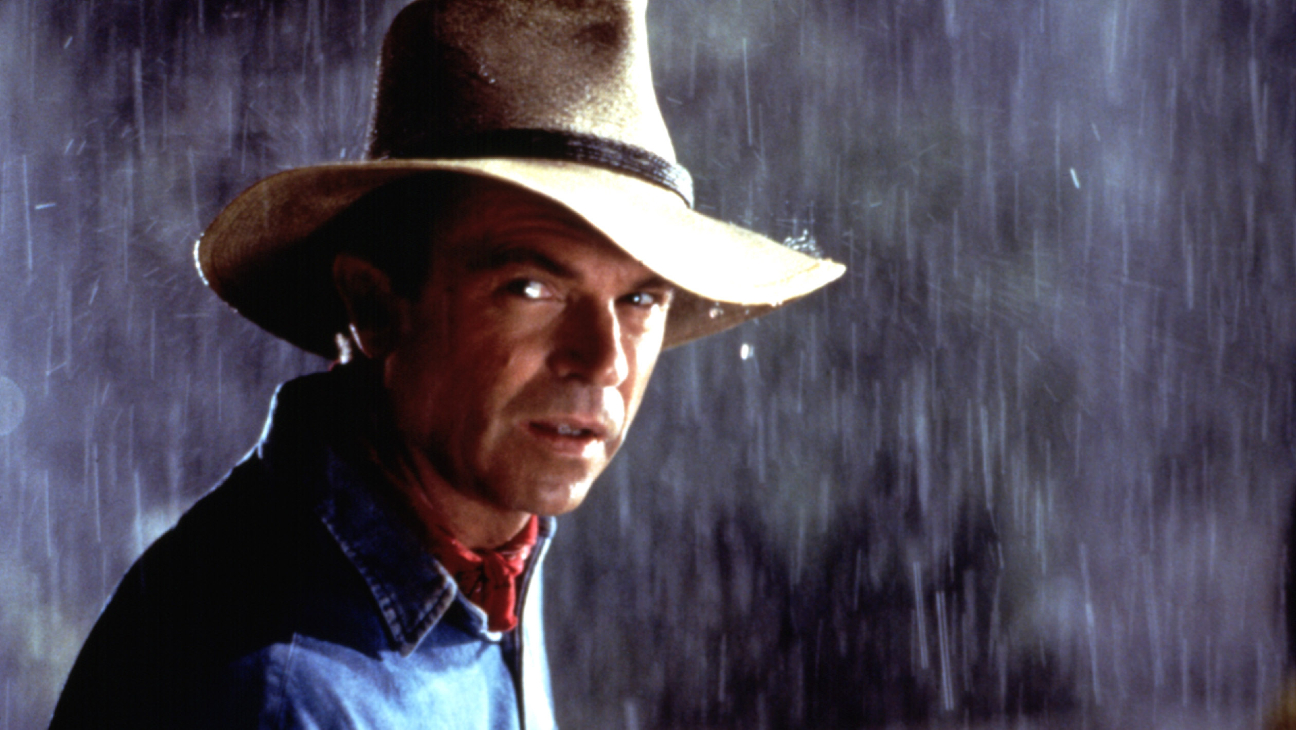
For an entire generation, Sam Neill was Dr. Alan Grant.
His performance in Steven Spielberg’s 1993 blockbuster Jurassic Park turned a skeptical, dust-covered dinosaur specialist into an unlikely everyman hero. He returned to the character in later instalments, most recently in the 2022 film Jurassic World Dominion.
But reducing his career to one franchise would do him a disservice. Neill accumulated more than 150 screen credits across five decades.
From Omagh to Aotearoa
Though the world thought of him as quintessentially Kiwi, Neill’s story began elsewhere.
He was born Nigel John Dermot Neill in Omagh, Northern Ireland, on 14 September 1947, and held both British and New Zealand citizenship. His family moved to New Zealand in the early 1950s.
The name change came later, and the reasoning was pure Neill: he swapped Nigel for Sam because there were simply too many Nigels in his classroom.
Building a Career, One Film at a Time
By the 1970s, he had carved out a foothold in New Zealand cinema. His breakthrough at home came with the 1977 action thriller Sleeping Dogs, a film that managed to travel well beyond the country’s shores.
The international door opened properly in 1983, when he portrayed the real-life spy Sidney Reilly in the television miniseries Reilly, Ace of Spades. The acclaim that followed transformed him from a local talent into a genuine global prospect.
The Range Behind the Reputation
What made Neill remarkable was his refusal to be typecast.
- A Soviet submarine officer in The Hunt for Red October in 1990
- The husband of Holly Hunter’s Ada in the Oscar-winning romance The Piano in 1993
- A haunted astrophysicist adrift in the sci-fi horror Event Horizon in 1997
- A weathered, middle-aged Merlin in NBC’s 1998 miniseries of the same name
That Merlin performance earned him one of his two Emmy nominations. Across his career, he also collected three Golden Globe nominations.
Never Slowing Down
Even in his later years, Neill kept working with the kind of quiet consistency that rarely makes headlines but builds legacies.
He appeared in the British crime drama Peaky Blinders and delivered a beloved turn in Taika Waititi’s 2016 comedy adventure Hunt for the Wilderpeople, a film that reintroduced him to younger audiences on his home turf.
Honours and Recognition
Neill’s contributions were formally acknowledged more than once.
He was appointed an Officer of the Order of the British Empire in 1991 for services to acting. In 2007, New Zealand made him a Distinguished Companion of the New Zealand Order of Merit. In 2022, he accepted a knighthood.
Leaders and Peers Pay Tribute
The response to his death spanned two countries and an industry.
New Zealand Prime Minister Christopher Luxon described him as one of the greats, crediting Neill with carrying New Zealand stories to global audiences for over five decades. Luxon argued that Neill’s talent was foundational to the country’s film industry becoming one of its most significant cultural exports.
Australian Prime Minister Anthony Albanese said Neill had earned a special place in Australian hearts, describing him as wry, dry, thoughtful and laconic. He noted that Neill confronted illness with the same dignity, humour and conviction that ran through every performance he gave.
Fellow Kiwi actor Karl Urban, known for The Boys and The Lord of the Rings, called Neill truly brilliant and described him as an inspiration to those who followed the path he had cleared.
Toni Collette, who worked alongside Neill in Dirty Deeds in 2002 and A Long Way Down in 2014, shared a group photo on Instagram and called him a hero and a legend.
Facing Illness Without Flinching
Neill revealed his diagnosis of a rare form of non-Hodgkin lymphoma after completing work on Jurassic World Dominion. He wrote about the experience in his 2023 memoir, Did I Ever Tell You This?
In a 2023 interview with The Guardian, he spoke about mortality with unusual candour. He said he would like another decade or two, but admitted he was not afraid of dying.
He acknowledged that the previous year had brought dark moments. Yet he framed them as something that sharpened the light, leaving him grateful for each day and deeply appreciative of his friends. He described himself, simply, as pleased to be alive.
A Legacy Measured in More Than Credits
Sam Neill is survived by four children and eight grandchildren.
What he leaves behind is harder to quantify than a filmography. He was the actor who made intelligence look effortless and vulnerability look natural, who could anchor a summer blockbuster and a quiet arthouse drama in the same career without ever seeming out of place in either.
For New Zealand, he was a standard-bearer. For audiences everywhere, he was the man who taught us to be afraid of raptors and, somehow, to love him for it.
Author