Trump’s Intelligence Nominee Dodges Question on Who Won the 2020 Election
The Jay Clayton confirmation hearing was meant to focus on the future of America’s intelligence community, but it quickly veered into the contentious past. As President Trump’s nominee to become director of national intelligence, Clayton appeared before the Senate Intelligence Committee for a session that was supposed to center on foreign threats and national security. Instead, much of the day was consumed by pointed questions about the 2020 presidential election.
A Hearing Hijacked by History
From the outset, the proceedings took an unexpected turn. Rather than dwelling on the intelligence challenges facing the nation, senators repeatedly pressed Clayton on a single, politically charged question: who won the 2020 election?
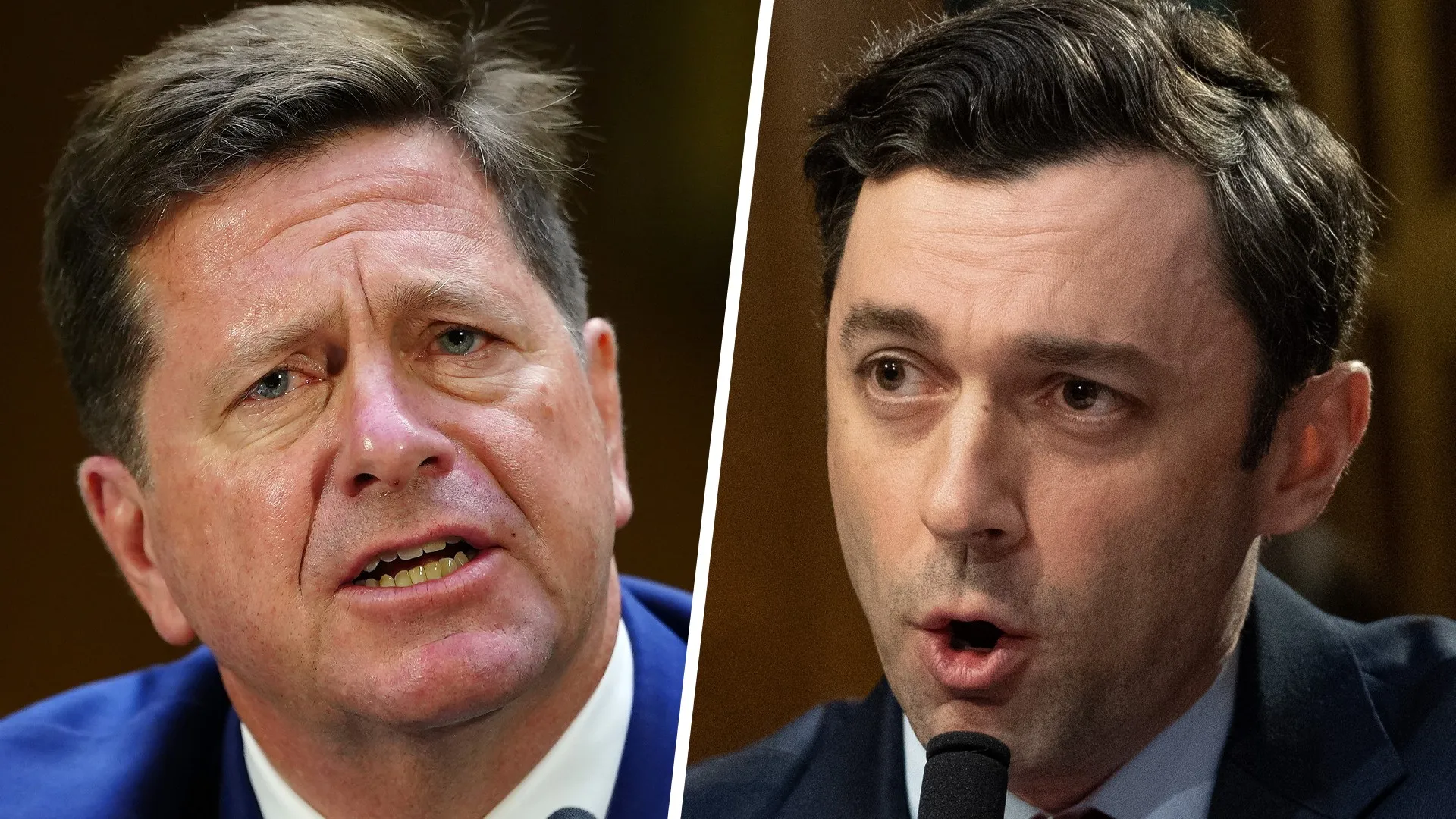
The moment crystallized when Senator Jon Ossoff of Georgia asked him directly. Clayton’s response was telling. He declined to engage, saying he would not go down that path.
The exchange set the tone for a hearing that would become less about Clayton’s qualifications and more about his willingness to break from the president’s long-standing claims about the last presidential contest.
Who Is Jay Clayton?
Clayton brings a substantial résumé to the table. He is a lawyer with more than three decades of experience and previously served as President Trump’s first chairman of the Securities and Exchange Commission.
Most recently, he held the role of U.S. attorney for the Southern District of New York, one of the most prestigious positions within the Justice Department. On paper, his credentials are considerable, yet the hearing largely sidestepped that experience in favor of the election controversy.
A Careful Choice of Words
When pressed on whether he denied that Joe Biden won in 2020, Clayton offered a measured but revealing answer. He stated that he was not an election denier and noted that Biden had been certified as president of the United States.
But there was a conspicuous gap in his phrasing. Throughout the hearing, Clayton consistently avoided using the word “won” to describe Biden’s victory, opting instead for the more technical term “certified.”
Senator Ossoff seized on that distinction, repeatedly demanding a direct answer. Clayton insisted he had already responded, but Ossoff pushed back hard, arguing that Clayton was refusing to answer a basic question about who won a presidential election. Ossoff went further, questioning how someone unwilling to answer such a fundamental question could ask to lead the nation’s intelligence community, and suggesting it was humiliating to indulge the president’s claims.
The Backdrop of Ongoing Election Claims
The tension didn’t emerge in a vacuum. Since 2020, President Trump has continued to assert that he actually won that election. Reports indicated that he was preparing to unveil new alleged details supporting his long-standing but unproven claims of fraud.
Those efforts have had real consequences within the intelligence community. Clayton’s predecessor, Tulsi Gabbard, became entangled in the president’s search for fraud. Gabbard reportedly said that Trump had directed her to observe an FBI raid on an election office in Fulton County, Georgia.
This raises a significant legal concern, as the director of national intelligence is barred by statute from participating in domestic law enforcement or intelligence collection.
Questions About Gabbard’s Involvement
When asked whether he was aware that Gabbard had testified her presence at the raid was requested by the president, Clayton said he had not known that until being told during the hearing.
The response drew skepticism from Senator Mark Warner of Virginia, the committee’s vice chairman. Warner said that while he trusted and knew Clayton personally, it strained credibility to believe he had been unaware of Gabbard’s involvement in domestic election activities in Fulton County. Clayton responded by emphasizing that the role of the ODNI is principally focused outside the United States.
The Debate Over the ODNI’s Size
Beyond the election controversy, the hearing touched on a genuinely consequential policy question: the size and scope of the Office of the Director of National Intelligence.
Recently, acting Director Bill Pulte launched a wave of firings as part of a downsizing effort driven by President Trump and backed by Committee Chairman Tom Cotton of Arkansas. Cotton has been sharply critical of the agency, describing it as a bloated bureaucracy that rewards make-work over genuine intelligence work.
Clayton appeared receptive to reform. He suggested that the ODNI should function more like a board of directors, serving as a place for oversight and conflict resolution. To the extent that the agency had drifted into operations or taken on the roles of other agencies, he indicated it should pull back.
A Supportive Perspective From Within
For additional insight, the discussion turned to Fred Fleitz, a veteran with a 25-year career in the intelligence community who served in the first Trump administration as deputy assistant to the president and chief of staff to the National Security Council staff.
Fleitz offered a favorable assessment of the nominee. He described Clayton as a distinguished leader and manager with strong rapport with Congress and relevant experience dealing with congressional oversight. Fleitz believed Clayton would help implement the president’s goal of reforming and downsizing the ODNI.
On the repeated election questions, Fleitz was dismissive. He called it a shame that Democrats were still focused on the 2020 election years later, arguing they had wasted an opportunity to discuss serious national security matters and were instead crafting talking points for the upcoming midterms.
The Case for a Leaner Agency
Fleitz elaborated on why he believes shrinking the ODNI is important. He praised Cotton’s framing of the office as a wasteful and unnecessary layer of bureaucracy, noting that the chairman would like to see its staff dramatically reduced.
Drawing on his own experience, Fleitz explained his key concerns:
- Thousands of bureaucrats currently work within the organization, and its exact function is unclear even to intelligence veterans.
- Too many officials involved in the process make it difficult to deliver intelligence to the president quickly.
- The ODNI has expanded beyond its original coordinating role to actually producing intelligence through bodies like the National Intelligence Council.
Fleitz argued that the office had strayed from the streamlined coordinating mission envisioned by the 9/11 Commission, which wanted it to ensure that intelligence agencies shared information rather than duplicate their work.
On the Question of Foreign Interference
The conversation also addressed concerns about the director of national intelligence becoming entangled in domestic politics. While acknowledging that the intelligence community has consistently found no evidence that foreign actors manipulated actual votes, Fleitz maintained that nations such as China, Iran, and Russia have attempted to influence the outcome of U.S. elections.
He stressed that whether such efforts changed any outcomes remains open to debate, but insisted the intelligence community has a responsibility to guard against hostile powers trying to affect elections, particularly presidential ones.
What Comes Next
The Intelligence Committee is expected to vote on Clayton’s nomination early the following week. The math is straightforward but tight: he would need all nine Republican votes if the committee’s eight Democrats uniformly opposed him.
Fleitz expressed confidence that the president would support Clayton as a strong director while still pursuing structural reductions. He anticipated that Clayton would receive similar directions to those given to Pulte, aimed at right-sizing the organization so that intelligence remains lean, effective, and free of political influence.
A Hearing That Revealed the Moment
Ultimately, the Jay Clayton confirmation hearing offered a revealing window into the current political climate. What was designed as a forum for discussing foreign threats and national security became a battleground over the legacy of the 2020 election.
Clayton’s careful refusal to use the word “won,” the lingering questions about his predecessor’s conduct, and the broader debate over the future of the intelligence community all combined to make the hearing far more than a routine confirmation. As the committee prepares to vote, the tensions on display serve as a reminder of just how deeply the events of recent years continue to shape the nation’s political and institutional landscape.
Author