Dangerous Wildfire Smoke Continues to Blanket Large Parts of the U.S.
Dangerous wildfire smoke is once again spreading across a huge stretch of the country, drifting from the Great Lakes into New England and reaching as far south as Maryland. The result has been a wave of unhealthy, and in some places outright hazardous, air quality affecting millions of people across multiple states.
The haze isn’t just an inconvenience. Experts warn it carries real, and sometimes invisible, health risks, and events like this are becoming more frequent as the climate warms.
Where the Smoke Is Coming From
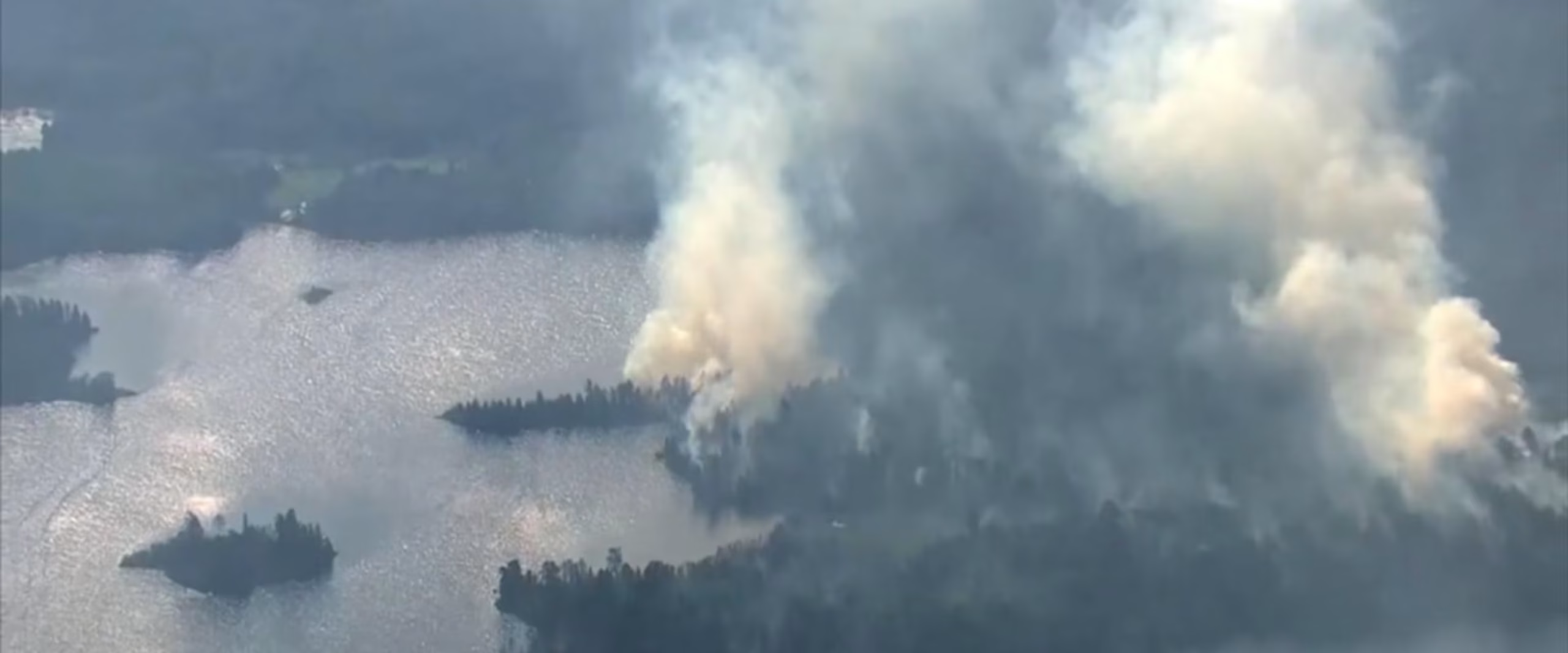
The source of the trouble lies largely to the north. A dangerous mix of extreme heat and dry conditions across Ontario and northern Minnesota fueled a rapid spread of wildfires in mid-July. At the time, more than 800 fires were actively burning across Canada.
Record-breaking temperatures were the key ingredient. A heat dome settled over western Ontario and Minnesota, pushing some areas past 100 degrees. That intense heat allowed the flames to keep advancing on what one expert called an “unprecedented run.”
Derek Mallia, a professor of atmospheric sciences at the University of Utah, described the sheer volume of smoke bluntly: “You have a firehose of smoke coming right now.”
Communities Under Threat
In Ontario, the scenes have been dramatic. Videos circulating on social media show intense flames and skies choked with smoke. Air quality in parts of the province was flagged as “very high risk,” and thousands of residents were forced to flee their homes.
South of the border, the effects have rippled across a wide region. Air quality ranging from unhealthy to hazardous has settled over parts of:
- Minnesota
- Wisconsin
- Michigan
Major cities in the Northeast, including Philadelphia, New York City, and Baltimore, have also been enveloped in the haze. Forecasters expect these smoke-filled skies to linger at least through the weekend.
A Growing Pattern, Not a One-Off
What makes this especially concerning is that events like this are no longer rare. Scientists point to human-driven climate change as a major factor intensifying these conditions. Longer and more severe droughts, combined with prolonged heat waves, are drying out vegetation and turning forests into tinder.
Dan Westervelt, an associate research professor at Columbia University’s Lamont-Doherty Earth Observatory, said the frequency and intensity of these smoke events are climbing. He noted that the fires have become an annual occurrence, and in some years, they strike even more often than that.
The Hidden Dangers of Wildfire Smoke
The health threat from smoke is easy to underestimate, partly because much of what’s harmful can’t be seen. Wildfire smoke is made up of tiny particles that can travel deep into the lungs and even slip into the bloodstream.
The evidence on its effects is well established. Dr. David Eisenman, a professor of medicine at UCLA’s David Geffen School of Medicine, points to research linking smoke exposure to a range of serious outcomes, including:
- Heart attacks and heart failure
- Stroke
- Respiratory illness
- Pregnancy complications from chronic exposure
- Possible developmental disorders in children
Eisenman also noted that air pollution ranks among the leading causes of premature death worldwide, sitting alongside risk factors like smoking and high cholesterol.
Why You Can’t Always Trust Your Eyes
One of Eisenman’s most important warnings is that clear-looking skies can be deceiving. Even when there’s no visible brown haze, the air can still be dangerous.
“Even if the sky is not brown, it still might be toxic for you,” he cautioned, adding that much of what these fires produce is invisible. Because of that, he urges people to check air quality monitors regularly rather than relying on what they can see.
The situation is made worse by the ongoing heat. With millions of Americans also under heat advisories as temperatures top 100 degrees, the combination of smoke and extreme heat compounds the overall risk to public health.
How to Protect Yourself
The good news is that there are concrete steps you can take to reduce your exposure. Eisenman recommends following the Environmental Protection Agency’s guidance on wildfire smoke, and several of those measures are simple to put in place:
- Stay updated on local air quality reports throughout the day.
- Use air purifiers and keep replacement filters on hand.
- Set up a “cleaner air room” in your home equipped with an air purifier.
- Stock up on food and medications so you can avoid going outside when smoke is heavy.
- Cut back on outdoor activity when air quality is poor.
- Wear an N95 mask if you must go outside during smoky conditions.
Looking Ahead
As the smoke continues to drift and the fires keep burning, this episode serves as another reminder of how interconnected our weather, climate, and health have become. With experts warning that these events will keep repeating, and often growing more intense, staying informed and prepared is no longer optional for people living in affected regions.
For now, the advice is straightforward: keep an eye on the air quality, protect your lungs, and take the haze seriously, even on days when the sky looks deceptively clear.
Author