Allegations of Chinese election interference now sit at the center of a sweeping federal investigation ordered by President Donald Trump. There’s just one striking omission: China itself doesn’t appear to be under investigation.
That gap has become the defining oddity of the week in Washington. A president publicly accusing a foreign government of sabotaging an American election, while his administration steers the resulting probes away from that government entirely.
What Trump Actually Ordered
In a Thursday address to the nation, Trump announced he had directed four of the country’s most powerful institutions — the FBI, the CIA, the Justice Department, and the Office of the Director of National Intelligence — to dig into what he described as an official cover-up of Beijing’s activities during the 2020 race.
The accusations were dramatic. He characterized the episode as the biggest breach of election data ever recorded, and claimed it involved the manufacture of fraudulent ballots for Joe Biden. He tied the alleged scheme to payback for his own trade confrontations with China during his first term.
But so far, none of the agencies involved have indicated that Beijing is a subject of the inquiry.
The Justice Department confirmed only that it was carrying out the president’s instructions. Asked directly whether the investigation would examine Chinese meddling, it offered no answer. The FBI, ODNI, and CIA didn’t respond to inquiries at all.
The White House Draws a Line
If there was any ambiguity about the direction of the probes, White House trade adviser Peter Navarro cleared it up on Friday.
He told reporters flatly that this wasn’t a story about China. The investigations, he explained, would concentrate on bad actors inside the United States who allegedly worked to compromise the election’s integrity. The White House separately declined to say whether it intends to pursue Beijing over any of the conduct Trump has described.
In other words: the alleged crime is foreign, but the suspects are domestic.
Democrats Call It Political
That framing handed Trump’s critics an obvious line of attack.
Rep. Ro Khanna of California, the ranking Democrat on the House Select Committee on China, argued that the president is deploying China as an instrument rather than treating it as a genuine threat. His charge is that the accusations exist to serve a political purpose — targeting figures inside the intelligence community — rather than to address any real security failure. He described it as leveraging the U.S.-China relationship to gain influence over American elections.
Khanna said he plans to have the China committee look into Trump’s claims, either immediately or once Democrats hold the majority. The committee’s Republican chair, John Moolenaar of Michigan, didn’t respond to a request for comment.
The Diplomatic Calendar Complicates Everything
Timing is doing a lot of work here.
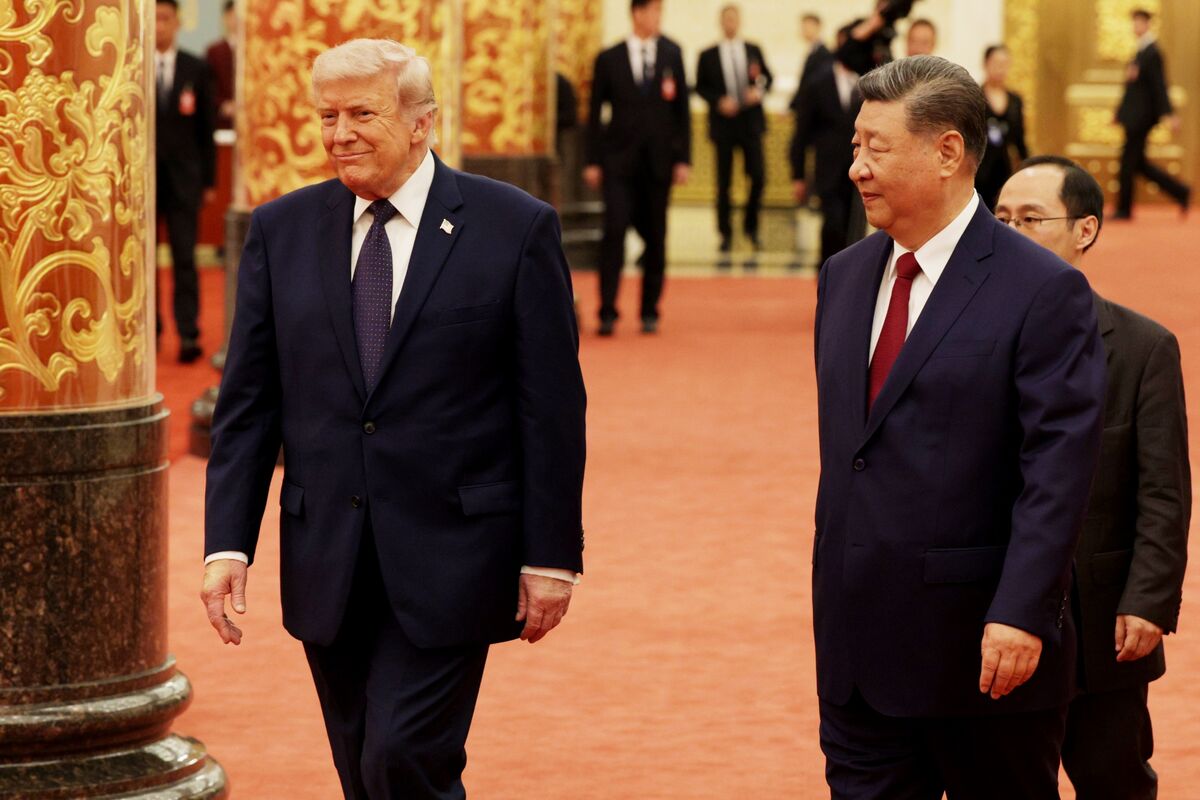
Trump’s accusations arrive while he’s actively pursuing warmer ties with Xi Jinping, following a punishing stretch of tariff and trade fights. The two leaders met in May, and Trump returned promoting agreements covering agricultural exports and Boeing aircraft sales. They’re scheduled to meet again in Washington in September.
The White House confirmed that summit remains on the calendar as planned. It would not say whether the election interference allegations will come up when the two men sit down.
Beijing Isn’t Panicking
China’s public response was firm but measured. Foreign Ministry spokesperson Lin Jian dismissed Trump’s remarks as a baseless accusation and a significant smear. Notably, he gave no signal that the broader relationship was in jeopardy. The Chinese Embassy in Washington declined to add anything further.
Privately, the mood appears even calmer. A Washington-based Asian diplomat in regular contact with Chinese counterparts, speaking anonymously to talk freely, said Beijing didn’t seem especially bothered by the speech. Their read: China is pushing back loudly in public while remaining fully open to negotiation. They characterized the whole episode as background noise, not a genuine threat to the September meeting.
The Evidence Problem
Trump’s core claims have been examined before, and repeatedly.
Investigations by agencies including the Cybersecurity and Infrastructure Security Agency and the FBI have found no support for them. More significantly, the intelligence community’s own 2021 assessment concluded that China weighed influence operations and ultimately chose not to carry them out — largely because it saw little advantage in either Trump or Biden winning.
Dennis Wilder, who served as the National Security Council’s China director under George W. Bush, was blunt about the prospects. He noted that the relevant intelligence has been picked over exhaustively without producing anything implicating China. Absent some overlooked piece of decisive evidence — which he considers highly improbable — he doesn’t expect the effort to lead anywhere.
Republicans Are Split
The response on the right hasn’t been uniform.
Sen. Todd Young of Indiana argued that the government genuinely does need to sharpen its understanding of Chinese Communist Party activity and get better at disrupting it. His emphasis was on building a shared picture across Congress, the executive branch, state and local officials, and the security agencies — a critique of institutional coordination more than an endorsement of Trump’s specific claims.
China hawks were more openly frustrated by the contradiction.
Michael Sobolik, formerly a national security aide to Sen. Ted Cruz, laid out the inconsistency in a series of pointed questions. If Trump truly believes Beijing worked to defeat him, why pursue stable relations with Xi now? Why permit ByteDance to retain control over TikTok’s algorithm? Why approve sales of advanced AI chips to China? Why roll back a Hong Kong emergency order?
Those questions cut to the heart of the matter. The administration’s policy posture toward Beijing looks nothing like the posture of a government that believes it was the victim of foreign election sabotage.
What to Watch Next
Two things will reveal whether these allegations amount to a policy shift or a political maneuver.
The first is the September summit. If Trump raises the interference charge directly with Xi, that suggests he intends to act on it. If the meeting proceeds as a trade-focused affair, the accusations start to look like domestic messaging.
The second is who actually ends up under investigation. Should indictments or referrals emerge, their targets will speak louder than any speech. Current signals point toward American officials, not Chinese ones.
For now, the administration has produced an unusual arrangement: a foreign interference scandal in which the foreign country plays no part in the response.
Author