The dispute between Zelenskyy and Syrskyi may be nearing a resolution that few expected a week ago. Ukraine’s president is considering removing Oleksandr Syrskyi as commander-in-chief of the armed forces, according to a Financial Times report, following days of upheaval across the country’s military leadership.
The newspaper cited an unnamed senior administration official who said Zelenskyy is already evaluating alternative candidates for the post.
A Crisis That Started With a Different Firing
The current turmoil traces back to Zelenskyy’s decision to dismiss civilian defense minister Mykhailo Fedorov.
Fedorov had been in open disagreement with Syrskyi over strategy. He was also genuinely popular — widely credited as one of the architects of Kyiv’s drone campaign against Russia, an effort that has delivered some of Ukraine’s most visible successes deep inside Russian territory.
Removing him produced consequences the president appears not to have anticipated.
Street protests broke out. Ukraine’s foreign allies expressed dismay. And within days, the question shifted from why Fedorov was fired to whether Syrskyi would survive the backlash.
Protests in Central Kyiv
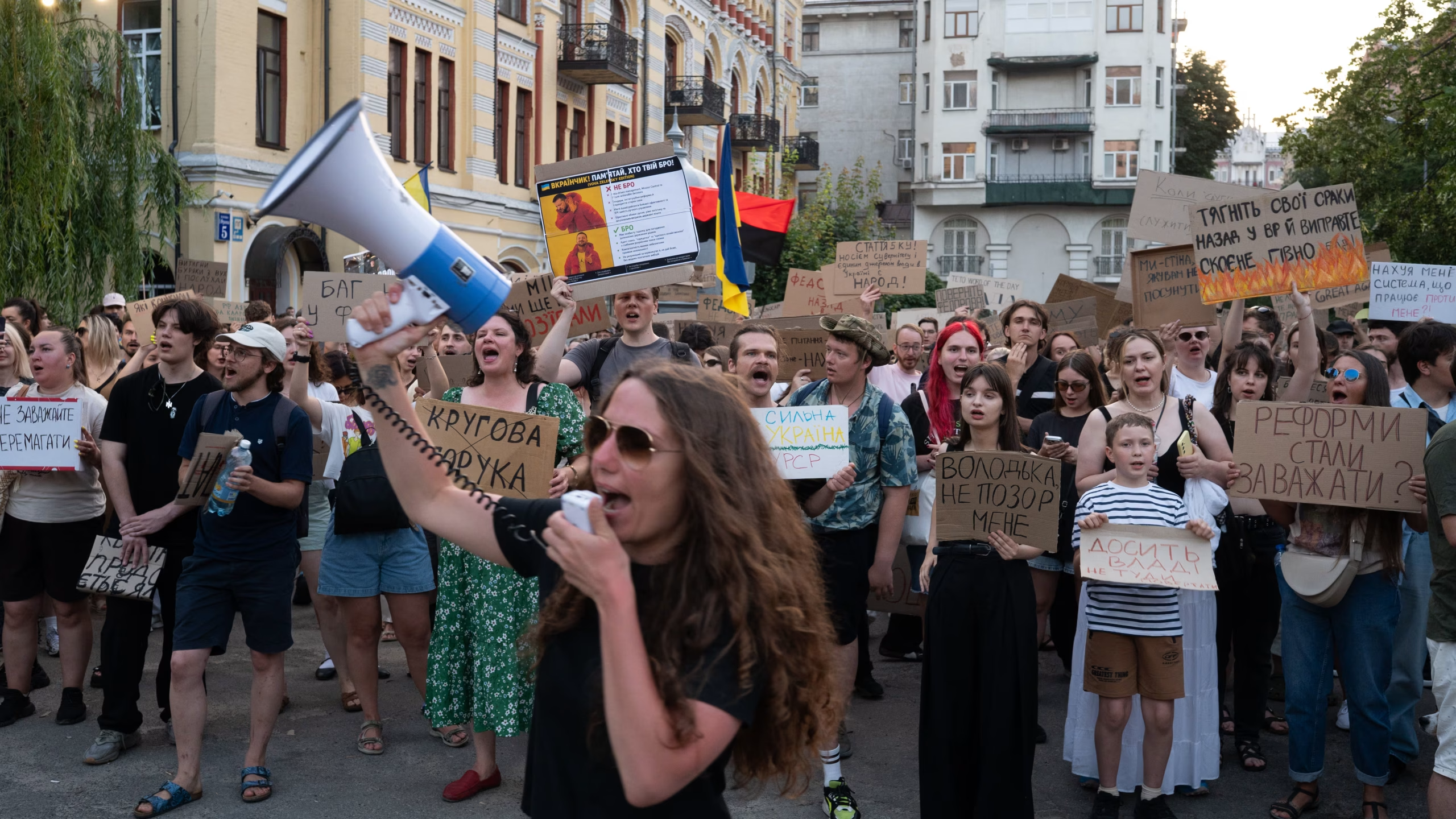
Thousands gathered in central Kyiv on Thursday after calls circulated on social media opposing Fedorov’s removal.
The demonstrations continued Friday, this time outside the presidential office — a direct escalation in both location and message.
Public protest during wartime carries particular weight in Ukraine. Citizens under sustained attack have generally prioritized unity over internal political disputes, which makes the willingness to mobilize a signal that something significant has ruptured.
Fedorov’s Account
The dismissed minister has not stayed quiet.
Fedorov said he declined an offer to serve as an adviser to Zelenskyy, even as the president publicly maintained that the 35-year-old remained part of his team.
More consequentially, Fedorov told reporters that he had asked Zelenskyy to dismiss Syrskyi and was refused. He accused the 60-year-old four-star general — who was educated in Moscow — of obstructing defense reforms and of engineering his own removal.
That accusation reframes the entire episode. It casts Fedorov’s firing not as a routine personnel decision but as the outcome of an internal power struggle that Syrskyi won.
If Zelenskyy now removes Syrskyi, it amounts to a reversal of that outcome under public pressure.
The Signal From Saturday
Zelenskyy posted on X that he was meeting Saturday with corps commanders defending what he described as the most intense sections of the front lines.
He offered no characterization of what was discussed.
The timing invites interpretation. A president reportedly weighing the removal of his top commander, meeting directly with field commanders, is at minimum taking the temperature of the officer corps — and possibly assessing who might be positioned to take over.
Why the Timing Is Difficult
This crisis has arrived at a consequential point in the war, now well into its fifth year.
Momentum has arguably shifted toward Ukraine. Kyiv’s forces continue striking energy infrastructure and other targets far inside Russia, imposing costs that accumulate over time and stretch Russian air defenses across an enormous area.
Disrupting the military command structure during a period of relative advantage carries obvious risk. New leadership requires time to establish authority, and operational continuity matters most when a campaign is working.
At the same time, the argument for change is that the current arrangement has already broken down. A commander-in-chief in conflict with the civilian defense ministry, with that conflict now spilling into public protest, is not a stable foundation either.
The Underlying Divide
Beneath the personalities sits a substantive disagreement about how Ukraine should fight.
Fedorov represented a technology-forward approach centered on drones, rapid procurement, and reform of defense institutions — methods that have produced measurable results against a larger opponent.
Syrskyi came up through a more traditional military structure and, according to Fedorov’s account, resisted reform efforts.
That tension between innovation and established practice has run through Ukraine’s war effort from the beginning. It has generally been productive. This is the first time it has produced a public rupture at the top.
What Zelenskyy Is Actually Weighing
The president faces a set of unattractive options.
Keeping Syrskyi means absorbing continued protests and signaling that public pressure doesn’t move him — at a cost to domestic cohesion and allied confidence.
Removing Syrskyi resolves the immediate crisis but concedes that a firing decision was made badly and reversed under street pressure. It also disrupts military command during active operations.
Restoring Fedorov, which protesters appear to want, would be the most complete reversal and the largest admission of error.
None of these paths returns the situation to where it stood two weeks ago.
What to Watch
Three developments will clarify where this goes.
Whether Saturday’s meeting with corps commanders produces any announcement, or whether the silence continues. Whether protests grow, hold steady, or dissipate over the weekend. And whether allied governments make their views known publicly rather than privately.
For Ukrainians watching, the concern is less about which individual holds which title than about whether a command structure can absorb this kind of disruption while a war continues on multiple fronts.
Author