The WAICO AI alliance gives China something it has been building toward for over a year: an institutional platform for shaping how the world governs artificial intelligence, with 29 countries already signed on.
The World Artificial Intelligence Cooperation Organisation was formally established on July 16 at a high-level event in Shanghai, with UN Secretary-General António Guterres among the attendees.
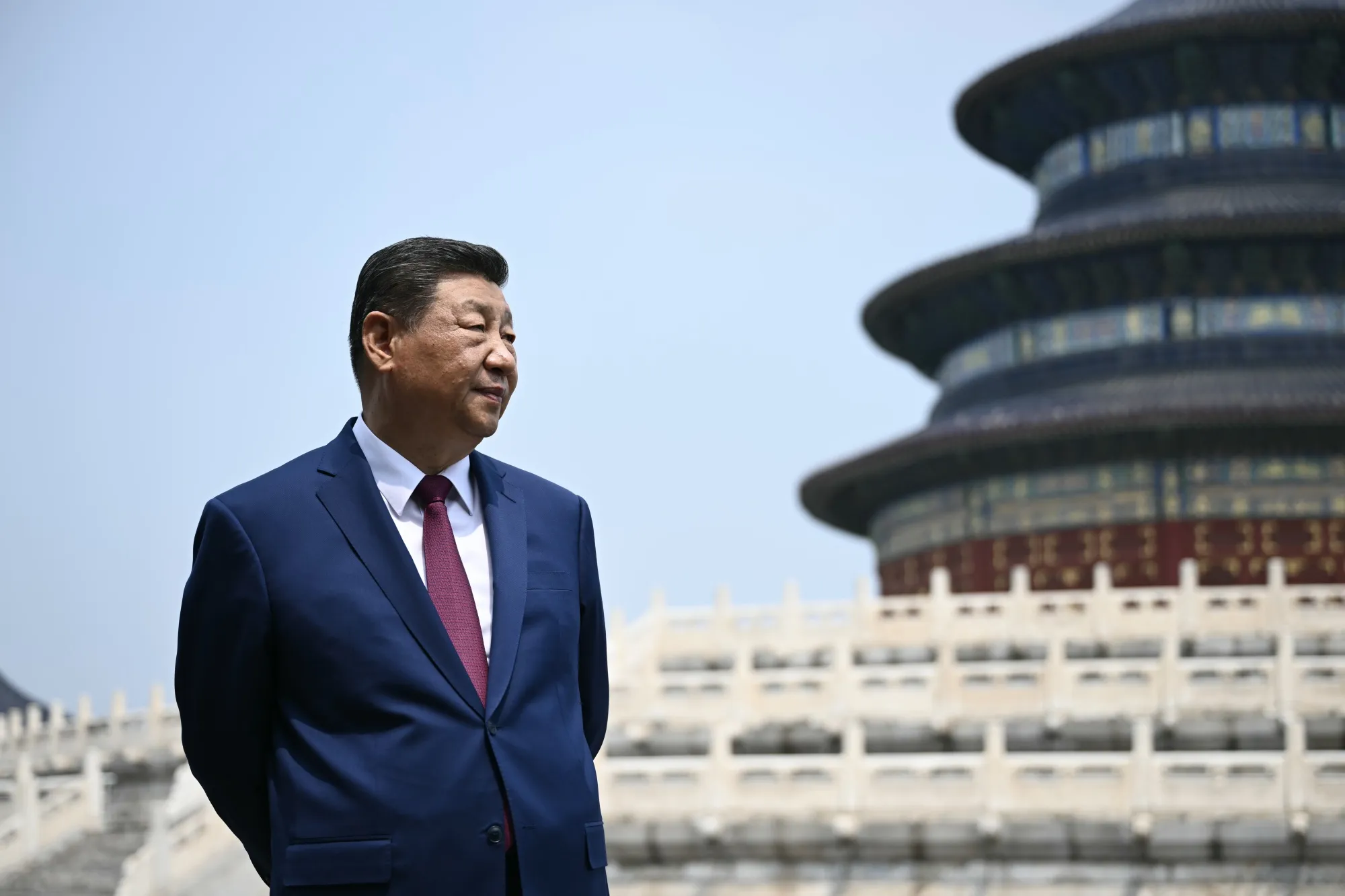
A day later, Xi Jinping delivered the message the organisation exists to advance.
What Xi Said
Speaking at the World Artificial Intelligence Conference in Shanghai, Xi urged countries to seize what he called the historic opportunity presented by open-source AI.
His central line landed as a direct contrast with American approaches: AI development, he said, should not be a solo performance by one country but a symphony of international cooperation.
He followed it with a pointed warning against overstretching national security justifications in the AI field, or elevating one country’s security above that of others — a transparent reference to U.S. export controls.
Xi also emphasised what he described as a people-centred approach, insisting AI must remain under human control through regulation, technological monitoring, early warning systems, and emergency response mechanisms.
On development, he said China has worked to ensure equitable access to AI capacity-building for developing countries, framing it as preventing new historical injustices. He announced plans to expand cooperation across Africa, Latin America, and Asia.
Who’s In
WAICO is headquartered in Shanghai. Its stated purpose is promoting international cooperation and developing cross-border AI regulation that keeps the technology beneficial and safe.
The 29 founding members skew heavily toward the Global South, including Indonesia, Brazil, Malaysia, South Africa, Senegal, Russia, and Pakistan.
That composition is the strategy. Analysts expect Beijing to use the alliance to influence how AI policy gets framed at the United Nations — a venue where numbers matter and where a bloc of middle-income and developing nations carries real weight.
The Technology Competition Underneath
AI sits at the centre of China’s industrial policy, with massive state investment spanning chip production through consumer applications.
That investment has fuelled an escalating conflict with Washington over control of chip-based technology, which underpins both advanced weapons systems and AI infrastructure.
The current balance is uneven in interesting ways.
China lags the United States in access to the most advanced semiconductors. But it holds a meaningful advantage in the infrastructure required to run large data centres — the facilities where AI models are actually trained and operated.
Energy explains much of that. China generates more than twice the electricity the United States does, and aggressive state-led investment in the power grid is expected to widen that gap. Cheap, abundant power is precisely what AI’s enormous computational demands require.
China also dominates production of the rare earth minerals needed to manufacture chips in the first place.
The Restrictions and the Retaliation
Washington has justified technology export controls on national security grounds. Beijing reads them as an effort to contain its AI progress.
In May, the U.S. Department of Commerce confirmed that restrictions on shipments of critical semiconductors extend to subsidiaries of Chinese companies — including those headquartered abroad but with Chinese parent companies.
China responded by barring exports of dual-use technology and critical minerals to American firms.
Each side is now targeting the other’s supply chain at the point where it’s most vulnerable.
Why Governance Is the Real Battleground
Regulation has consistently trailed the technology. Countries have struggled to develop frameworks fast enough to match AI’s pace, and the most contentious debates — particularly around military applications — remain unresolved.
That gap creates an opening. Whoever helps write the rules first shapes the environment everyone else operates in.
By hosting the conference and launching WAICO, Beijing has positioned itself to participate in that rule-writing from a position of institutional strength rather than as one voice among many.
The Longer Strategy
Premier Li Qiang first outlined plans for WAICO in July 2025.
Analysts read the move at the time as a shift in approach — from exporting Chinese AI infrastructure to building global policy institutions that reflect Chinese preferences, and doing so before American frameworks became entrenched.
The precedent frequently cited is the internet. China has long been uncomfortable with a technology of American origin built on decentralised architecture, and responded by insulating its domestic network.
AI presents a chance to avoid repeating that dynamic. Acting early, with support from a bloc of partner nations, could let Beijing help define the global framework rather than adapt to someone else’s.
Arindrajit Basu, a governance expert writing for the Carnegie Endowment for International Peace, connected the opportunity to American withdrawal. He noted that as Washington retreats from global cyber and AI norms-setting and pulls back financial support for cyber diplomacy generally, Beijing is eager to demonstrate global leadership.
The goal, in his assessment, is securing buy-in from the Global South for a state-centric vision of technology governance.
What “State-Centric” Means
That phrase carries the substance of the disagreement.
A state-centric governance model places national governments at the centre of decisions about how AI is developed, deployed, and controlled — emphasising sovereignty, official oversight, and government authority over data and platforms.
The alternative, broadly favoured in Western frameworks, distributes more authority among private companies, civil society, technical bodies, and multi-stakeholder processes.
Neither model is neutral. Each produces different outcomes on questions of surveillance, speech, corporate accountability, and who can veto what.
WAICO’s founding membership suggests which model will be advocated.
What to Watch
Three things will indicate whether WAICO becomes consequential or remains symbolic.
Membership growth is the first. Whether the bloc expands beyond 29 nations, and whether any advanced economies join, will show how broad its appeal actually is.
UN activity is the second. If WAICO members begin coordinating positions in UN forums on AI governance, the alliance is functioning as intended.
And the American response is the third. Washington has largely stepped back from international norms-setting on these questions. Whether that continues, or whether WAICO’s launch prompts renewed engagement, will determine whether Beijing’s institutional head start becomes a durable advantage.
Author