Cuban Dissident Artist Luis Manuel Otero Alcántara Lands in Miami After Prison and Forced Exile
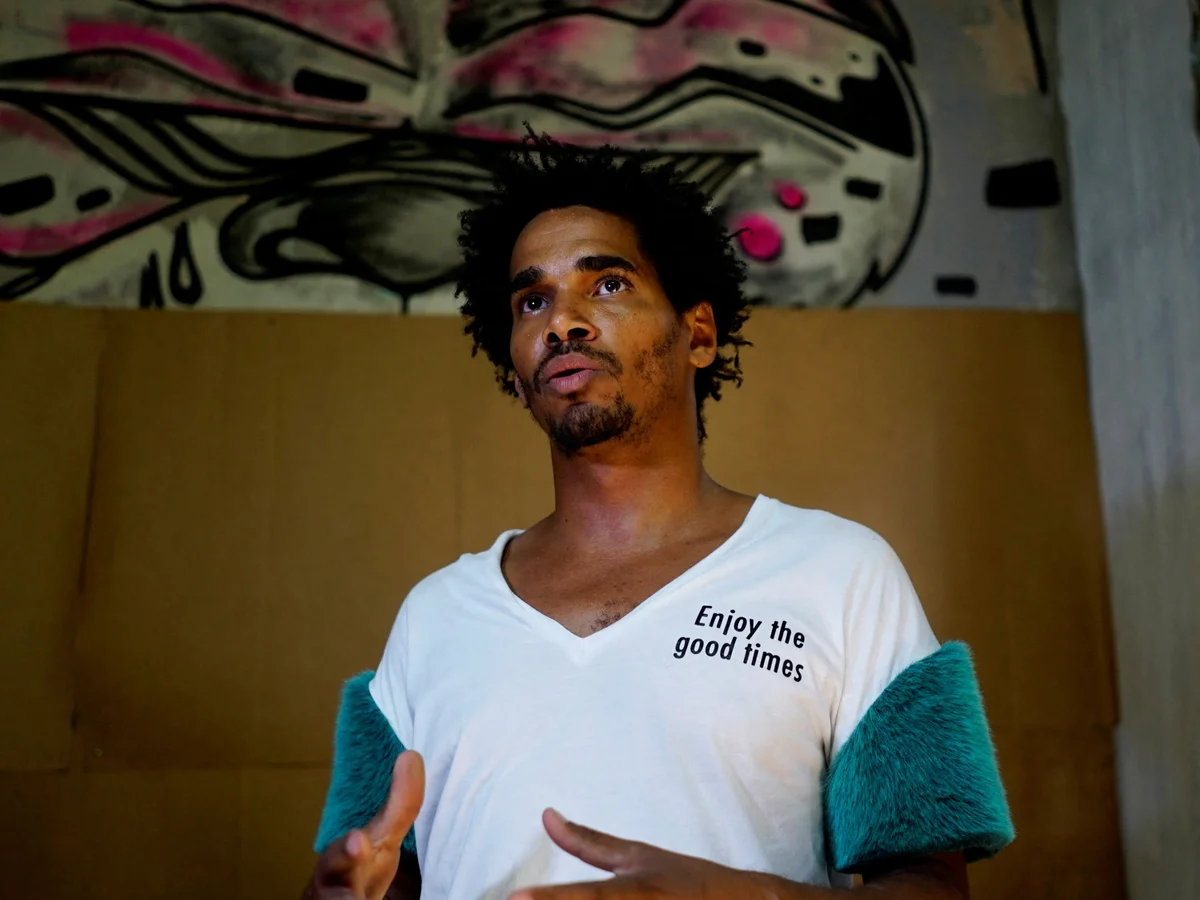
Luis Manuel Otero Alcántara stepped onto American soil in Miami on Saturday, five years after Cuban authorities imprisoned him and only after agreeing to a condition that made freedom possible: he had to leave his country and not return.
The 38-year-old artist and musician walked into an airport crowd that was singing, cheering and holding phones overhead to capture the moment. Supporters wrapped him in a Cuban flag printed with the words “Patria y Vida” — Homeland and Life — the title of the song that earned him a Grammy and became an anthem for Cuba’s political opposition.
Freedom With a Price Attached
The United States granted Alcántara parole earlier in the week, according to a social media page maintained by friends and supporters.
They wrote that he accepted exile as the only available route to escape persecution and continue his art and activism.
That framing matters. This was not a release in any ordinary sense. It was an exchange — liberty for permanent removal from the country whose treatment of its citizens formed the subject of his work. Governments have used this arrangement for decades because it accomplishes two things at once: it removes a prominent critic from the domestic scene while allowing officials to say the person is no longer imprisoned.
What He Was Convicted Of
Alcántara co-founded the San Isidro Movement, a collective of Havana artists, writers and musicians named after the neighbourhood where he lived. The group became one of the most visible independent cultural voices challenging state control over artistic expression.
He was arrested on July 11, 2021, during a public protest. The following year, a court sentenced him to five years for public disorder, contempt and disrespect toward national symbols.
Those charges — particularly disrespect toward national symbols — illustrate how expression itself became the offence. Alcántara’s work frequently used the Cuban flag as material, a deliberate provocation that the state prosecuted as a crime rather than treated as art.
Years of International Pressure
His imprisonment drew sustained condemnation from human rights organizations and the US government throughout his sentence.
Amnesty International and other groups classified him as a political prisoner. The Cuban government rejected that characterization.
He was held in a maximum-security facility, according to his own account.
Days of Uncertainty Before the Flight
Even the final stage of his release was fraught.
Alcántara had been expected to walk free last week. Instead, advocates spent days unable to contact him or determine where he was being held.
The organization Cubalex, which provides legal support to dissidents and documents human rights violations from outside Cuba, filed a habeas corpus petition on his behalf on Monday.
His supporters did not know his location — or whether he was genuinely free — until he actually boarded the plane on Saturday.
That period of silence is its own form of pressure. Uncertainty about whether a release will happen keeps everyone involved in a state of dependence on official goodwill.
A Broken Statue and a First Stop
Alcántara brought one object with him from Cuba: a broken statue of the Virgin Mary.
He described it as a symbol of hope and healing — the possibility of reassembling something from fragments.
His first destination on American soil, he said, would be the Shrine of Our Lady of Charity, where he intended to make an offering. The shrine holds particular meaning for Cuban exiles in Miami, built with contributions from the community and dedicated to Cuba’s patron saint.
The symbolism of both gestures is difficult to miss. A man exiled from a country he spent his career trying to change, carrying something broken, going first to a place built by others who left before him.
The People Still Inside
His supporters were careful not to treat the arrival as a conclusion.
Other political prisoners remain incarcerated in Cuba, including fellow artist Maykel “Osorbo” Castillo Pérez, who collaborated on “Patria y Vida.” Advocates expressed hope that Alcántara’s release might generate pressure for Pérez to be freed as well.
That hope has a logic to it. International attention tends to concentrate on individual names, and a successful release can build momentum for others. It also has a limit — attention is finite, and cases that don’t produce visible airport reunions tend to fade.
What Exile Changes
Alcántara can now speak, create and organize without fear of arrest. He can also no longer do any of it from inside Cuba.
Exiled dissidents across many countries have faced the same trade. Distance brings safety and a platform, but it also gradually erodes the immediacy that made a voice powerful in the first place. The audience that matters most becomes the hardest to reach.
Whether Alcántara’s work retains its force from Miami is a question only time answers. For now, a man who spent five years in a maximum-security prison for making art is standing in a crowd of people singing his song, holding the pieces of a statue he chose to carry across the water.
Author