Ninth Night of US Strikes on Iran as Missiles Rain on Bahrain and Kuwait
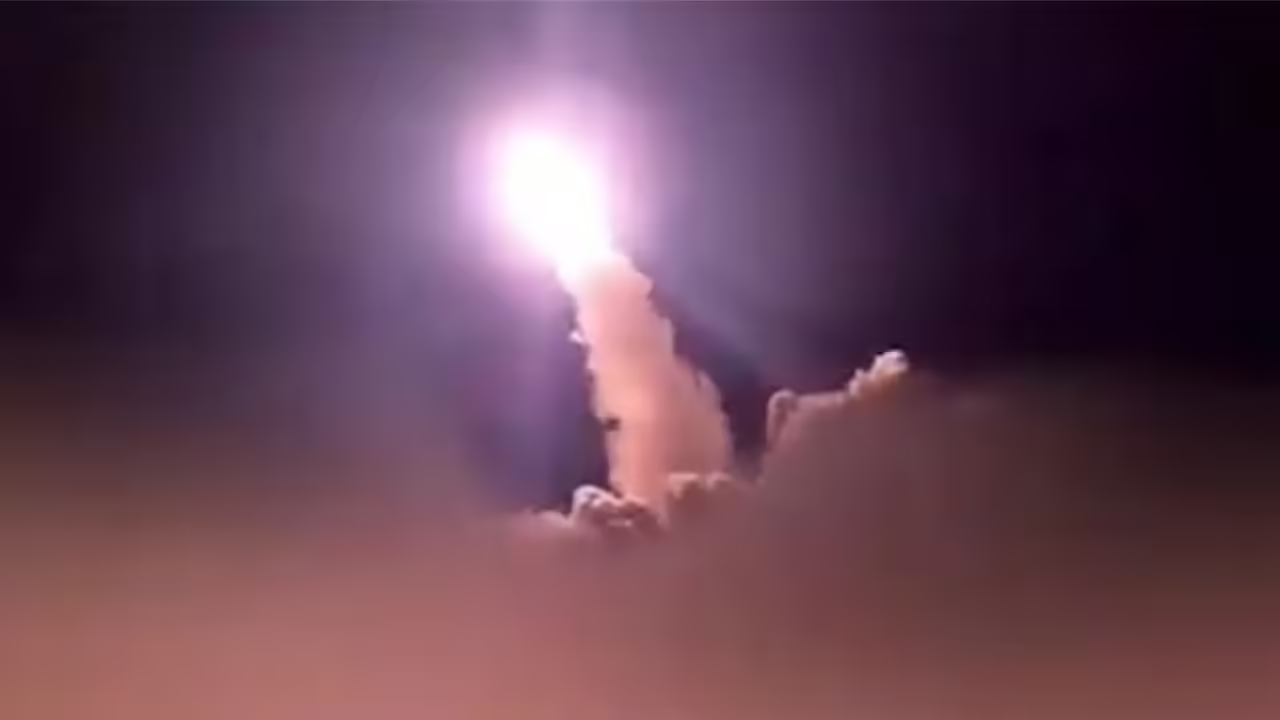
The US strikes on Iran entered a ninth consecutive night early Monday, hours after the American military announced another service member’s death — and Tehran answered by firing on two Gulf states that host US forces.
The exchange marked another step in a progression that has moved, incrementally but unmistakably, toward full-scale war. Last month’s interim agreement meant to end the fighting has effectively collapsed, shipping through the Strait of Hormuz has largely halted, and both sides have now struck infrastructure that millions of civilians depend on.
What Was Targeted
Central Command said the latest round hit Iranian military command centres, air defence and coastal surveillance sites, maritime capabilities, missile and drone launch positions, and communications networks.
Iran’s state-run IRNA news agency reported at least one person killed near Tabriz, a northwestern city roughly 520 kilometres from Tehran. Tabriz is believed to house underground missile facilities operated by the Revolutionary Guard.
IRNA also reported likely strikes at Bandar Imam Khomeini in Khuzestan province, Sirik and Jask in Hormozgan, and Konarak and Chahbahar in Sistan and Baluchistan.
President Trump framed the operation in explicit terms, saying American forces hit Iran very hard again and that they did so in honour of the soldiers killed.
The Death That Preceded It
The service member died Saturday in Iraq during what the military described as a controlled detonation of a downed Iranian drone.
Since fighting began on February 28, 17 US service members have been killed.
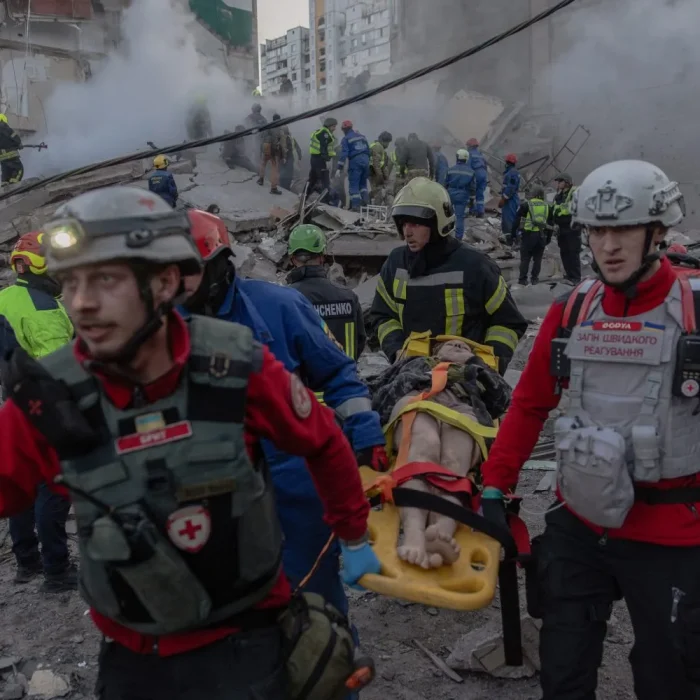
Iranian authorities said Sunday that the recent rounds of American strikes had killed at least 50 people and wounded 517.
Iran Hits Back Across the Gulf
Tehran’s response fell not on American territory but on the countries that host American forces.
Bahrain — home to the US Navy’s 5th Fleet — sounded missile alert sirens Monday morning. Kuwait reported its air defences engaging an incoming Iranian barrage.
This has become the pattern. Unable to strike the United States directly, Iran targets the regional infrastructure that makes American power projection possible. The cost falls heavily on Gulf populations who are not parties to the dispute.
A Tanker Burning Off Oman
As the strikes began, a vessel caught fire in the Strait of Hormuz after being struck by a projectile near the Omani coastline, according to the United Kingdom Maritime Trade Operations centre.
The crew abandoned ship. Hours later the vessel remained adrift and still burning.
The location carries particular significance. The route around Oman is the corridor the US military has encouraged commercial shipping to use specifically to stay clear of Iranian control. The Revolutionary Guard later claimed it was targeting tankers in the strait.
If the safer route is no longer safe, the practical options for commercial traffic narrow toward zero.
Energy Markets Feel It
The economic transmission is already visible.
Benchmark Brent crude climbed above $90 a barrel on Monday, deepening a global energy crisis the conflict triggered. Average US regular gasoline reached $4 a gallon.
That second figure carries political weight beyond its economic significance. Gasoline prices are the metric American voters feel weekly, and they are rising ahead of midterm elections this autumn. Before the war, roughly one-fifth of globally traded oil moved through the Strait of Hormuz.
Escalating Pressure on Hormuz
Trump has threatened to strike Iran’s power stations and bridges to force Tehran to loosen its grip on the strait. Recent target selection suggests that plan is being executed.
The US also reimposed a naval blockade on Iranian ports over the past week to halt crude oil shipments. The military said Saturday it had redirected six vessels and disabled one since the blockade resumed.
Diplomacy, Barely
The 60-day window the interim deal established for negotiating a permanent settlement — covering the war and Iran’s nuclear programme — has passed its halfway point without resolution.
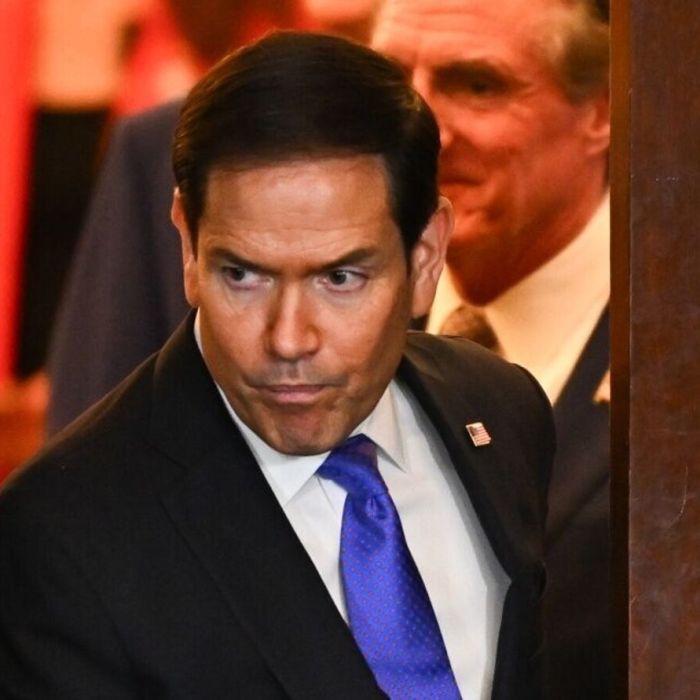
Secretary of State Marco Rubio said the US remains open to talks but insisted any engagement has to be real. He indicated responses would continue, adding that if diplomacy opened and figures willing to do something productive for Iran took control of negotiations, that would be a positive development. He acknowledged that isn’t where things stand.
Iranian Foreign Ministry spokesperson Esmail Baghaei later confirmed that proposals had reached Tehran through mediators, but declined to describe their content.
A Former Diplomat’s Warning to Both Sides
Mohammad Javad Zarif, the former Iranian foreign minister who helped elect reformist President Masoud Pezeshkian, published an essay in Foreign Policy arguing the interim deal could never have survived the disagreement over Hormuz.
He wrote that Washington cannot eliminate the Iranian government, and that only diplomacy, a new peace agreement and a security framework built by regional states for regional states would let the United States turn its attention elsewhere.
But Zarif also delivered a warning to Iran’s own leadership, cautioning that repeatedly threatening maritime traffic risks turning much of the world against the country.
That dual criticism is notable. It suggests at least some senior figures in Iran’s political establishment see the Hormuz strategy as self-defeating even on its own terms.
Where This Sits
The situation contains no obvious off-ramp:
- Neither side has accepted the other’s terms on the strait
- The negotiating window is running out
- Casualties continue accumulating on both sides
- Gulf states absorbing Iranian strikes have no control over the dispute
- Energy prices are climbing with global economic consequences
Nine nights of strikes have not changed Iran’s position on Hormuz. Iranian retaliation has not stopped American operations. What has changed is the number of dead, the price of oil, and the distance remaining between this conflict and something considerably worse.
Author