US-Saudi Nuclear Deal Left Hanging by a Last-Minute Demand
Washington and Riyadh reached agreement on nuclear cooperation that would establish a civilian nuclear programme in Saudi Arabia — and then, within a day, the terms appeared to change.
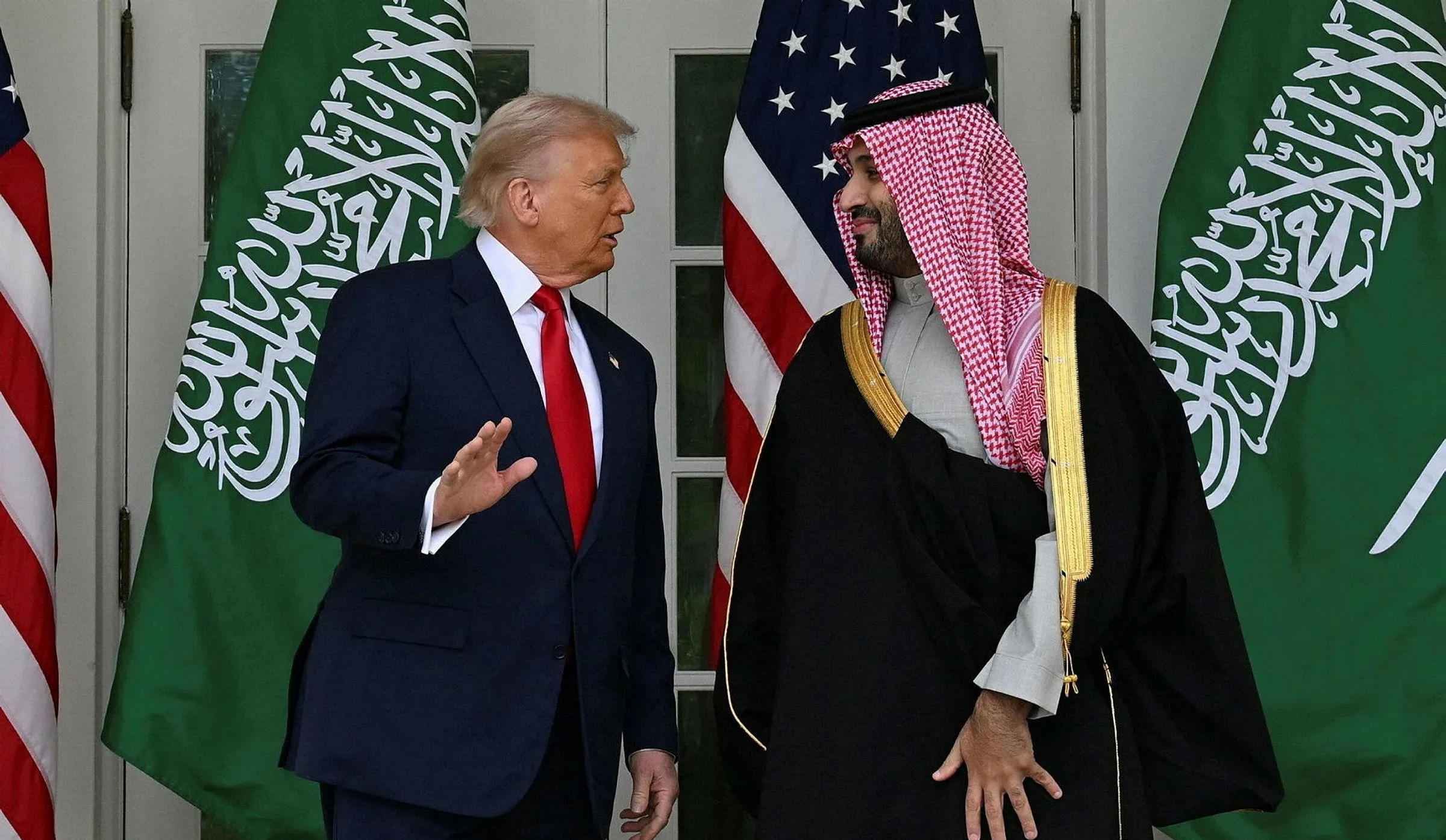
President Donald Trump announced on social media that Saudi Arabia must first normalise relations with Israel before the arrangement proceeds. That condition did not appear when the deal was first announced.
Riyadh has not publicly responded.
What the Deal Was Meant to Do
The agreement is expected to run for 30 years, transferring American technology and technical expertise to help the kingdom meet rising energy demand.
The rationale is straightforward economics. Nuclear generation would free up oil and gas for export rather than domestic electricity production, while also supplying power for the energy-hungry data centres Saudi Arabia is building out.
The Saudi Ministry of Energy framed it as supporting efforts to diversify energy sources, advance modern technology, and open cooperation and investment opportunities benefiting both countries.
Trump described the arrangement as limited to nonmilitary applications, comparing it to programmes already operating in Iran, the UAE and elsewhere.
The Enrichment Question
The full text has not been published, but reporting has surfaced key elements.
The Wall Street Journal reported that one provision could allow American companies to construct a uranium enrichment facility inside the kingdom. Trump’s social media statement, however, suggested Saudi-based enrichment may not be permitted after all — one of several ambiguities the announcement created.
Even under the more permissive reading, enrichment would not be automatic. It would depend on the findings of a joint two-year study conducted by both governments, with sensitive technology kept under tight control.
Absent that, Saudi Arabia would need to import commercial-grade low-enriched uranium, as most countries with nuclear programmes do.
The Normalisation Problem
Saudi Arabia’s position on recognising Israel has been consistent and public for years: no formal relations without a credible pathway to Palestinian statehood.
Israeli Prime Minister Benjamin Netanyahu has ruled that out.
This creates a condition the kingdom cannot satisfy through its own decision-making. Meeting Trump’s requirement would depend on movement from a third party that has explicitly refused to move.
Diplomatic Suspension
Steven Cook, senior fellow for Middle East and Africa studies at the Council on Foreign Relations, described the deal as now sitting in a state of diplomatic suspension.
He identified a specific friction point worth noting: Washington treats the president’s social media posts as official policy, while Riyadh has committed to a negotiated diplomatic agreement. Those two things are not the same, and the gap between them is likely to generate tension.
Congress Was Always the Next Step
Regardless of the normalisation dispute, the agreement requires congressional review before it can take effect.
That process has now been thrown into uncertainty. It is unclear when — or whether — the deal will actually be submitted to lawmakers.
Oversight Concerns Remain Unresolved
Separate from the political question is a monitoring one.
Reports indicate Saudi Arabia has not signed on to the International Atomic Energy Agency’s additional protocol, the instrument that permits expanded inspections, monitoring and verification. It has reportedly agreed instead to a bilateral safeguards arrangement with the United States.
The IAEA says it is waiting for a request from both governments to implement verification measures under the agreement before it can seek authorisation from its board of governors.
Saudi Arabia Has Other Options
If the American deal collapses, the kingdom is not without alternatives. Several countries maintain nuclear export industries and have previously been discussed as potential partners:
- China
- Russia
- South Korea
- The UAE
- France
That leverage cuts both ways. Riyadh can walk away, but doing so likely means accepting weaker nonproliferation safeguards than an American-supervised programme would carry — an outcome Washington has historically worked to avoid.
Where This Actually Stands
Two things are simultaneously true. A nuclear cooperation agreement has been reached. And a condition has been attached that the other party has spent years saying it cannot accept.
The practical result is a deal that exists on paper without a clear route to implementation. Saudi Arabia has not rejected the new demand, but it has not accepted it either — and silence from Riyadh on a question this sensitive tends to mean the answer is being worked out somewhere other than in public.
Author
-
Lucienne Albrecht is Luxe Chronicle’s wealth and lifestyle editor, celebrated for her elegant perspective on finance, legacy, and global luxury culture. With a flair for blending sophistication with insight, she brings a distinctly feminine voice to the world of high society and wealth.