War Reaches Deeper Into Daily Life
The Ukraine drone attack Moscow witnessed on Thursday marked a dramatic escalation, bringing the realities of war directly to the Russian capital. After a swarm of nearly 200 drones struck Moscow’s oil refinery, residents now face the unsettling prospect of rising gasoline prices and potential fuel shortages.
The strike represented Ukraine’s biggest drone assault on the capital to date, sending shockwaves through a city that has spent four years grappling with the consequences of the ongoing conflict.
A Stunning Scene Over Moscow
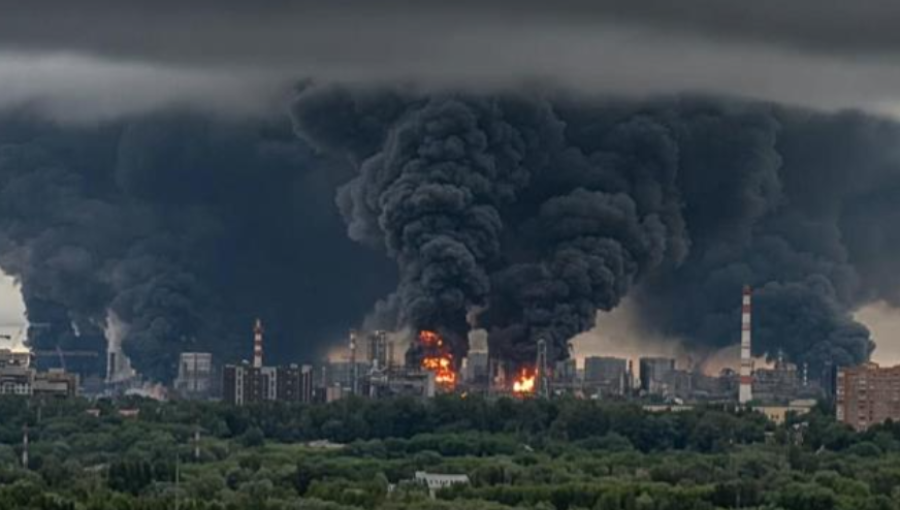
The attack left residents reeling. Muscovites were stunned by images of thick black smoke rising over the southern part of the city, accompanied by the shutdown of major roads and airports.
Adding to the surreal atmosphere, reports emerged of black rain falling in some districts. The visual spectacle drove home just how directly the war had intruded into the heart of the capital.
For a city long insulated from the front lines, the sight was both shocking and sobering.
From Shock to Practical Worries
As the initial shock began to fade, many residents shifted their focus to more immediate concerns. The pressing questions became whether the region would have enough fuel and how much it would cost.
These practical worries quickly took center stage as the effects of the strike rippled through everyday life. The attack on the refinery threatened to disrupt the steady flow of gasoline that residents had long taken for granted.
Prices Surge at the Pump
The impact on fuel prices was almost immediate. Some drivers in several Moscow districts and nearby areas reported gasoline prices climbing to more than 90 rubles, roughly $1.23, per liter on Thursday.
This represented a sharp increase from around 70 rubles before the attack. Beyond the price hikes, some Muscovites described encountering shortages and long lines at the pump.
In Moscow’s outer suburbs, residents reported additional disruptions. Some filling stations had reportedly stopped selling gasoline in jerry cans, further signaling the strain on supplies.
Shortages Seen as Unavoidable
Experts suggest that some degree of fuel shortage in the Moscow region is inevitable. According to Sergey Vakulenko, a senior fellow at the Carnegie Russia Eurasia Center in Berlin and a former Russian oil executive, a temporary decline in gasoline sales is likely.
He predicted that sales could drop to between 80% and 90% of normal levels, with the duration depending largely on how quickly repairs can be completed.
Vakulenko noted that authorities would do everything possible to bring in fuel from other regions. However, he cautioned that rail capacity is not unlimited, and nearby refineries have also sustained damage, complicating efforts to compensate for the shortfall.
A Pattern of Escalating Attacks
The Thursday strike was part of a broader trend. Kyiv has significantly increased its attacks on oil infrastructure in recent months, with the Moscow refinery alone hit twice this week.
The cumulative effect has been substantial. According to estimates by EA Analytics, part of industry consultant Energy Aspects Ltd., Russia’s crude-processing rates have fallen to their lowest level in two decades during June.
This decline reflects the growing toll that Ukraine’s targeted strikes are taking on Russia’s energy sector.
Prices Were Already Climbing
Even before Thursday’s attacks, fuel costs in Russia had been on the rise. Data published by the Federal Statistics Service showed that average retail gasoline prices increased 1% week-on-week to 69.11 rubles per liter during the June 9 to 15 period.
That figure marked the biggest jump since early January, according to weekly data. The pre-existing upward trend meant that the refinery strike added pressure to an already tightening market.
The combination of factors has left consumers facing mounting costs at a difficult time.
Authorities Move to Reassure
In response to the growing concern, officials across Russia have sought to calm motorists. They have worked to project an image of control over the situation.
Deputy Prime Minister Alexander Novak was scheduled to hold a meeting on the domestic fuel market on Friday, according to state news agency Tass. Meanwhile, after prices rose at some Moscow-area stations, the country’s antitrust service requested pricing and sales figures from two fuel retailers.
These steps reflected an effort to monitor the market and prevent excessive price increases.
Mixed Signals on Pricing
Despite the reported spikes at some locations, official data painted a somewhat different picture. According to information compiled by a service that tracks retail gasoline sales, prices at major refueling chains remained near regional averages seen before the attacks.
These chains included Gazprom Neft, Rosneft, Lukoil, and Tatneft. The discrepancy between individual reports of soaring prices and the broader averages suggested that the impact varied significantly by location.
For now, the full extent of the price effects remained somewhat unclear.
Transportation Disruptions Mount
The attack’s consequences extended well beyond fuel. Traffic restrictions imposed in southeastern Moscow following the drone strikes were gradually lifted, according to the city’s administration.
Air travel suffered considerable disruption. Russia’s biggest airline, Aeroflot, canceled about 170 flights on Thursday, while more than 500 flights in total were canceled or delayed at Moscow airports.
The disruption continued into Friday, as the capital’s air defenses repelled more than 30 additional drones, causing further chaos at the airports.
Containing the Fire
Authorities addressed concerns about the refinery blaze itself. Moscow officials stated that air quality in the capital remained within normal limits, even after the fire burned for much of the day.
Mayor Sergei Sobyanin reported that the blaze had been mostly contained by around 3 p.m. local time on Thursday, with firefighters continuing to work on remaining hot spots. However, he provided no further updates afterward on whether the fire had been fully extinguished.
The lack of follow-up information left some questions unanswered.
Downplaying the Incident
Russian authorities and federal media largely sought to minimize the significance of the attack. Reports about the refinery fire received only brief coverage on major television channels.
Kremlin spokesman Dmitry Peskov deflected questions about the drone strike, instead urging reporters to focus on what he described as the impressive results of Russian strikes on Ukraine.
Peskov also noted that President Vladimir Putin receives daily reports on developments across the country, indicating that the president had been informed about the attack.
A New and Unpleasant Reality
The disruption to fuel supplies and transportation illustrates how the war’s impact has become increasingly visible in everyday life. More than four years after Russia launched its full-scale invasion of Ukraine, ordinary Russians are feeling the consequences more acutely than ever.
For many residents, the situation represents an unwelcome shift. Elena, a 47-year-old owner of a small restaurant in Moscow, captured this sentiment, describing it as a new and unpleasant reality.
She acknowledged feeling trapped by circumstances, noting that she has a business in Moscow, nowhere else to go, and no power to stop the war.
Looking Ahead
As Moscow grapples with the aftermath of the strike, the coming days will reveal just how severe the fuel shortages become and how quickly repairs can restore normal operations. The pressure on Russia’s energy infrastructure shows no signs of easing.
With Ukraine continuing to target oil facilities and Russian authorities scrambling to manage the fallout, the conflict’s effects on daily life appear likely to persist. For residents of the capital, the war has moved closer to home, transforming abstract distant events into tangible disruptions.
The events of this week underscore a sobering truth: after four years of conflict, the war shows no signs of relenting, and its consequences continue to reshape life in the Russian capital with no clear end in sight.
Author