Iran War Live Updates: Trump Declares Ceasefire “On Life Support” as Tehran Vows to Continue Fight
Iran ceasefire on life support — that was the stark warning from President Donald Trump on Monday, as tensions between Washington and Tehran reached a boiling point once again. With Iran rejecting the latest American peace proposal and the White House signaling growing frustration, the fragile truce that briefly slowed a two-month-long Middle East conflict now appears to be unraveling.
Trump Slams Iran’s Response as “Totally Unacceptable”
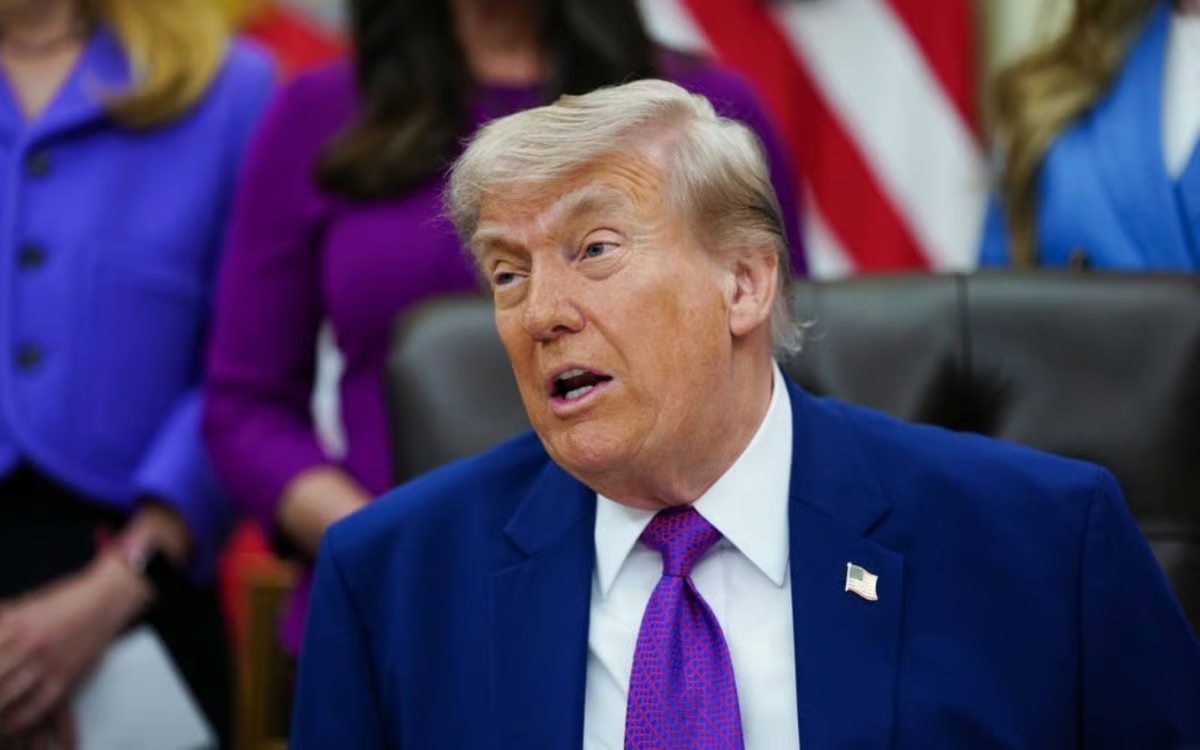
Speaking to reporters on Monday, President Trump made it clear that his patience with Tehran has worn thin. He called Iran’s official reply to the U.S. peace framework “totally unacceptable” and went a step further by labeling it “a piece of garbage.” His blunt language reflects the deep dissatisfaction inside the administration, which had hoped for a breakthrough that would bring the costly war to a swift conclusion.
According to Trump, the ceasefire is now “on life support,” a phrase that signals just how close the situation is to collapse. The White House had earlier presented what it described as a balanced proposal, but Iranian officials pushed back firmly, refusing to give in to what they consider unfair demands.
Tehran Says It Only Demanded “Legitimate Rights”
In response to Washington’s criticism, the Iranian government defended its stance. Officials in Tehran insisted that their counter-proposal contained no “concessions” and was instead based solely on what they described as the country’s “legitimate rights.”
This framing suggests that Iran is unwilling to be perceived as backing down under American pressure. For Tehran, the negotiation is not only about ending the war but also about preserving national dignity and political standing in the region. The standoff highlights how far apart the two sides remain, even after weeks of indirect talks and international mediation.
Trump Heads to Beijing for High-Stakes Meeting With Xi
The diplomatic drama is set to intensify this week as President Trump travels to Beijing for a key summit with Chinese President Xi Jinping. According to officials, Trump plans to urge China to use its substantial economic leverage to push Iran toward a deal.
China is the world’s largest importer of Iranian oil, making Beijing one of the few global powers capable of influencing Tehran’s decisions. Trump has repeatedly expressed frustration that China has not done more to rein in its ally, even as he occasionally credits Beijing for helping nudge Iran back to the negotiating table when talks faltered last month.
White House Tempers Expectations Ahead of the Summit
Despite Trump’s intentions, the White House is keeping public expectations low. Administration officials acknowledge that convincing Xi to dramatically shift China’s stance on Iran will be a tall order. Instead, the focus appears to be on preventing disagreements over Iran from derailing other crucial issues on the U.S.-China agenda.
U.S. Trade Representative Jamieson Greer captured this cautious approach during a recent interview, noting that the administration does not want the Iran dispute to overshadow broader negotiations. Key topics expected to dominate the summit include:
- Trade tariffs and supply chain cooperation
- Chinese assistance in halting fentanyl precursor exports
- Regional security and military communication
- Technology restrictions and economic competition
By keeping the agenda broad, the Trump team hopes to extract progress on multiple fronts rather than allowing the Middle East conflict to dominate every conversation.
China’s Balancing Act in the Middle East
Publicly, Beijing has expressed support for ending the war and has been working quietly behind the scenes. Chinese diplomats have backed Pakistan’s efforts to mediate a peace agreement and have reportedly sent what one analyst called a “subtle message of discontent” to both Tehran and Washington.
China is uneasy about Iran’s decision to close the Strait of Hormuz, a chokepoint critical for global oil flow, and is equally concerned about the U.S. naval blockade affecting Iranian shipping. Both moves threaten to disrupt global energy markets and could damage China’s own economic interests.
Ahmed Aboudouh, a Middle East expert at Chatham House in London, explained that Beijing is treading carefully. According to him, Chinese leaders are highly cautious and prefer to avoid being pulled into a conflict they view as outside their core responsibilities. China wants stability without being seen as taking sides or shouldering the burden of resolving the crisis.
What’s Next for the Iran-US Conflict?
With the Iran ceasefire on life support, the next few days could prove decisive. If Trump’s Beijing visit fails to produce meaningful Chinese pressure on Iran, Washington may turn to harsher economic and military measures. On the other hand, if Xi signals willingness to play a stronger role, a fresh diplomatic opening could emerge.
For now, three key questions hang over the conflict: Will Iran soften its position under mounting pressure? Can China balance its strategic interests while preventing a wider war? And will Trump’s tough talk translate into a workable peace, or push the region deeper into chaos?
As world leaders watch closely, the coming week may shape not just the future of the Iran war but the broader balance of power in the Middle East and beyond.
Author