The clean energy grant cancellations that stripped $7.6 billion from hundreds of projects were decided on political geography, according to an admission the Trump administration made in federal court — a disclosure that undercuts more than a year of official explanations.
In court documents, government attorneys acknowledged that the terminations were made based solely on the political identity of the state where each grant recipient was located. The 16 states affected all supported Kamala Harris in the 2024 presidential election.
What Officials Had Said Before
That admission sits awkwardly against the public record.
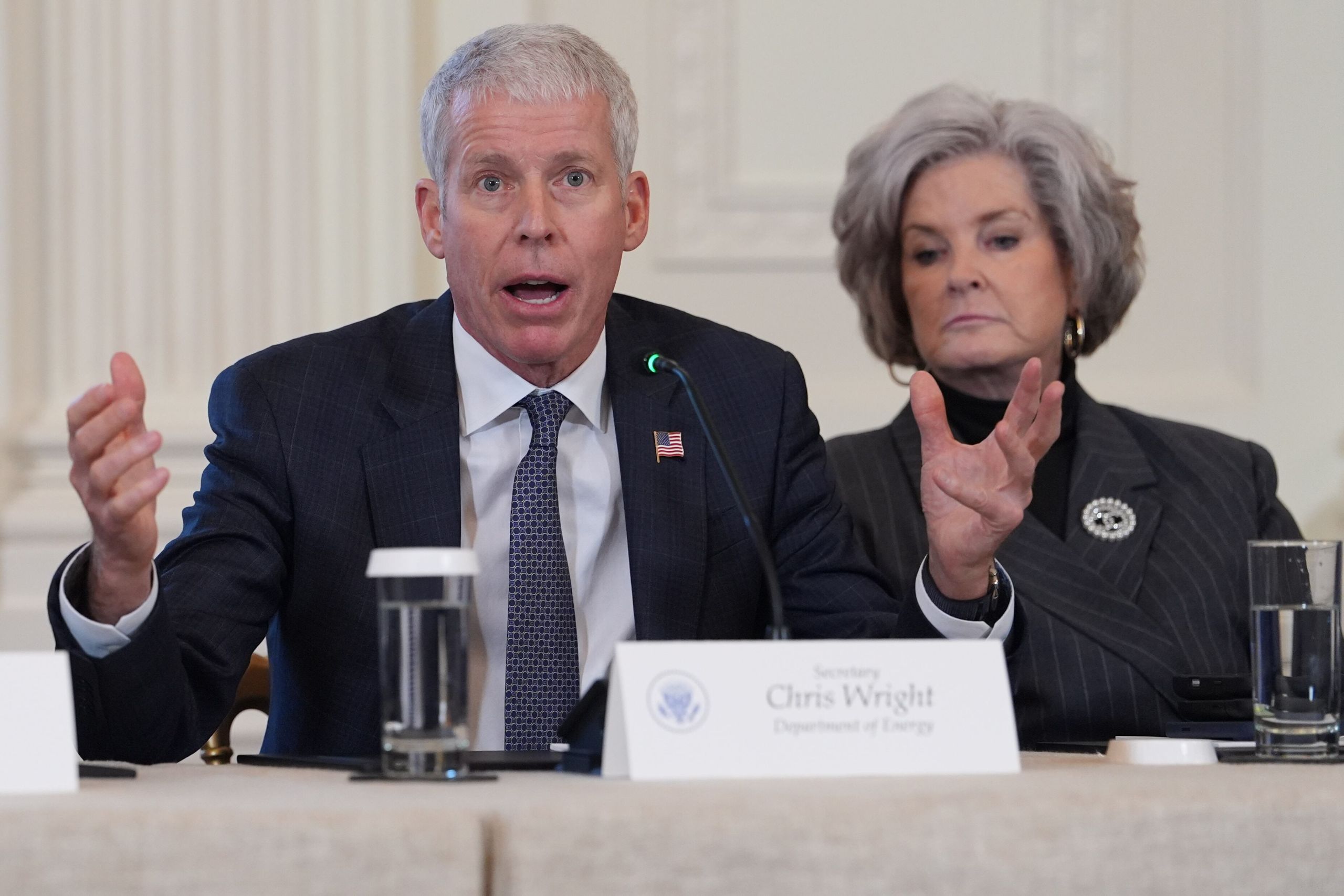
Energy Secretary Chris Wright and other administration figures had repeatedly explained the cuts in technical and fiscal terms, saying the projects failed to meaningfully serve the country’s energy needs or carried flaws that made them unwise uses of public money. Wright specifically characterized the terminations as business decisions turning on whether taxpayers were getting value.
The Energy Department announced the cuts last October, reporting that 321 individual funding awards spread across 223 projects had been terminated following a review. The stated rationale at the time was that the work did not adequately advance national energy priorities or was not economically viable.
What Was Actually Cancelled
The affected projects were not fringe experiments. They included construction of battery manufacturing facilities, hydrogen technology development, electrical grid modernization and carbon dioxide capture systems — the kind of infrastructure work that generates construction employment and long-term operational jobs.
The cuts formed part of a wider effort by President Donald Trump to unwind climate programs and federal clean energy support. White House budget director Russell Vought promoted the decision publicly, framing it on social media as an end to funding what he described as the left’s climate agenda.
The Energy Department did not immediately respond to a request for comment on the filing.
The Sixteen States
The terminated projects were located in California, Colorado, Connecticut, Delaware, Hawaii, Illinois, Maryland, Massachusetts, Minnesota, New Hampshire, New Jersey, New Mexico, New York, Oregon, Vermont and Washington.
The pattern is what drew attention immediately. Every state on that list voted for Harris. No state carried by Trump appeared among those losing funding, a distribution that would be extraordinarily unlikely to emerge from a neutral technical review.
How the Admission Emerged
This was not the first time government lawyers conceded the role politics played.
In a court filing late last year, attorneys confirmed that the selection of grants for termination had been influenced by whether a recipient’s address fell within a state that generally elects Democratic candidates in state and national races — language the filing itself framed using the term blue states. That disclosure came in a separate lawsuit brought by clean energy organizations along with the city of St. Paul, Minnesota.
The more recent and more explicit acknowledgment surfaced in a case titled Thakur v. Trump, which has been moving through the courts since last spring. In that proceeding, federal lawyers also acknowledged screening projects using keyword searches tied to diversity, gender, vaccine hesitancy and COVID-19 to identify work that conflicted with administration priorities.
That detail suggests the review process involved filtering criteria unrelated to engineering merit or cost-effectiveness — the grounds officials had publicly cited.
The Political Reaction
Congressional Democrats responded sharply. Rep. Marcy Kaptur of Ohio and Sen. Patty Murray of Washington, who hold senior positions on the House and Senate Appropriations committees respectively, said the administration had confirmed in court what many had already concluded.
In their view, roughly 300 cost-reducing energy projects were killed for no reason other than the voting behavior of the states hosting them. They described turning federal machinery toward that purpose as un-American, arguing that families already squeezed by high living costs are the ones absorbing the damage.
The two lawmakers called on Republicans in Congress to join them in holding the administration accountable, framing the issue as a failure to govern on behalf of all Americans rather than a partisan dispute.
Legal and Oversight Pressure
Challenges began almost immediately after the October announcement.
More than two dozen Democratic members of Congress, led by California Senators Adam Schiff and Alex Padilla along with Rep. Zoe Lofgren, wrote to the Energy Department’s acting inspector general requesting a formal inquiry. The department’s internal watchdog opened an investigation in December, and that review is separate from the litigation now producing these admissions.
Multiple lawsuits remain active, and the court filings emerging from them have become the primary source of information about how the termination decisions were actually made.
Environmental Groups Weigh In
Holly Bender, chief program officer at the Sierra Club, said the filing amounts to the administration openly conceding a vindictive approach to canceling infrastructure the country needs. In her assessment, the decision disregards job losses, air quality consequences and rising utility bills already being felt across the country.
She also pointed to where money is flowing instead, noting nearly $3 billion the administration has committed toward canceling offshore wind development in favor of fossil fuel projects including natural gas and coal. Rather than building energy capacity, she argued, public funds are enriching a small number of fossil fuel executives.
Why the Legal Question Matters
Beyond the politics, the admission raises a genuine legal issue about the limits of executive discretion over appropriated funds.
Agencies generally have latitude to terminate grants for cause — poor performance, missed milestones, changed priorities. What courts have historically treated with more suspicion is the use of federal money to reward or punish jurisdictions based on how their residents voted. Litigants in these cases will argue that a state’s electoral behavior is not a permissible criterion for distributing funds Congress already approved.
The administration’s counterargument will likely rest on executive authority to set policy direction and reallocate discretionary spending toward its own priorities.
What Comes Next
The cases continue, and further filings may reveal more about the internal review process. The inspector general’s findings, whenever released, could add another layer.
For the communities involved, the practical situation has not changed. Battery plants that were planned are not being built. Grid upgrades are not underway. And the workers who expected those jobs are still waiting to learn whether any court will order the money restored.
Author
-
Lucienne Albrecht is Luxe Chronicle’s wealth and lifestyle editor, celebrated for her elegant perspective on finance, legacy, and global luxury culture. With a flair for blending sophistication with insight, she brings a distinctly feminine voice to the world of high society and wealth.