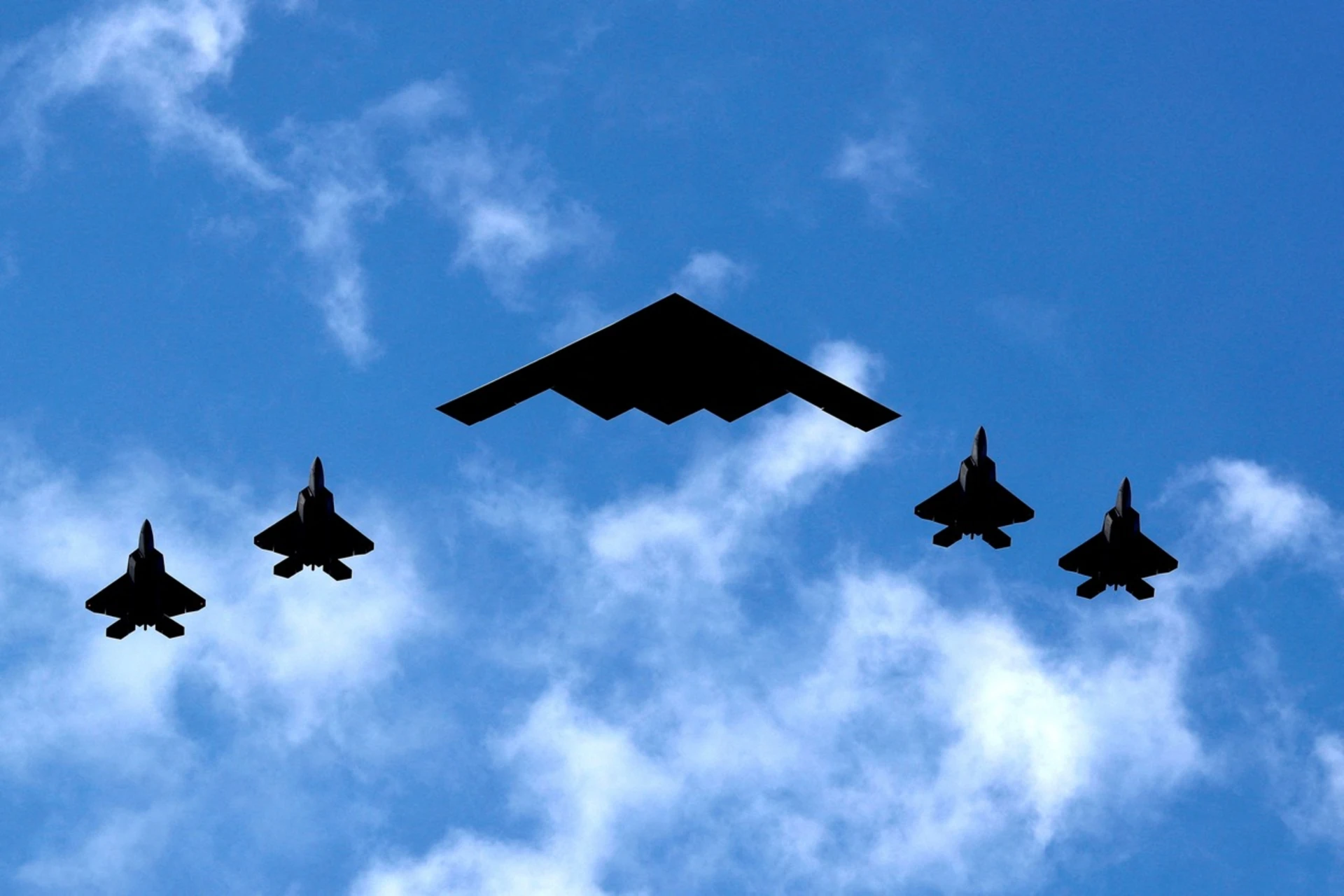
The US air campaign Iran is now facing may soon grow considerably heavier, with President Donald Trump signaling a possible escalation and the American military visibly preparing for a return to large-scale operations. Yet a striking number of regional specialists and former officials say the same thing: more bombs are unlikely to produce the outcome Washington wants.
Their argument is not that airpower cannot destroy things. It is that destroying more things may not change how Tehran calculates.
The Case Against Escalation
Sina Azodi, who directs the Middle East Studies Program at George Washington University, was blunt. Iran’s leadership has publicly framed the conflict as a fight for its own survival, and in his view that framing makes bombing largely irrelevant as a lever. Intensifying strikes will not shift the calculation.
What it will do, he said, is spread suffering across the wider region while eliminating whatever narrow opening for diplomacy still exists.
His alternative is a return to a revised Memorandum of Understanding — not a simple pause in fighting. A ceasefire alone, he argued, resolves nothing. What is required is a comprehensive agreement written in language that cannot be read two ways, and, just as importantly, an American commitment that Washington actually honors once made.
The Missing Half of the Strategy
A former senior U.S. intelligence official, speaking anonymously, framed the problem as one of imbalance. Increasing the bombing without collectively enforcing the naval blockade, managing traffic through the Strait of Hormuz and accepting a share of the resulting global economic pain as a sustained strategy leaves the effort incomplete.
His summary was direct: nobody bombs their way into a ceasefire. Economic pressure has to carry weight equal to the military instrument.
A recent U.S. intelligence assessment reached a similar judgment, according to The Washington Post, concluding that Iran is not likely to moderate its negotiating position because strikes intensify.
Even the country’s top uniformed officer gestured at the limits. Testifying before a Senate hearing this week, Chairman of the Joint Chiefs Gen. Dan Caine told Sen. Jack Reed that history shows airpower has boundaries worth remembering. America’s real advantage, he suggested, appears when diplomatic, informational and economic tools are combined with military force — work he indicated is underway.
Options That Range From Bad to Worse
Michael “Mick” Mulroy, formerly a Deputy Assistant Secretary of Defense for the Middle East and now a fellow at the Middle East Institute, said it is genuinely unclear whether a harder air campaign would bring Iran to the table. What he was certain about is that none of the available paths look attractive.
Washington cannot simply ease pressure, he argued, without first reopening the Strait of Hormuz and securing binding commitments on the nuclear program. If Iran regains oil revenue and access to frozen assets, it could rebuild damaged capabilities faster than the United States replenishes the precision munitions and interceptors expended in the fighting.
Without a new nuclear agreement, he warned, the alternative is permanent conflict — periodically returning to strike the same facilities to prevent a weapon from ever being completed.
Running Out of Things Worth Hitting
Saeid Golkar, who studies Iranian security institutions at the University of Tennessee at Chattanooga, identified a different constraint: the target list is thinning while Iran has grown better at concealing what remains.
Most of what has been struck over the past two weeks, he said, was neither strategically significant nor capable of forcing the change Washington seeks.
His view of what would actually matter is uncomfortable. Removing figures such as IRGC commander in chief Ahmad Vahidi and parliamentary speaker and chief negotiator Mohammad Bagher Ghalibaf would move the needle, because in his analysis a durable deal requires hardliners to be out of power altogether.
What Has Been Hit, and What Came Back
Recent American strikes have concentrated on Iranian command centers, communications networks, drone and missile storage sites, coastal surveillance installations and maritime capabilities. Several bridges in coastal cities have been destroyed or damaged.
Iran has answered since July 7 with ballistic and cruise missiles and one-way attack drones aimed at Jordan, Kuwait and Bahrain. Air defenses intercepted many, but not all. One strike hit a power and water facility in Jordan. Another killed three American service members at Muwaffaq Salti Air Base.
U.S. diplomatic posts across Bahrain, Lebanon, Kuwait, Iraq, the United Arab Emirates and Jordan have issued alerts urging Americans to reconsider travel through the region.
A Steady Military Buildup
The Pentagon has continued reinforcing the theater. F-35s have moved in from the United Kingdom and F-16s from Germany, alongside transport aircraft. More than 150 medics recently arrived at Landstuhl Regional Medical Center near Ramstein — a deployment that speaks to expected casualties. Over 50,000 American personnel are now stationed across the region.
The naval blockade at the Strait of Hormuz resumed last week. Centcom forces have turned away 12 commercial vessels and disabled two. On Friday, the tanker M/T Lavine was disabled by fire into its engine room in the Gulf of Oman after at least four attempts to run the blockade, according to Centcom spokesperson Navy Capt. Tim Hawkins, who said the vessel is no longer heading to Iran. Roughly 20 U.S. warships are enforcing the effort.
The Hardest Target of All
Mulroy suggested future strikes might focus on infrastructure closely tied to the IRGC or to energy exports, including railways. He also urged attention to nuclear facilities.
Trump has floated hitting Pickaxe Mountain, near the damaged Natanz enrichment site. The complication is depth: the facility sits beneath as much as 2,000 feet of granite, and specialists doubt even America’s heaviest bunker-busters could reach it.
That leaves a ground operation as the only reliable method of destroying the site or removing enriched uranium — troops under sustained fire, holding position long enough to extract material or wreck centrifuges, likely requiring a constructed airstrip. If the site is already damaged, excavation becomes necessary too. Mulroy called it potentially the most complicated special operations mission in history.
Trump has not excluded ground forces, while suggesting other nations should shoulder part of the burden. A U.S. official said the military stands ready for intensified action on command, and Centcom described its forces late Wednesday as vigilant, focused, lethal and ready.
Next week, U.S. and U.K. officials plan a major conference on protecting shipping through the Strait — a reminder that the economic front may ultimately decide more than the air one.
Author
-
Lucienne Albrecht is Luxe Chronicle’s wealth and lifestyle editor, celebrated for her elegant perspective on finance, legacy, and global luxury culture. With a flair for blending sophistication with insight, she brings a distinctly feminine voice to the world of high society and wealth.