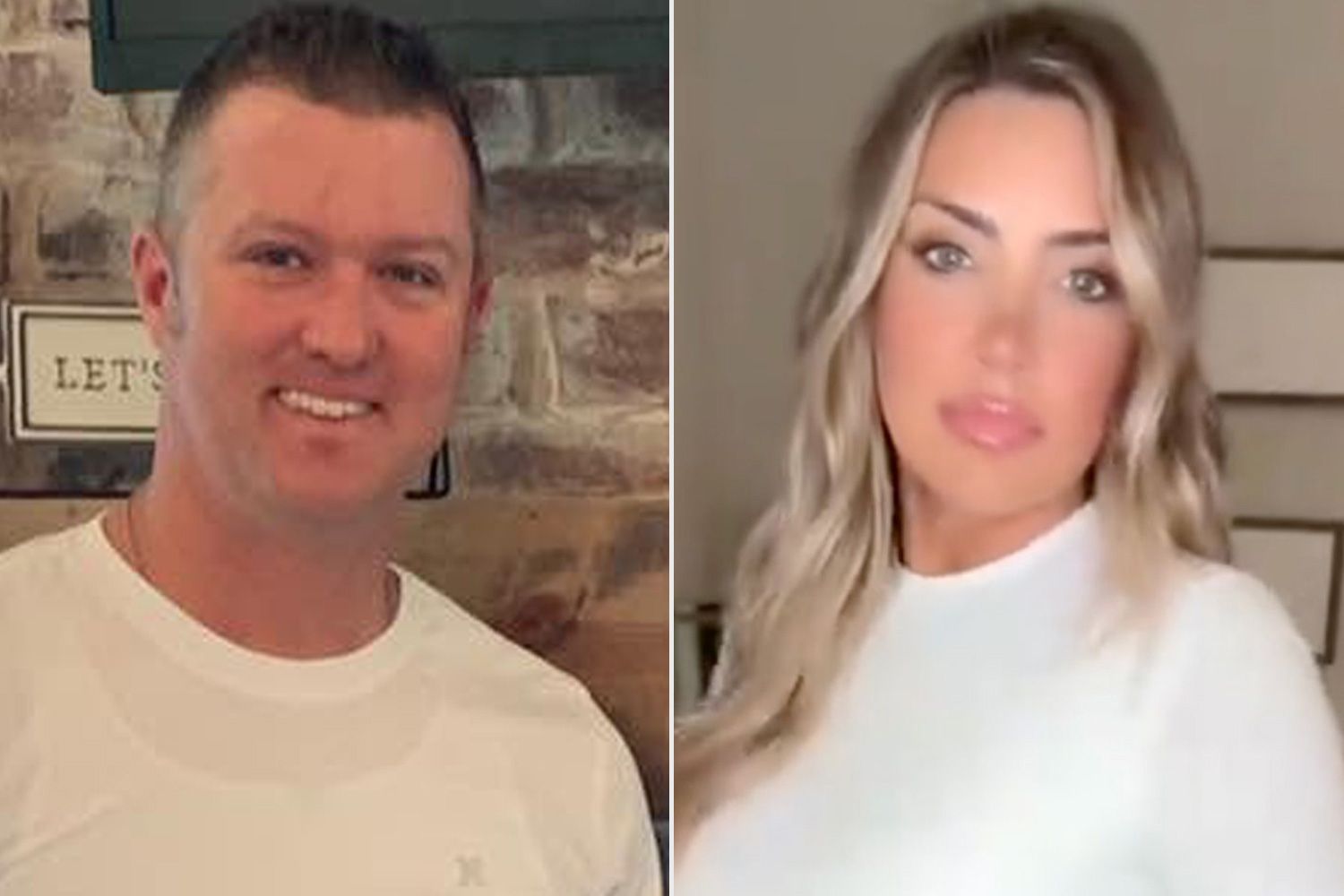
The Sara Gilson murder has left her family describing years of warnings that went unheeded — not by her alone, but by a system that repeatedly gave her paperwork instead of protection.
Gilson, 43, was found dead in her Oklahoma home on Thursday, July 23. The Owasso Police Department confirmed that she was shot by her estranged husband, Jeremiah “Shawn” Duffey, 48, who then took his own life. Weeks earlier, she had publicly accused him of being a pedophile.
An Ex-Husband Who Saw It Coming
Lyle Landers, Gilson’s ex-husband and the father of her two children, told PEOPLE he had spent years trying to pull her away from Duffey.
He described Duffey as a danger from the beginning of their relationship. Gilson, he said, had become caught in a dynamic where abuse had come to feel normal. For five years he pleaded with her to leave, offering whatever help he could provide. Something in the relationship held her in place, and she could not break free of it.
That description matches a pattern advocates encounter constantly. Leaving is rarely a single decision. It is a series of attempts, often interrupted by fear, financial dependence, threats or the belief that the danger will pass.
Statistically, the period after leaving is the most dangerous window a victim faces.
Who She Was
Landers was careful to describe a person rather than a case.
He remembered her as a mother, a daughter, a sister and a friend — someone beautiful inside and out, who loved people without judgment. He said her greatest accomplishment was their two children.
Before becoming a parent, she had worried constantly that she would not know what to do or would fall short as a mother. She turned out to be exceptional at it, he said, going overboard to make sure the children knew they were loved.
She also took real pride in her work as a hairdresser.
The two divorced roughly seven years ago and eventually built a friendship. Landers said their co-parenting worked as well as anyone’s, and that it had been good for the children and for both of them.
His summary of what happened is difficult to read. She would have died for her children, he said — and her effort to protect a child is ultimately what led to her death.
The Allegations That Preceded the Killing
The sequence of events over the past several weeks is documented in court records.
On June 10, a woman filed a protective order against Duffey on behalf of her 15-year-old daughter. The girl played on a youth basketball team Duffey coached. According to the mother’s account reported by The Oklahoman, he kissed and touched the teenager and was discovered by another coach.
The girl told her mother about additional behavior, including messages he sent her, an invitation to his hotel room during a tournament trip, and an offer of money to keep her silent.
That same day, Gilson filed for an emergency protective order of her own. Duffey was immediately ordered out of their home and directed to remain 100 yards away from her. On June 23, the order was extended through August 24.
In her application, Gilson stated that Duffey had a gun, had threatened suicide, and had gone on the run.
Warnings That Had Come Before
This was not the first time she sought legal protection.
Court records show Gilson filed two protective orders against Duffey in 2021. Both were dismissed because she did not appear at the hearing.
Advocates see that outcome frequently, and it rarely means the danger was overstated. Victims miss hearings for reasons directly tied to the abuse — intimidation, transportation problems, work they cannot afford to lose, childcare, or renewed promises from an abuser that this time will be different.
The dismissal leaves no record of ongoing risk, which means each subsequent filing begins from a blank page.
The Signals That Were Present
Looking at the June filing alone, several recognized high-risk indicators appear together.
Access to a firearm. Threats of suicide. Fleeing rather than complying. A recently issued protective order. Separation after a long relationship. Public allegations that threatened his standing and his freedom.
Each of these independently elevates lethality risk in domestic violence assessments. Appearing together, they describe one of the most dangerous configurations researchers have identified.
A protective order is a legal instrument. It creates consequences after a violation. It does not physically stand between two people, which is why safety planning specialists treat it as one component of a plan rather than the plan itself.
A Family Left Behind
Landers had already paid tribute to Gilson publicly on Facebook, describing her as the life of any party, someone who loved her children fiercely and would have fought to the death for them.
He wrote that the two of them worked to keep life steady and familiar for their children even after the marriage ended, and called her death unfathomable.
A GoFundMe has been established to support the couple’s two children. Its description echoes what Landers said in his interview — that Gilson’s children were the center of her world, that she worked hard to provide for them, and that everything she did was aimed at giving them the best life she could.
The fund is intended to help them through the years ahead, not merely the immediate weeks.
What This Case Illustrates
Two separate failures overlap here, and they are worth naming clearly.
A teenage girl reported abuse and her family sought legal protection. A woman recognized the danger her estranged husband posed and obtained an order documenting a firearm, suicidal threats and flight. Both did what the system asks people to do.
The gap between filing a protective order and being genuinely safe is where cases like this end. Closing it requires firearm surrender enforcement, coordinated risk assessment, and follow-through that does not depend on a frightened person navigating a court process alone.
None of that helps Gilson now. It might help the next person who walks into a courthouse with the same set of warning signs.
If you suspect child abuse, the Childhelp National Child Abuse Hotline is available at 1-800-4-A-CHILD (1-800-422-4453) or at childhelp.org. Calls are free, confidential and answered 24 hours a day in more than 170 languages.
If you are experiencing domestic violence, the National Domestic Violence Hotline can be reached at 1-800-799-7233 or at thehotline.org, also free, confidential and available around the clock in more than 170 languages.
Author