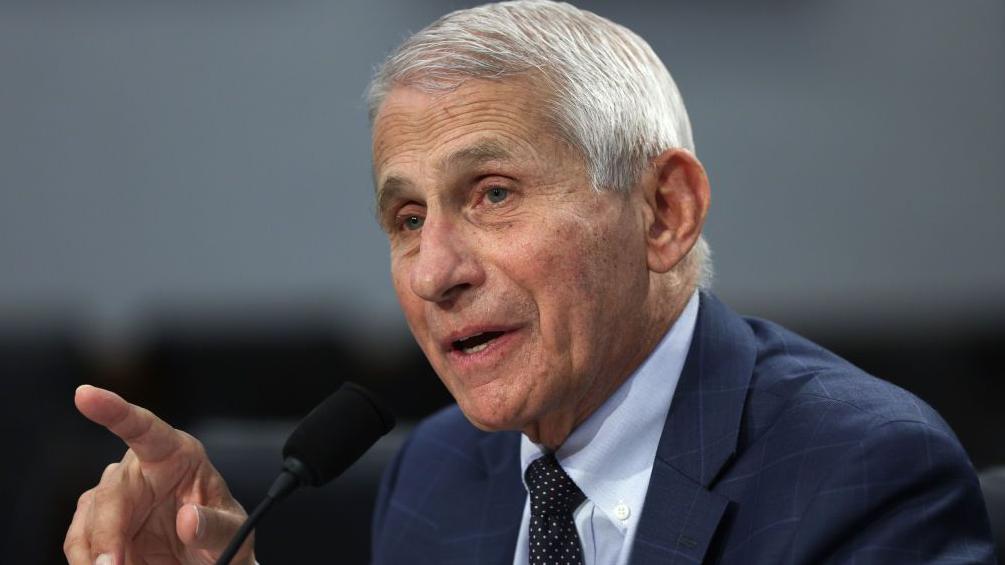
The Fauci private diary now circulating in Washington offers something the public rarely gets from a senior federal official: an unguarded running commentary on the presidents, aides, anchors and movie stars who moved through his life while a pandemic unfolded around him.
The entries were released by Senate Homeland Security Committee Chairman Rand Paul of Kentucky. They document the day-to-day texture of Fauci’s role during COVID-19 — meetings attended, calls taken, opinions formed — and they arrive just days before Fauci is scheduled to appear before the Senate Homeland Security and Governmental Affairs Committee under subpoena from Paul.
An Early Warmth With Trump
The earliest material describes a relationship far friendlier than what the public eventually witnessed.
Fauci recorded that President Donald Trump routinely turned to him for answers during White House meetings, at one point calling him the smartest person in the world and telling him the administration was counting on him. As Fauci’s national visibility climbed, he wrote that the president seemed genuinely taken with him.
That framing matters, because the eventual public rupture between the two men has largely erased the earlier period from memory. The diary preserves a stretch when the scientist was an asset rather than a target.
The Meadows Problem
The tone shifts considerably around White House chief of staff Mark Meadows.
Fauci’s entries chart a relationship that soured steadily. He wrote that Meadows threatened to keep him off television, pressed him repeatedly to soften what he said publicly, and in one instance screamed at him over remarks he had made.
The friction was fundamentally about control of the message. Fauci wanted to speak; the chief of staff wanted a narrower, more managed public posture. That tension defined much of the administration’s internal handling of the pandemic.
Allies and Adversaries in Communications
Not everyone in the communications operation drew Fauci’s ire.
He described then-White House communications director Alyssa Farah as an ally on more than one occasion. In a May 2020 entry, he wrote that Farah acknowledged staff had been holding him back, conceded the situation had gotten out of hand, and pledged to start approving his television requests again.
Michael Caputo, then serving as the Department of Health and Human Services assistant secretary for public affairs, received the opposite treatment. In an entry dated July 2, 2020, Fauci called him a con man and used considerably harsher language besides, writing that Caputo publicly claimed to support his media appearances while quietly blocking them.
The contrast is revealing. Fauci’s frustration was not with being managed generally, but with people he believed were saying one thing to his face and doing another behind it.
Cable News Runs Through the Pages
Television journalists appear throughout, and the entries capture a level of personal familiarity that will interest media critics.
CNN anchor Jake Tapper surfaces repeatedly, with Fauci noting phone calls, text exchanges and dinners at the Tapper home in Washington. In one instance, Fauci wrote that Tapper privately checked in to confirm a CNN interview had not created trouble for him at the White House.
When The Atlantic’s Peter Nicholas suggested Fauci had been humiliated over a cancelled Tapper interview, Fauci vented in the diary with a two-word profanity aimed directly at the reporter.
CNN’s Dana Bash also features. Following Fauci’s heated exchange with Ohio Rep. Jim Jordan, he wrote that Bash texted to tell him he was a better man, and passed along that colleague Wolf Blitzer had joked nobody would have faulted Fauci for telling Jordan off in blunt terms. The next day, according to the diary, Bash texted again to point him toward a Vanity Fair headline mocking Jordan’s performance at the hearing.
Those exchanges will fuel an ongoing argument about the closeness between officials and the journalists covering them — though private rapport between sources and reporters is hardly unusual, and the entries reflect Fauci’s perception rather than any documented agreement about coverage.
A Billionaire Cameo
The diary also includes sharper assessments of figures outside government. Fauci described Oracle co-founder Larry Ellison as a bit of a loose cannon while discussing White House efforts to deploy Oracle technology during the pandemic response.
The Hollywood Chapter
Portions of the diary read less like a public health record and more like a social calendar from an unusual year in American celebrity.
Julia Roberts hosted Fauci on Instagram Live, sent him flowers and later presented him with an award. Vogue editor Anna Wintour appears. So do comedian Trevor Noah, NBA star Steph Curry, actors Sean Penn and Matt Damon, and rapper Lil Wayne.
Taken together, those entries document something genuinely strange about that period: an infectious disease specialist in his late seventies becoming, briefly, one of the most recognizable people in the country.
An Unexpected Closing Scene
The diary ends with a moment at the 2022 Kennedy Center Honors.
Fauci wrote that he embraced Hunter Biden, who joked that the internet would explode if anyone photographed the two of them together, given that both were under sustained attack from the far right.
Why the Release Matters Now
The timing is not incidental. Paul has been pursuing Fauci over pandemic-era decision-making for years, and releasing the diaries days before compelled testimony frames the hearing before it begins.
Critics of the release will argue that personal journals reflect private impressions in the moment rather than considered judgments, and that publishing profanity-laced asides serves political theater more than oversight. Supporters will counter that a senior official’s contemporaneous account of how public health messaging was shaped and suppressed is legitimately in the public interest.
Both readings will be tested when Fauci sits before the committee and is asked to explain, in public, what he wrote in private.
Author
-
Lucienne Albrecht is Luxe Chronicle’s wealth and lifestyle editor, celebrated for her elegant perspective on finance, legacy, and global luxury culture. With a flair for blending sophistication with insight, she brings a distinctly feminine voice to the world of high society and wealth.