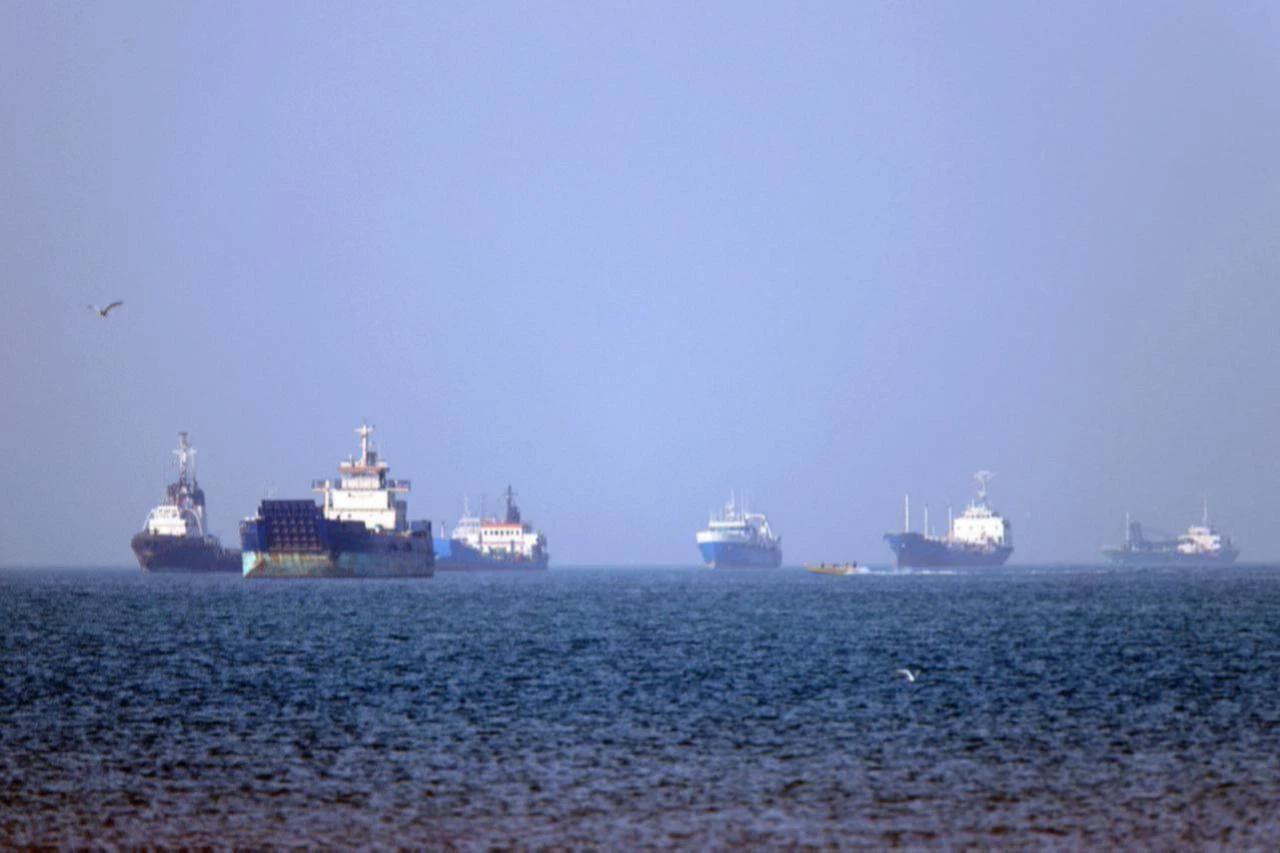
The Strait of Hormuz proposal delivered by Oman to Tehran this week offers something neither side has put on the table before: a way for the world’s most important oil passage to be managed collectively rather than controlled by whoever holds the guns nearest to it. A Gulf source told Reuters on Tuesday that Muscat has assembled regional backing for the plan, and that its core condition is unambiguous. Iran would not run the waterway alone.
Where the Idea Comes From
The Omani concept is not invented from scratch. It borrows directly from an arrangement that has functioned for years on the other side of Asia.
The Strait of Malacca, threading between the Malay Peninsula and Sumatra, is one of the busiest shipping corridors on earth and sits within the territorial waters of multiple countries. Rather than any single state extracting tolls or dictating passage, vessels that use it contribute voluntarily toward the costs of keeping it usable: navigational aids, environmental protection, and search and rescue capability.
The elegance of that model is that nobody has to concede sovereignty and nobody has to accept a foreign authority over their coastline. The money funds shared functions that benefit every user, and participation is framed as contribution rather than tribute.
Applied to Hormuz, the logic is the same. Ships pay into a common mechanism, that mechanism maintains safety and navigation, and no single government sits at the gate deciding who passes.
Why This Matters So Much
Before the current conflict, roughly a fifth of the world’s energy supplies moved through the Strait of Hormuz. There is no meaningful alternative route for most of that volume. Pipelines bypassing the strait exist but carry a fraction of what tankers move, and the geography offers no second door.
That concentration is precisely why the waterway has become a weapon. Closing or threatening it does not merely inconvenience regional shipping. It reaches directly into fuel prices, insurance markets and supply chains on every continent.
How the War Reached This Point
The current crisis began on February 28, when the United States and Israel launched a joint bombing campaign against Iran aimed at destabilizing the government and dismantling its ballistic missile and nuclear programs.
Iran’s response came through missile and drone strikes across the region and a blockade of Hormuz. Fighting paused with a truce on April 8. Last month the United States and Iran reached a memorandum of understanding intended to open peace talks, but that framework collapsed as attacks on shipping continued, prompting renewed American strikes and a return to open conflict.
The Current Military Picture
Washington abruptly suspended its air campaign over the weekend, a move that has generated cautious optimism that shipping might resume.
The pause is not a withdrawal. The US military said Saturday that its reimposed naval blockade against Iran remains in force, reporting that a dozen commercial vessels had been redirected, two disabled and two boarded. American forces, the statement said, remain vigilant and ready.
President Donald Trump described the discussions with Iran on Monday as good talks and said a deal was possible, while warning that strikes would resume if negotiations failed to produce results.
Tehran’s Position
Iran has not rejected the Omani proposal publicly, but its stated position sits awkwardly beside it.
Tehran maintains that its interim understanding with Washington gives it authority to manage shipping through the strait for the time being. It has also objected to American efforts to promote a transit route hugging the Omani side of the waterway rather than passing through waters Iran considers under its control.
Before the war, Hormuz was treated as an international waterway, a status the current dispute has effectively suspended.
Foreign Minister Abbas Araghchi held discussions on the strait with his Omani and Saudi counterparts on Monday. According to a statement from Iran’s Foreign Ministry, he stressed the need for deeper cooperation and coordinated diplomacy to restore stability, framing the insecurity around Hormuz as a product of American aggression rather than Iranian action.
That framing is the diplomatic obstacle in miniature. Iran describes itself as responding to a threat imposed on the region. Gulf states and Washington describe Iran as the source of the disruption. A shared management mechanism requires both to accept an arrangement that implies neither is entitled to unilateral control.
What Oman Brings to the Table
Muscat’s role here is not accidental. Oman has spent decades cultivating a position as the Gulf’s designated intermediary, maintaining functional relations with Tehran while remaining embedded in the Gulf Cooperation Council and on workable terms with Washington.
It also has direct geographic standing. The southern shore of Hormuz is Omani territory, which means any arrangement governing the strait necessarily involves Oman as a party rather than merely a messenger.
The reported backing from Gulf states matters too. A proposal carrying collective regional endorsement is harder for Iran to dismiss as an American instrument, and harder for Washington to sideline as insufficiently robust.
The Difficult Part
The proposal’s appeal is also its vulnerability. Voluntary contribution works in Malacca because the littoral states are not in conflict with each other or with the shipping industry, and because no participant is trying to use the waterway as leverage.
Hormuz is a different environment. A mechanism funded by voluntary payments depends on trust that passage will actually be permitted, and that trust does not currently exist. Shipping companies, insurers and naval commanders would need reason to believe the arrangement outlasts the next escalation.
There is also the question of what happens to the blockade. A joint management framework and an active naval interdiction campaign cannot comfortably coexist. Any serious agreement would have to address both Iranian interference with shipping and American enforcement measures, which means the proposal is less a standalone shipping arrangement than a component of whatever broader settlement emerges from the talks.
What to Watch
The immediate indicators are whether Tehran responds substantively rather than rhetorically, whether the American strike pause extends, and whether commercial traffic begins testing the route again.
Insurance rates are often the most honest signal in situations like this. Underwriters price risk without regard to diplomatic optimism, and a meaningful drop in war-risk premiums for Hormuz transits would indicate that the market believes something has genuinely changed.
For now, the proposal sits with Iran, the blockade remains in place, and a fifth of the world’s energy supply is waiting on the answer.
Author
-
Lucienne Albrecht is Luxe Chronicle’s wealth and lifestyle editor, celebrated for her elegant perspective on finance, legacy, and global luxury culture. With a flair for blending sophistication with insight, she brings a distinctly feminine voice to the world of high society and wealth.