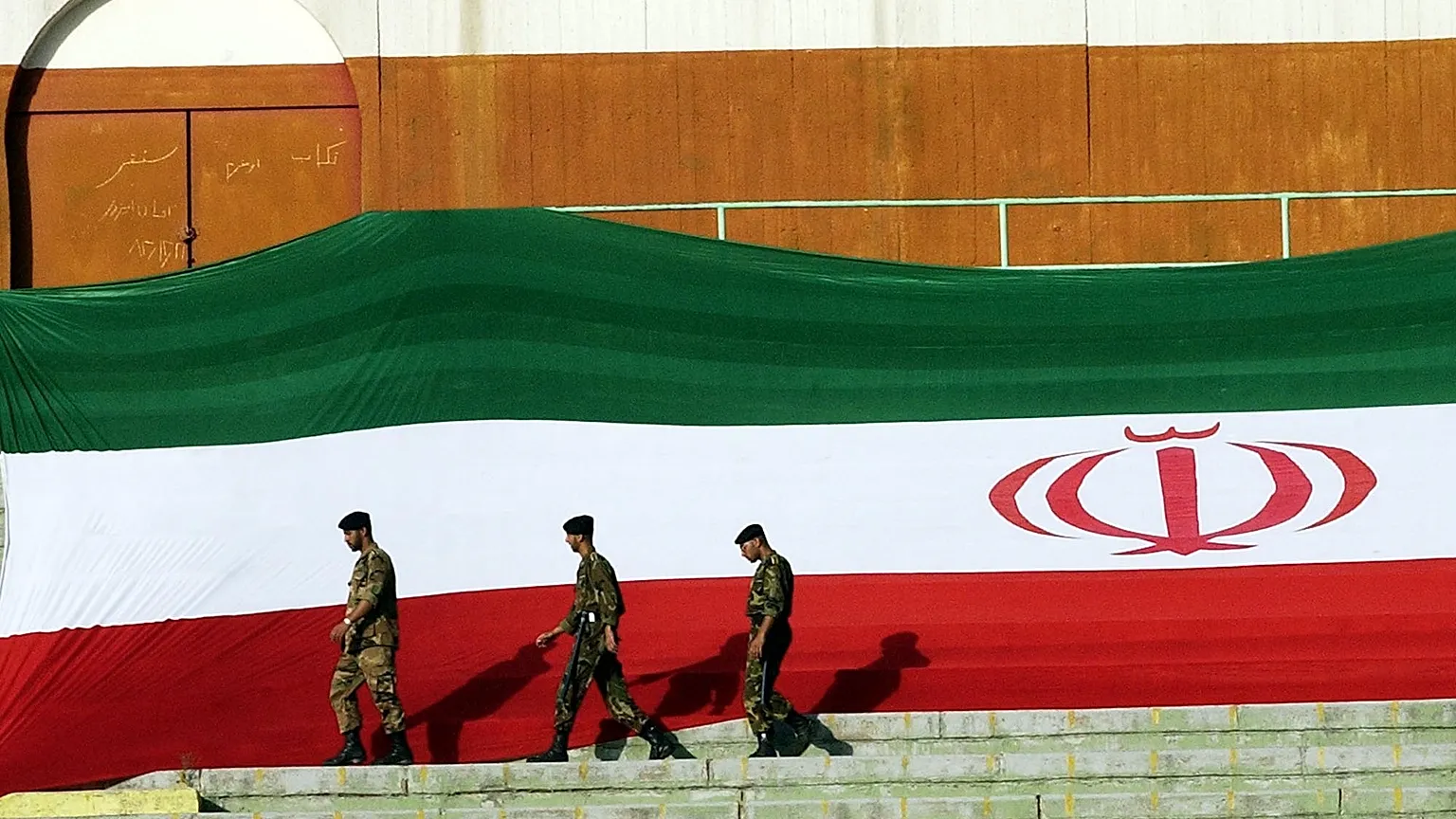
The Iran public execution Isfahan authorities carried out on Tuesday morning was staged in the open, in the same square where the events that led to it are alleged to have taken place. Two men detained during January’s protests were hanged in Alikhani Square, according to the country’s judicial media and footage circulating among opposition networks abroad. The response, both inside Iran and beyond it, has been immediate anger.
Who the Men Were and What the State Alleges
The Mizan news agency identified them as Amirhossein Safari and Abolfazl Sepahi.
According to the state’s account, the two took part in a violent assault on police officers on January 8, involving bladed weapons and culminating in the officers being burned. That same day, authorities say, four members of the security forces were killed in the square.
State broadcasting released footage it presented as documenting the attack and described the men as monarchist rioters, tying them to opposition currents abroad.
None of these claims has been tested in any proceeding that international observers regard as credible, which is the central problem with the case.
The Charges Used
Safari and Sepahi were convicted of moharebeh, usually translated as waging war against God, in this instance framed as drawing weapons and spreading fear and terror. They were also convicted of corruption on earth, a charge covering acts said to have severely disrupted public order and security.
Both carry the death penalty, and both have been applied repeatedly to demonstrators over the past year. Their breadth is precisely what makes them useful to prosecutors: conduct that would elsewhere be handled as assault or public order offences becomes a capital matter.
Twelve men in total were convicted over the deaths in Alikhani Square. Two were executed on July 19, despite United Nations warnings about serious irregularities in the proceedings that produced the verdicts. Tuesday’s hangings bring that number to four.
What the UN Says About the Trial
Dr. Mai Sato, the Special Rapporteur on human rights in Iran, said the twelve were tried together in a closed proceeding that failed to meet fair trial standards.
Group trials conducted behind closed doors make individual culpability nearly impossible to establish. Where evidence is not disclosed, defence counsel is restricted and the public cannot observe, there is no mechanism to distinguish a person who committed a specific act from someone who was present in the same crowd.
Experts note that at least 24 people have been executed in connection with the January protests since the start of 2026, and describe capital punishment being deployed as an instrument for instilling fear and silencing dissent rather than as a response to individual guilt.
UN experts have also warned that Iranian law as currently written leaves no safe route to criticise the government, exposing anyone who does to harassment, retaliation and prosecution.
A Deliberate Public Display
Reports indicate the execution was planned in advance and intended to be seen. Iron scaffolding reportedly appeared in the square overnight, and the area was placed under heavy police watch before dawn.
Beni Sabti, an Iran specialist at INSS, told The Jerusalem Post that demonstrations had already broken out in response, and argued that the choice of a public setting was itself the message. In his reading, the government has stopped trying to manage how the world perceives its conduct.
He drew a contrast with the protest period itself, when authorities cut internet access to prevent images of the crackdown from reaching outside audiences and carried out executions without notifying families, in violation of Iran’s own laws. What was once concealed, he said, is now being done in the street.
Sabti attributed the shift to confidence accumulated since the end of the war. The leadership believes it prevailed against Israel and the United States and believes it broke the protest movement. From inside that framework, he argued, a public hanging is not reckless but logical.
The Dispute Over the Death Toll
The numbers attached to the December and January protests remain contested by an enormous margin.
Human rights organisations estimate that more than 30,000 people were killed by the government during that period. Tehran’s own figure is 3,117 deaths, including 427 members of the security forces, which it attributes to foreign-backed rioters.
There is no independent means of verifying either figure. What has been widely reported is a practice that complicates any count: families seeking the return of a relative’s body for burial were reportedly required first to accept the state’s version of how that person died. Relatives were allegedly pressed to sign statements blaming rioters or asserting that the deceased had belonged to the Basij paramilitary.
That practice, if accurate, corrupts the record at its source. Deaths caused by security forces are converted on paper into deaths caused by protesters, as a condition of a family being permitted to bury their child.
A Final Visit
A source close to Safari’s family told the diaspora outlet Iran International that relatives had been called to Isfahan Central Prison for a last visit before the execution.
Attention has now turned to Shervin Bagherian Jebeli, who reached his eighteenth birthday only days before he was arrested.
Within a week of his detention, and before any trial had taken place, state television aired footage of him confessing during interrogation to violence against security officers. UN experts noted that he appeared not to understand what moharebeh meant, despite it being the capital charge he faced, raising the question of whether he had access to a lawyer of his own choosing at any point.
A televised confession obtained during interrogation, from a teenager who does not appear to grasp the charge that could end his life, is not evidence in any sense that a court elsewhere would recognise. It is the reason the international scrutiny of these cases has intensified, and the reason concern for Bagherian Jebeli is being expressed urgently rather than after the fact.
Author
-
Lucienne Albrecht is Luxe Chronicle’s wealth and lifestyle editor, celebrated for her elegant perspective on finance, legacy, and global luxury culture. With a flair for blending sophistication with insight, she brings a distinctly feminine voice to the world of high society and wealth.