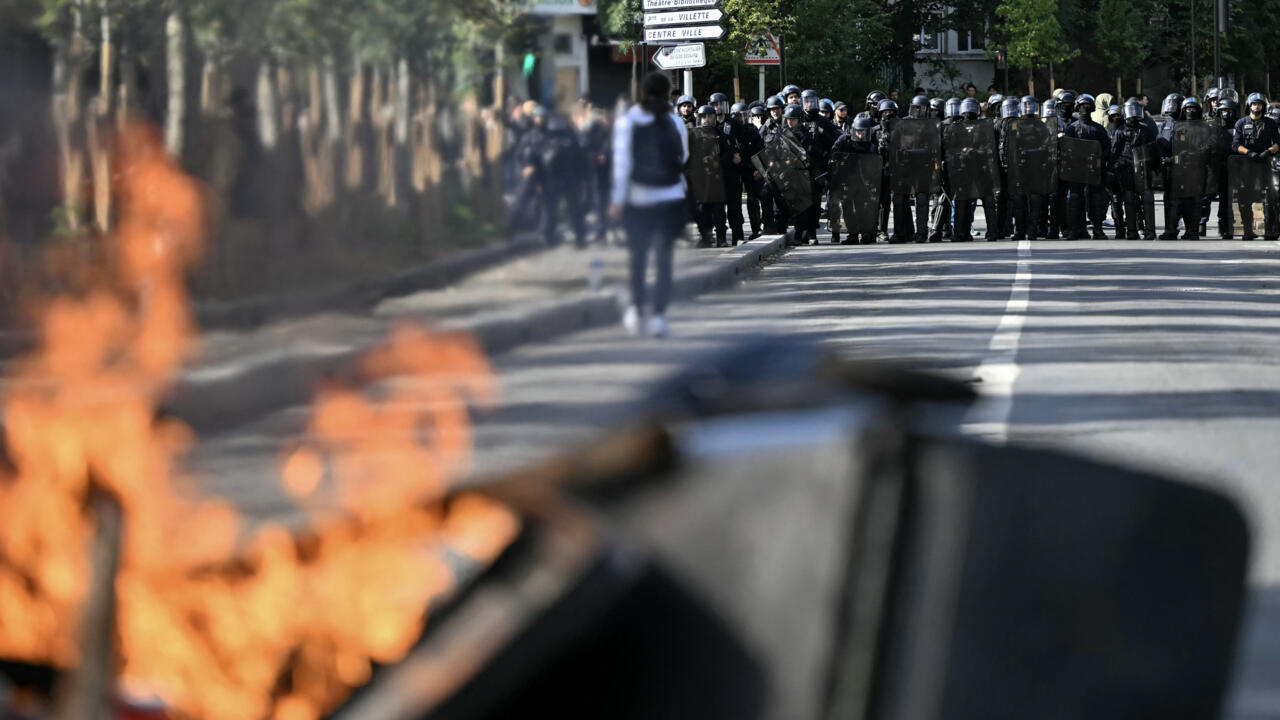
French student protests have escalated sharply in recent days, with school fires, mass arrests and a fierce political row over who is stoking the anger. What began as frustration over run-down classrooms has become one of the most serious domestic tests the government has faced in some time.
A Night of Arrests and Fires
According to the interior ministry, 1,949 people were arrested on Thursday alone. Students gathered outside more than 1,000 schools, and 222 of them were blockaded.
Some of the unrest turned destructive. Schools were set alight in Nantes and Lyon, and there was an attempt to burn Bordeaux’s city hall. Public transport was halted in Marseille, and trams stopped running in Strasbourg.
The wider toll is heavy. More than 3,000 people have been arrested since the protests began, and over 100 students and school staff have been hurt. On Thursday alone, 305 law enforcement officers were injured.
What Students Are Angry About
The protesters point to overcrowded schools, crumbling buildings and years of under-investment in education. These complaints are not coming from nowhere.
A major OECD study released in September showed a clear decline in the French system. Reading skills continued to fall, and maths results dropped by an unprecedented margin. The OECD blamed teacher shortages, poor classroom conditions and growing gaps between rich and poor pupils. The education ministry itself says around 10 percent of teaching time is lost nationally to closures and unreplaced absent teachers.
The Blame Game
Politics has quickly overtaken the debate. Prime Minister Sébastien Lecornu accused the hard-left party La France Insoumise of exploiting students’ anger for its own ends. A source close to him said intelligence services share the view that the unrest is a manoeuvre organised by the party and its ultra-left allies, calling it a turning point from school blockades to urban violence.
Far-right leader Marine Le Pen went further. She said these are no longer student protests but riots organised by professionals and overseen by LFI members of parliament, and she called for a new “anti-rioter” law.
Jean-Luc Mélenchon, the party’s leader, rejects the accusation. He has urged peaceful protest but says the anger is a reaction to the shameful state of the country’s high schools after nine years of Emmanuel Macron in power. He argues the government is blaming him to avoid dealing with the real problem.
Why the Stakes Are High
Mélenchon is polling at about 17 percent in voting intentions, which could be enough to reach a run-off against Le Pen. That gives both sides a clear political incentive to shape the story.
Concerns Over Policing
Not all the criticism is aimed at protesters. A video circulating on social media appears to show a teenager hit at close range by a projectile from a police grenade launcher. Interior minister Laurent Nuñez has said investigations are open into three incidents where students were allegedly injured by officers.
The Government’s Response
Education minister Édouard Geffray said 400 schools will close on Friday and asked for classes to move online. He insisted that violence must not deprive students of their right to education.
The timing is awkward. The government has just announced spending cuts for 2027 to calm market worries about France’s finances and rising borrowing costs. Education is spared, with its budget set to rise by 1.1 billion euros, but teachers’ salaries will be partly frozen. Unions already held strikes this week over pay and the cost of living.
A Familiar Fear for French Governments
French leaders have good reason to worry. Student unrest helped spark the 1968 strikes that nearly toppled the De Gaulle government. Student strikes also merged with the 2018 gilets jaunes movement, deepening the biggest domestic crisis of Macron’s first term.
What to Watch Next
- Whether the violence spreads or fades once remote classes begin
- Whether the government pursues new legislation targeting rioters
- The outcome of the investigations into police conduct
- How the unrest affects Mélenchon’s and Le Pen’s standing in the polls
The Bottom Line
France is facing an unusual mix of genuine grievance, political opportunism and street violence. Whether this becomes a passing flare-up or a deeper crisis will depend on how well the government addresses the root complaints while keeping order.
Author