The Abrego Garcia case returned to the spotlight on Monday when the Justice Department asked a federal appeals court to revive criminal charges that a trial judge had thrown out earlier this year. Federal attorneys want the U.S. Court of Appeals for the 6th Circuit to overturn a ruling that concluded the prosecution had been driven by retaliation rather than evidence.
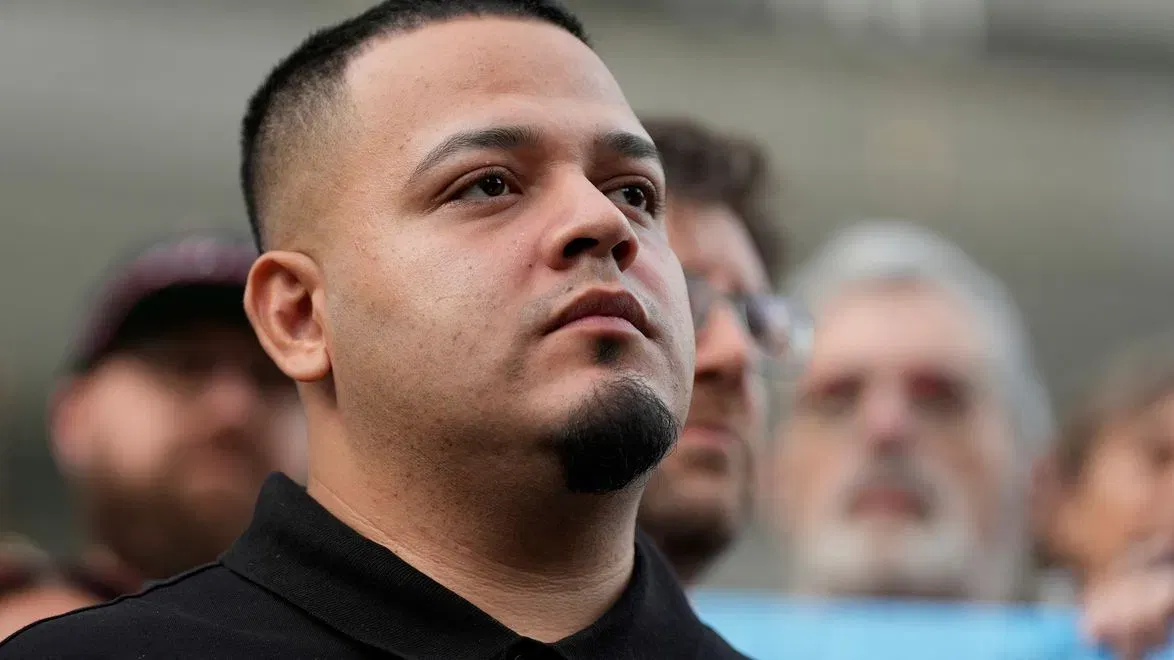
At the center of it all is Kilmar Abrego Garcia, a Salvadoran man whose deportation by the Trump administration last year was later acknowledged as a mistake. What began as an immigration error has grown into a sprawling legal fight spanning multiple courts, two continents and a fundamental question about how far judges may go in second-guessing prosecutors.
How the Charges Fell Apart
In May, a federal judge in Tennessee dismissed the indictment against Abrego Garcia entirely. The government had accused him of smuggling people into the country illegally, but the judge determined that the case had been brought as payback for his public and legal efforts to contest his removal to El Salvador.
That finding — vindictive prosecution — is a rare conclusion for a court to reach. It essentially says that the government charged someone not because it believed a crime occurred, but because that person exercised a legal right and the government wanted to punish him for it. Such rulings are unusual precisely because they require a judge to look past the paperwork and examine what motivated the people making decisions.
The Government’s Argument on Appeal
In its Monday filing, the Justice Department rejected the retaliation finding outright, insisting there were several legitimate grounds for pursuing the case.
Officials framed the indictment as a routine exercise of prosecutorial judgment. According to a departmental news release, the decision to charge Abrego Garcia with human smuggling came from career prosecutors who reviewed the evidence, applied the relevant law and concluded they could prove the allegations beyond a reasonable doubt.
The department’s broader concern goes well beyond this one defendant. Attorneys warned that the May ruling represents a sweeping enlargement of judicial power, allowing courts to toss out serious felony charges based on their own reading of what a prosecutor may have been thinking. Left standing, they suggest, the precedent could invite defendants in unrelated cases to argue that any politically sensitive charge was really an act of revenge.
The Defense Fires Back
Lawyers for Abrego Garcia responded sharply. In a statement provided to CBS News, the defense team described the Justice Department’s public account as simply incorrect.
Their position is that the record already settled the question. They maintain the evidence presented in district court demonstrated retaliatory intent clearly, and they emphasized that this conclusion held even though the government declined to put its own senior officials on the witness stand. Attorney General Todd Blanche, they noted, was among the decision makers who never testified under oath.
The defense went further, asserting that the prosecution originated at the White House and was launched only after their client prevailed in his Supreme Court case challenging the deportation. In their telling, the sequence of events speaks for itself: he won, and then he was charged.
Where the Criminal Allegations Came From
The underlying accusations trace back to a traffic stop in Tennessee in November 2022. State Highway Patrol officers pulled Abrego Garcia over and found a number of passengers inside the vehicle. Roughly two years later, that encounter became the basis for two counts of human smuggling.
Abrego Garcia entered a not guilty plea and has consistently disputed the characterization of the stop.
Key elements of the criminal matter:
- Two federal counts of human smuggling
- Rooted in a single 2022 traffic stop
- Dismissed in May on vindictive prosecution grounds
- Now under review by the 6th Circuit
A Second Fight Over Deportation
The criminal appeal is only half the story. A separate case is unfolding in federal court in Maryland, where the administration continues pressing to remove Abrego Garcia from the United States.
Immigration and Customs Enforcement has indicated it wants to deport him to Liberia — a West African nation with no apparent connection to his life or origins. A federal judge has blocked that plan for the time being, leaving his status unresolved while the litigation proceeds.
Third-country removals of this kind have drawn increasing scrutiny, since they raise questions about whether a person is being sent somewhere for legitimate immigration reasons or simply somewhere convenient and far away.
What’s Actually at Stake
For Abrego Garcia personally, the outcome determines whether he faces trial on felony charges and whether he remains in the country at all. But the appeal carries implications that reach considerably further.
If the 6th Circuit sides with the government, the message to lower courts will be that prosecutorial motive is largely off limits for judicial review, and that charging decisions should be evaluated on evidence alone. If the appeals court affirms the dismissal, it hands defendants a sharper tool for challenging cases they believe were brought in bad faith — and puts prosecutors on notice that timing and context can matter.
Both readings have serious consequences for how criminal law interacts with politics, which is why a case that started with a wrongful deportation and a traffic stop is now being watched far beyond the parties involved.
No timeline has been announced for the 6th Circuit’s decision, and the Maryland proceedings continue on their own track. For now, Abrego Garcia remains in legal limbo on two fronts at once.
Author
-
Lucienne Albrecht is Luxe Chronicle’s wealth and lifestyle editor, celebrated for her elegant perspective on finance, legacy, and global luxury culture. With a flair for blending sophistication with insight, she brings a distinctly feminine voice to the world of high society and wealth.